How to recognise it
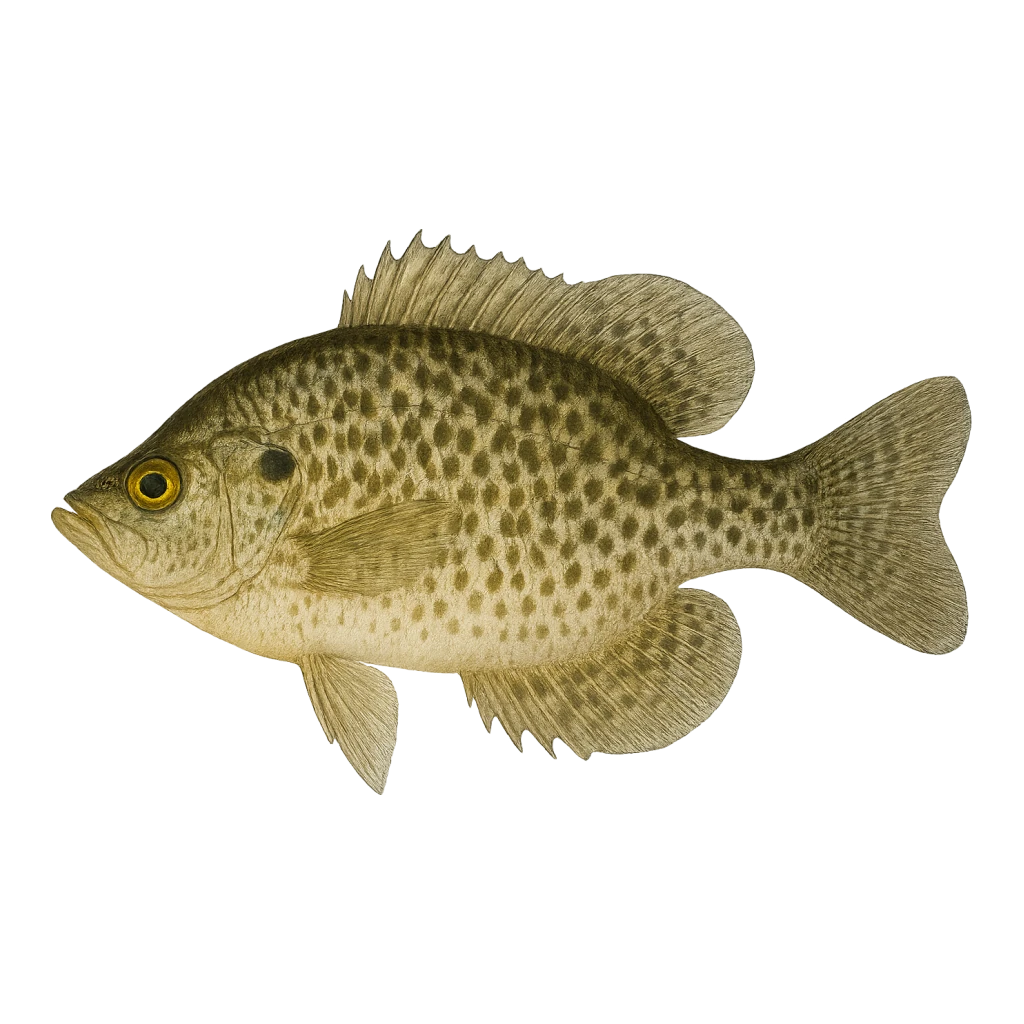
The Flier, or Centrarchus macropterus, is a distinctive freshwater fish. It has a compressed body and a large, rounded dorsal fin. The coloration is typically olive-green to brown on the back, with lighter sides and a white belly. The Flier has a unique feature: its long, wing-like pectoral fins, which can extend beyond the body. The fish is often confused with the Redear Sunfish (Lepomis microlophus). The key detail that separates them is the Flier's elongated pectoral fins, which are much larger in proportion to its body than those of the Redear Sunfish.
Where it lives
The Flier is primarily found in the southeastern United States. Its range includes waters from Texas to Florida, extending north to parts of Alabama and Georgia. It inhabits slow-moving rivers, ponds, and lakes, often preferring areas with abundant vegetation. Depths of 1 to 10 feet are common, especially near submerged structures like logs and aquatic plants. During spring and summer, the Flier tends to move into shallower waters for spawning. In colder months, it may retreat to deeper areas to avoid temperature fluctuations.
When it bites
The Flier is most active from late spring through early fall. It typically bites when water temperatures range from 65 to 80 degrees F. Early morning and late afternoon are prime times for fishing, as the Flier is more likely to feed during these hours. Weather changes can influence its behavior; a passing front may trigger feeding activity, while high winds can make them less active. A full moon can also enhance their feeding, as they may be more inclined to roam during the night.
How to catch it
To catch a Flier, anglers can use a variety of rigs. A simple bobber rig with a small hook (size 8 to 10) is effective. Live bait such as worms or crickets works well, while lures like small jigs (1/16 to 1/8 ounce) in bright colors like chartreuse or orange can attract them. Cast near vegetation or submerged structures, and retrieve the bait slowly to mimic natural movement. Flier are often found in areas with cover, so focus on casting around lily pads or fallen trees.
Size, age and the table
Anglers typically encounter Flier ranging from 6 to 10 inches in length. A trophy Flier is generally considered to be over 12 inches. Growth rates can vary, but they often reach maturity within 2 to 3 years. The lifespan of a Flier can extend up to 5 years in the wild. The flesh of the Flier is considered good to eat, with a mild flavor. When handling, it is important to wet your hands to avoid damaging their slime coating. For catch and release, use barbless hooks and minimize air exposure to ensure their survival.