How to recognise it
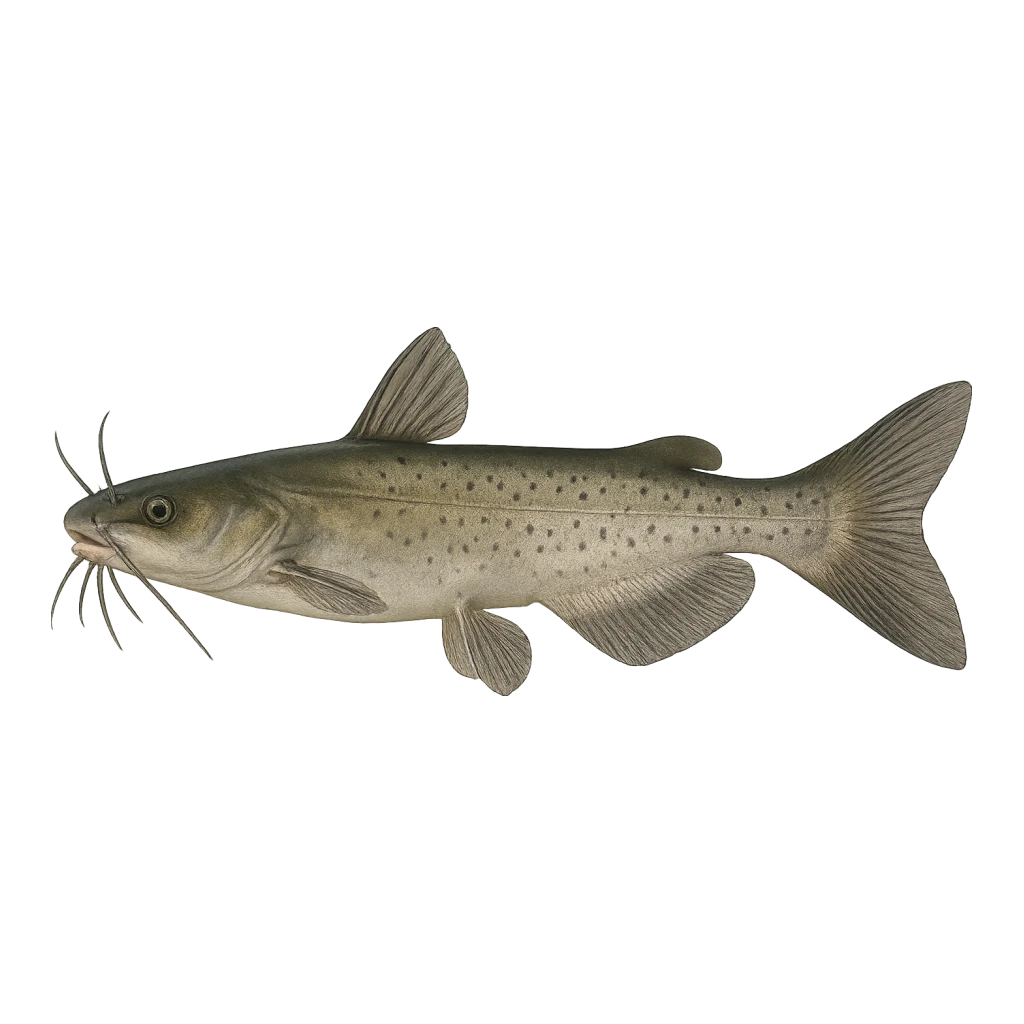
The Channel Catfish (Ictalurus punctatus) is a distinctive freshwater fish. It has a long, slender body that can reach lengths of up to 40 inches and weights of over 50 pounds. The skin is smooth and typically has a bluish or grayish tint, often with a white or yellowish belly. The fish features long, whisker-like barbels on its upper jaw, which help it sense food in murky waters.
One of the key identifying features is its forked tail, which is more pronounced than in other catfish species. The Channel Catfish is often confused with the Flathead Catfish (Pylodictis olivaris). The main detail that separates them is the shape of the head; the Flathead Catfish has a broader, flatter head compared to the more tapered head of the Channel Catfish.
Where it lives
The Channel Catfish is widely distributed across the United States. It is found in rivers, lakes, and reservoirs, primarily in the Midwest and Southeast regions. They prefer slow-moving waters with plenty of cover, such as submerged logs, rocks, and vegetation.
In terms of depth, Channel Catfish can be found in waters ranging from 1 to 30 feet deep. During warmer months, they tend to move into shallower areas, especially at night. In colder months, they may retreat to deeper waters where temperatures are more stable.
When it bites
Channel Catfish are most active from late spring through early fall. They typically bite when water temperatures are between 70 and 85 degrees F. Early morning and late evening are prime times for fishing, as they tend to feed more actively during these hours.
Weather conditions can influence their feeding behavior. A passing front can trigger increased activity, while windy conditions may also enhance feeding. Additionally, a full moon can lead to more nocturnal feeding, making night fishing particularly effective.
How to catch it
To catch Channel Catfish, anglers often use bottom rigs or slip sinker rigs. A common setup includes a 2/0 to 5/0 hook, depending on the bait size. Popular baits include chicken liver, stink bait, and nightcrawlers. For lures, consider using jigs or spinners in bright colors like chartreuse or orange.
When casting, aim for areas near cover, such as fallen trees or rocky structures. Allow your bait to settle on the bottom and be patient. Channel Catfish are known for their slow, deliberate bites, so it’s essential to wait for a solid pull before setting the hook.
Size, age and the table
Anglers typically encounter Channel Catfish ranging from 1 to 10 pounds. A trophy Channel Catfish is generally considered to be over 20 pounds. Growth rates can vary, but they can reach 1 pound in their first year and may live up to 15 years in the wild.
Channel Catfish are known for their good eating quality. The flesh is firm and mild-flavored, making it a popular choice for cooking. When handling, use wet hands to minimize slime loss, and if releasing, do so gently to ensure their survival.