How to recognise it
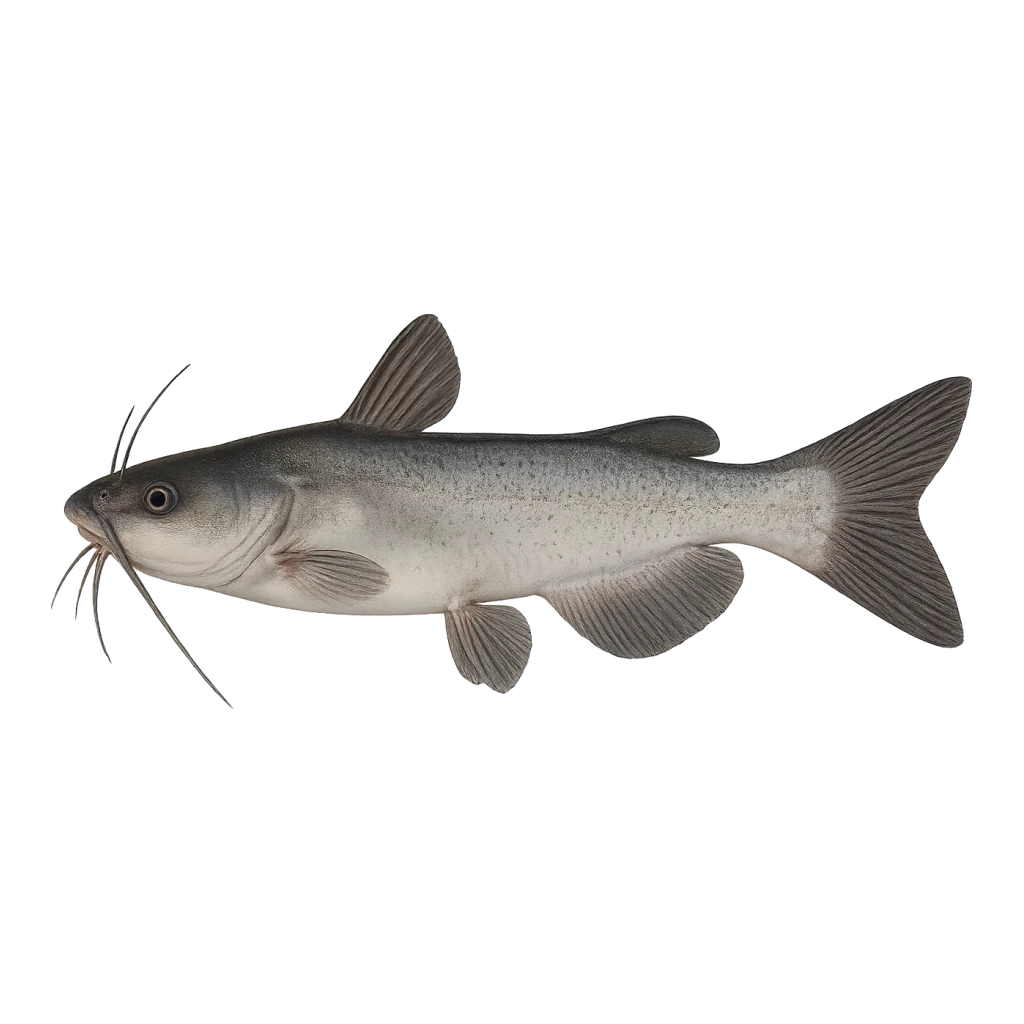
The White Catfish (Ameiurus catus) is a freshwater fish that can be identified by its distinctive features. It has a slender, elongated body that is typically pale to dark gray or bluish on the back, fading to a white or cream color on the belly. The most notable field marks include its long, whisker-like barbels that are white or light gray. The dorsal fin is relatively short and has a dark edge, while the pectoral fins are sharp and spiny. The mouth is wide and located on the underside of the head.
This species is often confused with the Channel Catfish (Ictalurus punctatus). The key detail that separates them is the absence of spots on the White Catfish, while the Channel Catfish has distinct black spots scattered across its body.
Where it lives
The White Catfish is primarily found in the eastern and central United States. Its range extends from the Great Lakes region down to the Gulf Coast, including states like New York, Pennsylvania, and Louisiana. This species prefers slow-moving waters such as rivers, lakes, and ponds. It can often be found in depths of 2 to 20 feet, especially near structures like submerged logs, rocks, and vegetation.
In the spring and summer, White Catfish tend to move into shallower waters for spawning. During the fall and winter months, they may retreat to deeper areas as water temperatures drop.
When it bites
The White Catfish is most active from late spring through early fall. It typically bites when water temperatures range from 65 to 80 degrees F. Early morning and late evening are the best times to fish for them, as they tend to feed more actively during these hours.
Weather changes can influence their feeding behavior. A passing front may trigger increased activity, while strong winds can make them less likely to bite. A full moon can also enhance their feeding, as they are more likely to be active during the night.
How to catch it
To catch White Catfish, anglers can use a variety of rigs. A simple slip sinker rig works well, with a weight of 1 to 2 ounces depending on the current. Use a 2/0 to 4/0 circle hook for best results. Baits such as stink bait, chicken liver, or nightcrawlers are effective. For lures, try using small jigs or spinners in bright colors like chartreuse or white.
Cast near structures, such as fallen trees or rocky outcrops, and allow the bait to settle. Retrieve slowly, giving the fish time to take the bait. Be patient, as bites may be subtle.
Size, age and the table
Anglers typically encounter White Catfish ranging from 1 to 5 pounds, with lengths of 12 to 24 inches. A trophy White Catfish is generally considered to be over 10 pounds. Growth rates can vary, but they usually reach maturity in 2 to 3 years and can live up to 10 years in the wild.
White Catfish are considered good eating, with firm, white flesh. When handling, wet your hands to avoid removing the protective slime layer. If releasing, do so gently to minimize stress and injury to the fish.