How to recognise it
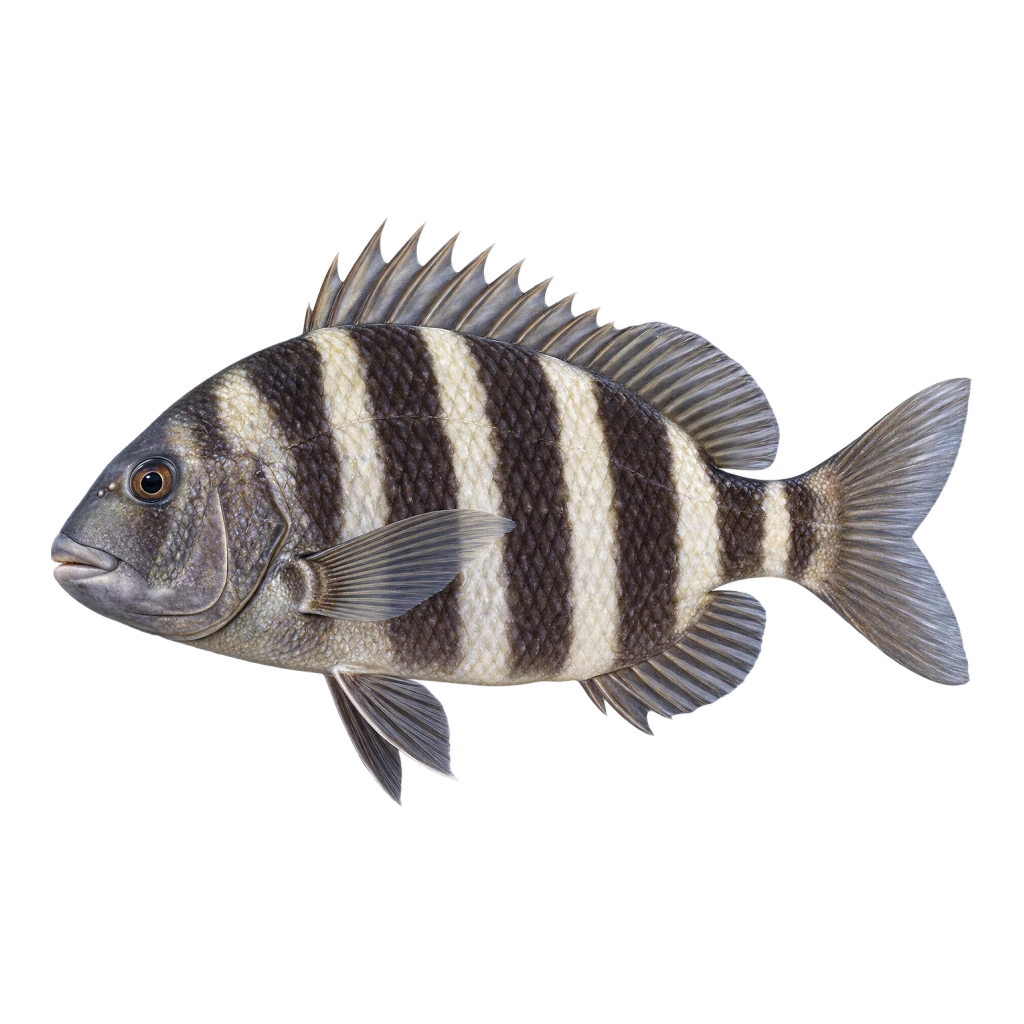
The Sheepshead (Archosargus probatocephalus) is easily identifiable by its distinct appearance. It has a laterally compressed body with a series of vertical black stripes on a silver background. The stripes are usually five to seven in number and run from the dorsal fin to the belly. The mouth is unique, featuring strong, human-like teeth that are well-suited for crushing shellfish. The dorsal fin is long and continuous, while the anal fin is shorter and rounded. Sheepshead are often confused with the Black Drum (Pogonias cromis). The key detail that separates them is the Sheepshead's prominent teeth, which resemble molars, while the Black Drum has more traditional, conical teeth.
Where it lives
Sheepshead are primarily found along the Atlantic Coast of the United States, from Cape Cod, Massachusetts, down to Florida and into the Gulf of Mexico. They inhabit brackish and saltwater environments, preferring areas around structures such as piers, jetties, and reefs. They are typically found at depths ranging from 10 to 70 feet. During warmer months, Sheepshead tend to move closer to shore, while in colder months, they may migrate to deeper waters. They often seek cover among rocks, pilings, and other structures, which provide protection and hunting grounds.
When it bites
Sheepshead are most active and likely to bite from March to November. They prefer water temperatures between 65°F and 80°F. Early mornings and late afternoons are generally the best times to fish for them. Weather patterns can influence their feeding behavior; a passing front may trigger increased activity, while strong winds can make them less likely to bite. A full moon can also enhance their feeding, as it increases the availability of food sources.
How to catch it
To effectively catch Sheepshead, anglers often use bottom rigs or Carolina rigs. A typical setup includes a 1/0 to 3/0 circle hook, depending on the size of the bait. Use a 20 to 30-pound test line for strength. Live baits such as fiddler crabs, shrimp, and sand fleas are particularly effective. When using lures, consider jigs in natural colors like green or brown, around 1 to 2 ounces. Cast near structures where Sheepshead are likely to be hiding, and let the bait settle on the bottom. Slowly lift and drop the bait to mimic natural movement, which can entice a bite.
Size, age and the table
Anglers typically encounter Sheepshead ranging from 12 to 20 inches in length, with weights between 2 to 8 pounds. A trophy Sheepshead is generally considered to be over 20 inches. They grow at a moderate rate, reaching sexual maturity around 3 years of age, and can live up to 9 years. Sheepshead are known for their excellent eating quality, with firm, white flesh that is mild in flavor. When handling, be cautious of their sharp teeth and spines. If releasing, do so gently to minimize stress and increase survival chances.