How to recognise it
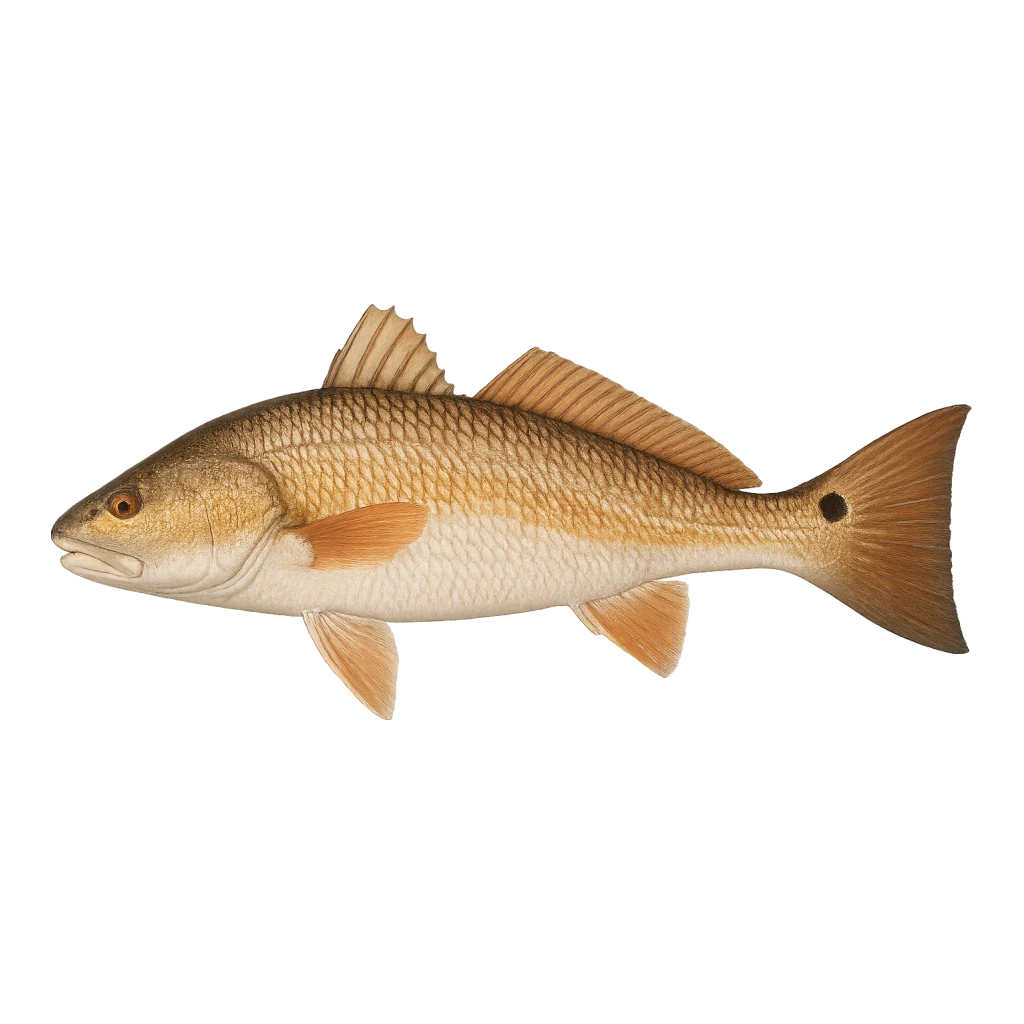
The Red Drum, or Sciaenops ocellatus, is known for its distinctive appearance. It has a copper-bronze body with a series of black spots along its back and sides. These spots can vary in number and size. The dorsal fin is long and has a slight curve, while the mouth is slightly upturned, allowing it to feed on prey near the surface. It is often confused with the Black Drum (Pogonias cromis). The key detail that separates them is the number of anal fin rays; Red Drum have 8 to 9, while Black Drum have 7 to 8.
Where it lives
Red Drum are primarily found along the Atlantic Coast and the Gulf of Mexico. Their range extends from New York to Florida in the Atlantic and from Florida to Texas in the Gulf. They inhabit a variety of water types, including estuaries, bays, and coastal waters. They prefer depths of 3 to 30 feet, often holding near structures like grass beds, oyster reefs, and jetties. In the spring and summer, they move into shallower waters, while in the fall and winter, they tend to migrate to deeper areas.
When it bites
Red Drum are most active from April to November. They prefer water temperatures between 70°F and 85°F. Early morning and late afternoon are the best times to catch them. A passing front can trigger feeding activity, while strong winds may make them less active. A full moon can enhance their feeding behavior, making them more likely to bite.
How to catch it
To catch Red Drum, use a variety of rigs such as the Carolina rig or a popping cork rig. Live baits like shrimp, mullet, or menhaden work well, typically in sizes of 3 to 6 inches. Artificial lures like topwater plugs, soft plastics, and spoons in colors like chartreuse, white, or red can be effective. Use a 20 to 30-pound test line with a 3/0 to 5/0 hook. Cast near structures and work the bait with a steady retrieve or occasional pauses to mimic injured prey.
Size, age and the table
Anglers typically encounter Red Drum ranging from 18 to 30 inches. A trophy Red Drum is generally considered to be over 40 inches. They grow rapidly, reaching around 12 inches by their first year and can live up to 30 years. The meat is firm and has a mild flavor, making it a popular choice for eating. Handle them carefully to minimize stress, and use proper techniques for release to ensure their survival.