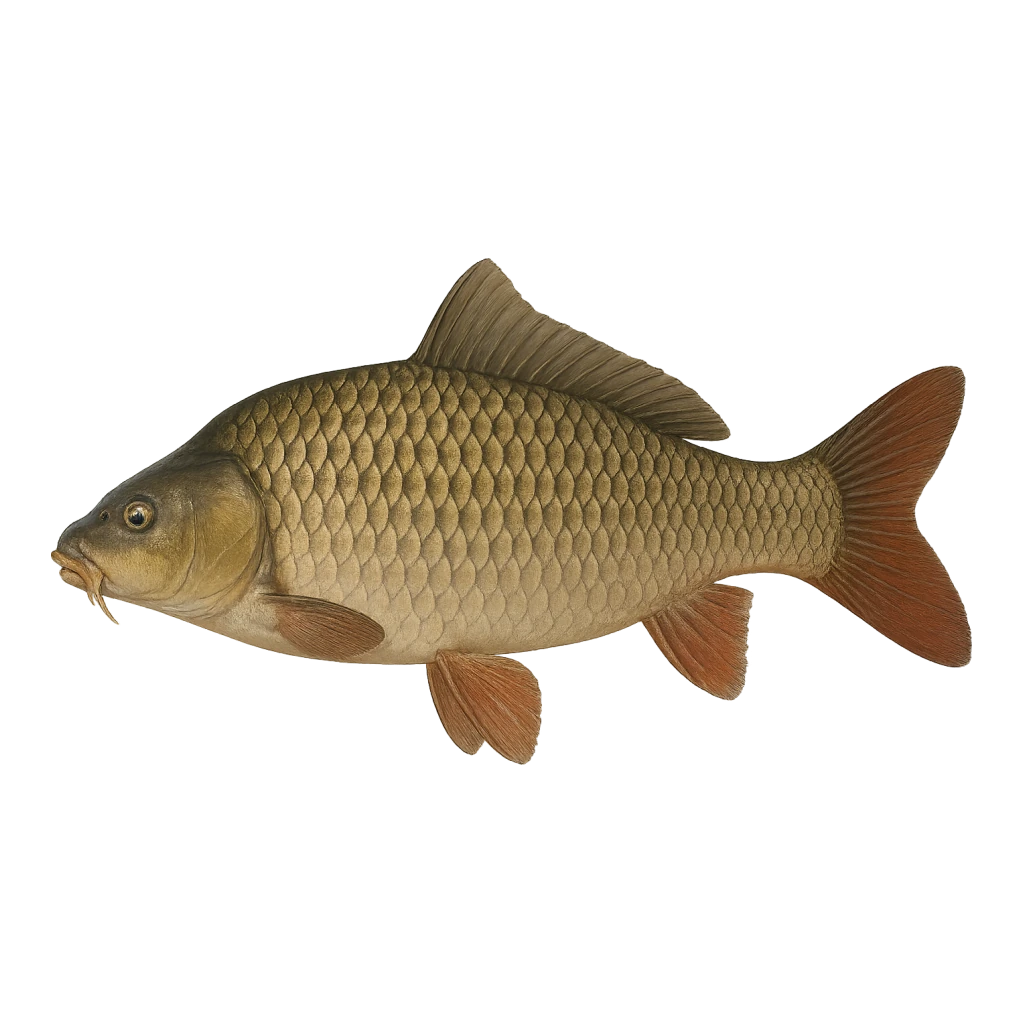
How to recognise it
The Common Carp (Cyprinus carpio) is a large freshwater fish. It has a robust, elongated body. The coloration varies from golden yellow to dark brown. Its scales are large and can be either fully scaled or partially scaled. The Common Carp has a distinctive barbel on each side of its upper jaw. The mouth is fleshy and protrudes, which helps it forage for food on the bottom. This species is often confused with the Grass Carp (Ctenopharyngodon idella). The key detail that separates them is the presence of barbels on the Common Carp, which the Grass Carp lacks.
Where it lives
The Common Carp is widely distributed across the United States. It thrives in various regions, including the Midwest, Northeast, and parts of the South. This species prefers freshwater habitats such as lakes, rivers, and ponds. It can be found in shallow waters, typically at depths of 1 to 10 feet. The Common Carp often holds to cover like submerged vegetation, rocks, and fallen trees. In spring and summer, they tend to be found in shallower areas for spawning. In colder months, they may move to deeper waters to avoid harsh conditions.
When it bites
The Common Carp is most active from late spring to early fall. The ideal water temperature for carp fishing is between 65 and 75 degrees F. They are more likely to bite during the early morning and late afternoon. Weather changes can influence their feeding behavior. A passing front may trigger increased activity, while strong winds can make them more cautious. A full moon often leads to heightened feeding, especially during the night.
How to catch it
To catch Common Carp, use a variety of rigs. The hair rig is popular, allowing for effective bait presentation. Baits such as corn, dough balls, and boilies in sizes 10-20 mm work well. Colors like yellow, white, and green are often effective. Use a line strength of 10-20 pounds and hooks sized 6-10. Cast near structures or areas with visible feeding activity. Allow the bait to settle and be patient. Carp can be wary, so a slow retrieve or leaving the bait stationary can yield better results.
Size, age and the table
Common Carp typically range from 10 to 30 inches in length. A trophy Common Carp is generally considered to be over 30 inches. Growth rates vary, but they can reach maturity in 3 to 5 years. The lifespan of a Common Carp can exceed 20 years in favorable conditions. While some anglers enjoy eating carp, they are often released due to their bony structure. Proper handling is essential to ensure a successful release. Wet your hands before touching the fish to protect its slime coat.