How to recognise it
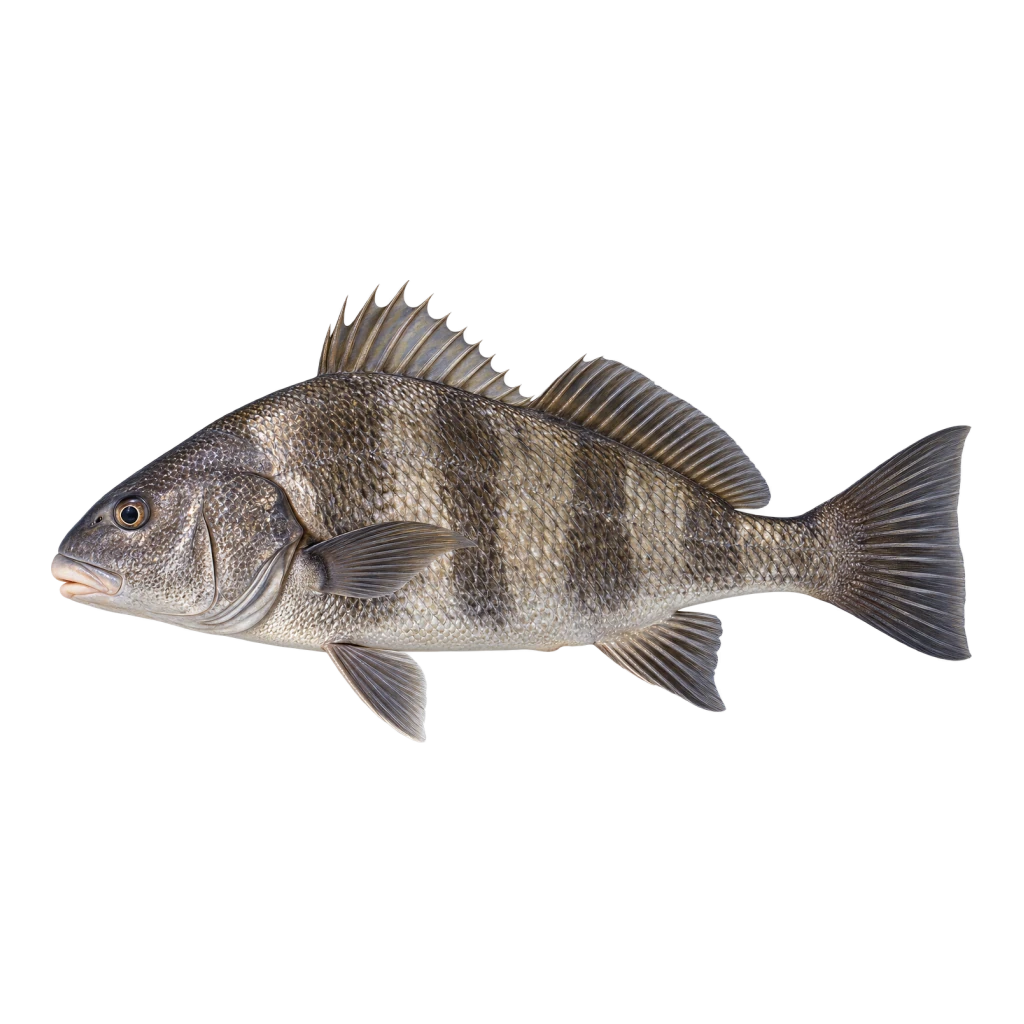
The Black Drum (Pogonias cromis) is a robust fish with a deep, laterally compressed body. It typically has a dark gray to black coloration on its back, fading to a lighter silver or white on its belly. The fish features a series of vertical black stripes that can vary in intensity. Its dorsal fin is long and continuous, with a slight notch near the tail. The mouth is sub-terminal, which means it is located slightly below the center of the head, and it has thick, fleshy lips.
The Black Drum is often confused with the Red Drum (Sciaenops ocellatus). The key detail that separates them is the presence of barbels on the chin of the Black Drum, which the Red Drum lacks.
Where it lives
The Black Drum is primarily found along the Atlantic Coast of the United States, from New Jersey to Florida, and in the Gulf of Mexico. They inhabit estuaries, bays, and coastal waters, preferring brackish environments. Black Drums are typically found at depths ranging from 10 to 60 feet, although they can be found in shallower waters during certain times of the year.
In the spring and summer, they tend to move into shallower waters to spawn, while in the fall and winter, they may retreat to deeper waters. They often seek cover around structures such as jetties, piers, and rocky bottoms.
When it bites
Black Drum are most active from April to November. They prefer water temperatures between 65°F and 80°F. Early morning and late afternoon are the best times to fish for them, as they tend to feed more actively during these periods.
Weather conditions can influence their feeding behavior. A passing front may trigger increased activity, while strong winds can make them less likely to bite. A full moon can also enhance their feeding, as it increases the light and encourages them to forage.
How to catch it
To catch Black Drum, anglers often use bottom rigs such as fish finder rigs or Carolina rigs. Recommended baits include live or cut shrimp, crabs, and clams. Use hooks ranging from 2/0 to 5/0, depending on the bait size. A 20 to 30-pound test line is suitable for most situations.
Cast near structures where Black Drum are likely to congregate, such as docks, bridges, and rocky areas. Allow the bait to settle on the bottom and wait for a bite. When you feel a tug, reel in steadily to set the hook.
Size, age and the table
Anglers typically encounter Black Drum ranging from 10 to 30 inches in length, with weights between 5 and 15 pounds. A trophy Black Drum is generally considered to be over 40 inches long. They grow quickly, reaching sexual maturity at around 3 to 4 years of age, and can live up to 60 years.
Black Drum are known for their excellent eating quality, with firm, white flesh. When handling them, be cautious of their spiny dorsal fin. If releasing, do so gently to minimize stress and injury to the fish.