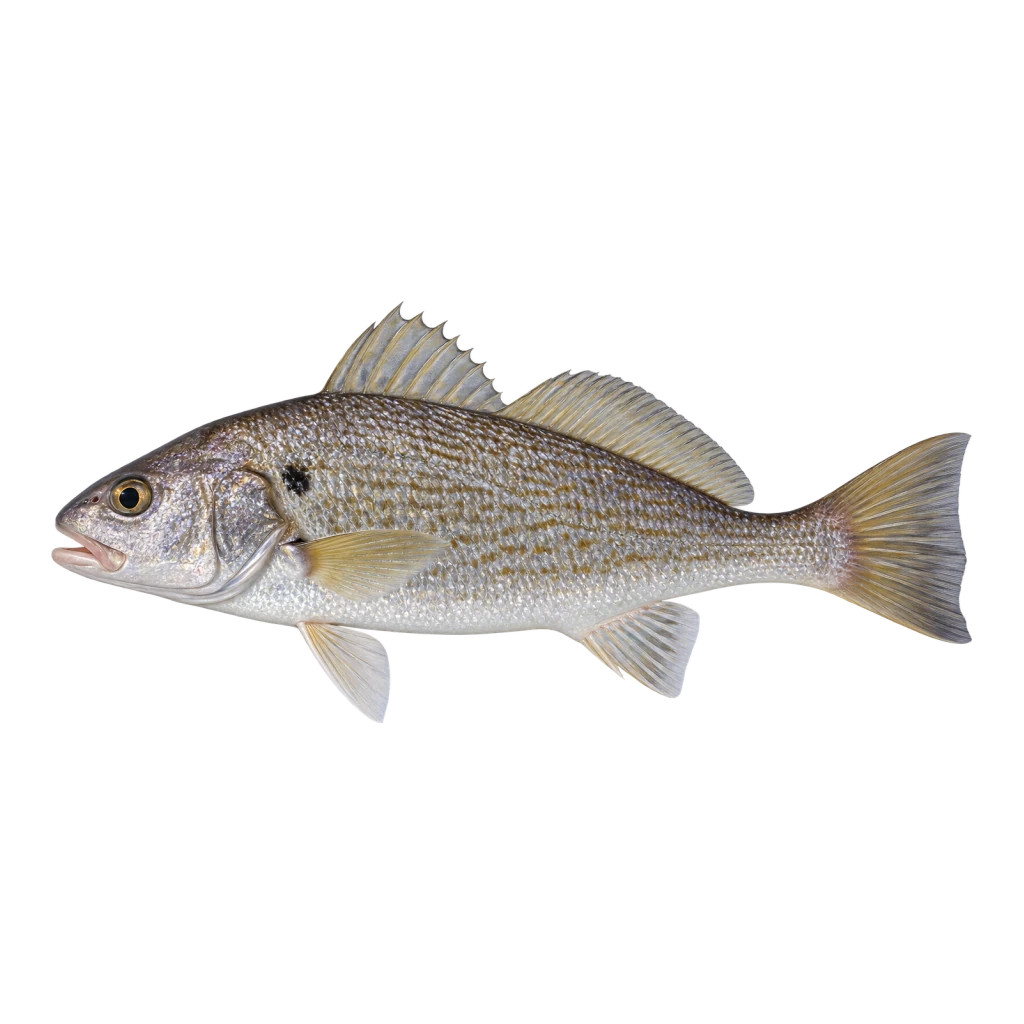
How to recognise it
The Atlantic Croaker (Micropogonias undulatus) is a distinctive fish. It has a streamlined body that can reach lengths of up to 24 inches. The coloration is typically silver to gray on the back, with a lighter belly. One of its key features is the series of dark spots along its sides, which can vary in number and intensity.
The Atlantic Croaker has a small mouth with a prominent lower jaw. Its dorsal fin is long and has a slight notch. This fish is often confused with the similar species, the Black Drum. The main detail that separates them is the Atlantic Croaker's smaller size and the distinct dark spots along its sides, which the Black Drum lacks.
Where it lives
The Atlantic Croaker is found along the Atlantic coast of the United States, from Cape Cod, Massachusetts, to the Gulf of Mexico. It prefers estuarine and coastal waters, often inhabiting sandy or muddy bottoms. The depth range for this species typically varies from 10 to 100 feet.
In the warmer months, Atlantic Croakers move into shallower waters, often near inlets and estuaries. During the colder months, they tend to migrate to deeper waters. This seasonal movement is influenced by water temperature and food availability.
When it bites
Atlantic Croakers are most active from late spring through early fall. They bite best when water temperatures range from 65 to 80 degrees F. Early morning and late afternoon are prime times for fishing.
Weather conditions can affect their feeding behavior. A passing front can trigger increased activity, while strong winds may make them less likely to bite. A full moon often leads to more aggressive feeding patterns.
How to catch it
To catch Atlantic Croakers, use a simple bottom rig or a Carolina rig. A 1/0 to 2/0 hook is suitable, with a 15 to 30-pound test line. Baits like shrimp, cut bait, or bloodworms work well. For lures, try small jigs or soft plastics in natural colors like white or chartreuse.
Cast near structures such as piers, jetties, or inlets. Work the bait by letting it sit on the bottom or gently bouncing it. Be patient, as bites can be subtle.
Size, age and the table
Anglers typically encounter Atlantic Croakers that are 12 to 18 inches long. A trophy-sized fish is considered to be over 20 inches. They grow quickly, reaching maturity in about 2 to 3 years and can live up to 8 years.
Atlantic Croakers are known for their good eating quality. The flesh is white and flaky, making it popular for frying or grilling. Handle them carefully to avoid damage, and if releasing, do so gently to ensure their survival.