How to recognise it
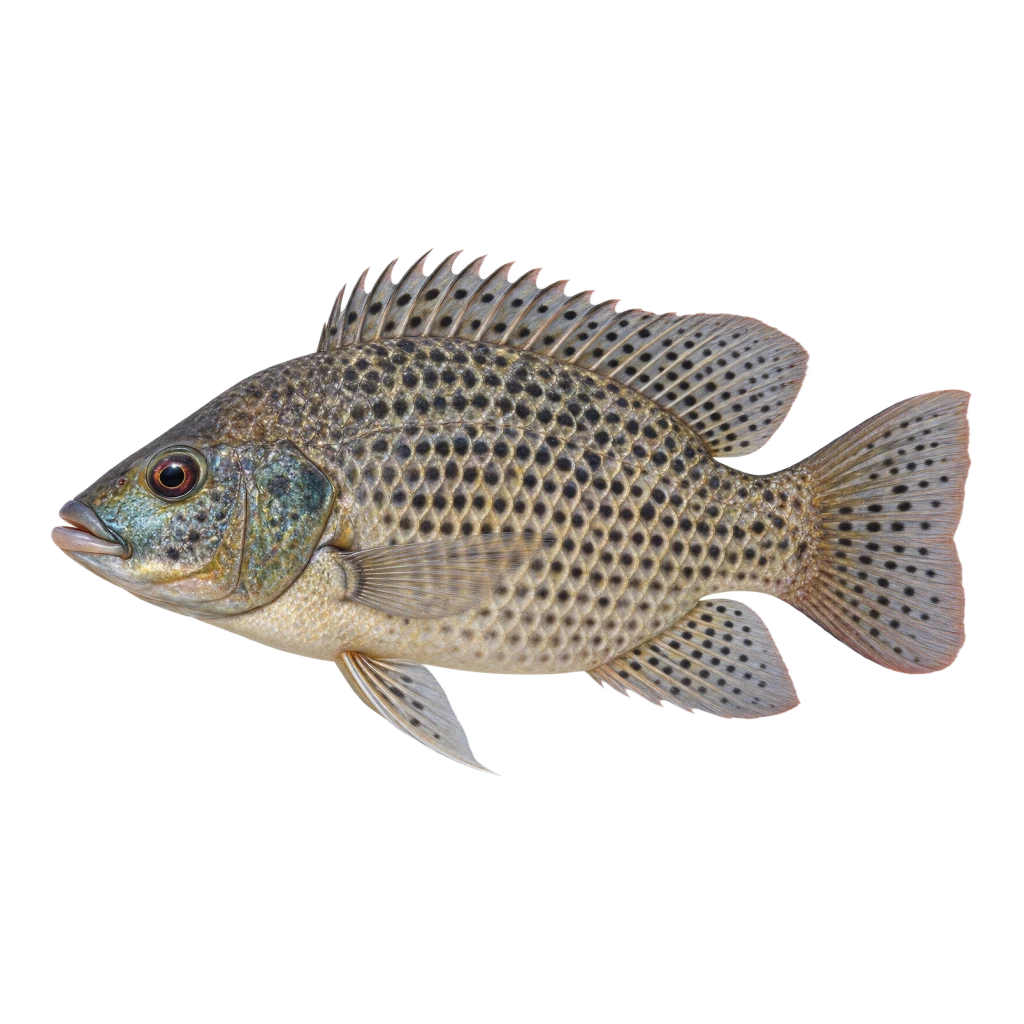
The Spotted Tilapia (Pelmatolapia mariae) is a freshwater fish that can be identified by its distinctive features. It has a laterally compressed body, typically measuring between 8 to 12 inches in length. The coloration is generally olive green to brown, with dark spots scattered across its body. The dorsal fin is long and continuous, with a slight notch towards the rear. The mouth is slightly protruding, adapted for grazing on algae and plant material.
This species is often confused with the Mozambique Tilapia (Oreochromis mossambicus). The key detail that separates them is the number of dorsal spines; Spotted Tilapia has 14-16 spines, while Mozambique Tilapia has 12-14.
Where it lives
In the United States, Spotted Tilapia is primarily found in the southern regions, particularly in Florida and parts of Texas. They inhabit freshwater lakes, ponds, and slow-moving rivers. These fish prefer warm waters, typically found at depths of 3 to 20 feet. They often seek cover near submerged vegetation, rocks, or structures.
Seasonal changes affect their habitat. In warmer months, they may move into shallower waters to spawn, while in cooler months, they tend to retreat to deeper areas for thermal refuge.
When it bites
Spotted Tilapia are most active from late spring through early fall, particularly from May to September. They thrive in water temperatures between 75°F and 85°F. Early morning and late afternoon are the best times to catch them, as they feed more actively during these periods.
Weather conditions can influence their feeding behavior. A passing front may trigger increased activity, while strong winds can make them less likely to bite. The presence of a full moon can also enhance their feeding patterns, leading to more successful catches.
How to catch it
To catch Spotted Tilapia, anglers can use a variety of rigs. A simple slip bobber rig with a small hook (size 6 to 10) is effective. Baits such as corn, dough balls, or earthworms work well. For lures, small jigs in bright colors (yellow or chartreuse) can attract their attention.
Cast near vegetation or structures where they are likely to hide. Retrieve slowly, allowing the bait to settle and mimic natural food sources. Pay attention to any bites, as they may nibble before taking the bait fully.
Size, age and the table
Anglers typically encounter Spotted Tilapia in the 8 to 12-inch range. A trophy specimen is generally considered to be over 14 inches. Growth rates can vary, but they often reach maturity within 1 to 2 years. Their lifespan can extend up to 5 years in the wild.
Spotted Tilapia are known for their good eating quality. They have a mild flavor and firm texture, making them a popular choice for cooking. When handling them, use wet hands to prevent damage to their skin and scales. If releasing, do so gently to ensure their survival.