How to recognise it
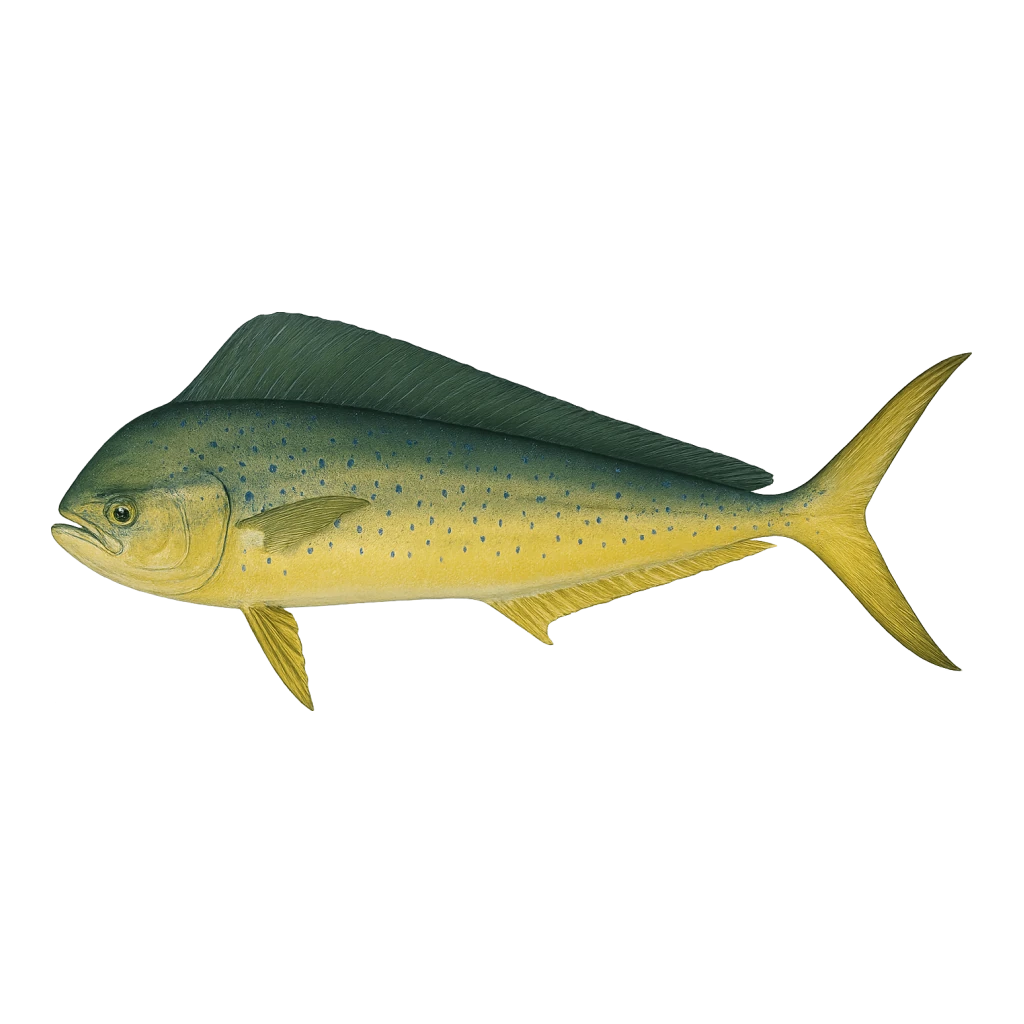
Mahi Mahi, or Coryphaena hippurus, is a vibrant fish known for its striking colors. Adults typically display a brilliant greenish-blue on the back, transitioning to a bright yellow on the sides. The fish has a long, streamlined body with a distinctive blunt head. The dorsal fin is long and extends nearly the length of the body, while the anal fin is also elongated. The mouth is large, filled with sharp teeth.
This species is often confused with the smaller fish known as the Dorado, which is another name for Mahi Mahi. The key detail that separates them is the shape of the head; Mahi Mahi has a more pronounced, blunt forehead compared to the more tapered head of the Dorado.
Where it lives
Mahi Mahi are primarily found in warm ocean waters. In the United States, they are commonly located in the Atlantic Ocean, particularly off the southeastern coast, including Florida and the Gulf of Mexico. They also inhabit the Pacific Ocean, especially around Hawaii and California.
This species prefers surface waters and is often found in depths ranging from 30 to 300 feet. Mahi Mahi are known to associate with floating debris, such as sargassum weed, which provides cover and attracts prey. Their habitat can change with the seasons; during warmer months, they may move closer to shore, while in cooler months, they tend to venture into deeper waters.
When it bites
Mahi Mahi are most active from late spring through early fall. The ideal water temperature for catching them is between 72°F and 82°F. They tend to bite more aggressively during the early morning and late afternoon, coinciding with the feeding patterns of their prey.
Weather conditions can influence their behavior. A passing front can trigger a feeding frenzy, while strong winds may scatter the fish. A full moon can also enhance their activity, making them more likely to bite during the night.
How to catch it
To catch Mahi Mahi, anglers often use trolling rigs with lures or live bait. Popular lures include brightly colored trolling skirts in sizes ranging from 6 to 12 inches. Colors like blue, green, and yellow are particularly effective. When using live bait, small fish such as ballyhoo or pilchards work well.
For line, a test strength of 20 to 50 pounds is recommended, with a strong circle hook size ranging from 5/0 to 8/0. Cast near floating debris or weed lines, and work the lure by maintaining a steady speed while occasionally varying the retrieve to mimic injured prey.
Size, age and the table
Anglers typically encounter Mahi Mahi ranging from 20 to 30 inches in length, weighing between 5 to 15 pounds. A trophy Mahi Mahi is generally considered to be over 40 inches long and weighing more than 30 pounds.
Mahi Mahi grow rapidly, reaching maturity in about 4 to 5 years. Their lifespan is relatively short, averaging 5 years in the wild. They are highly regarded for their eating quality, with firm, white flesh that is mild and flaky. When handling Mahi Mahi, it is important to keep them cool and handle them gently to ensure a successful release if not kept for consumption.