How to recognise it
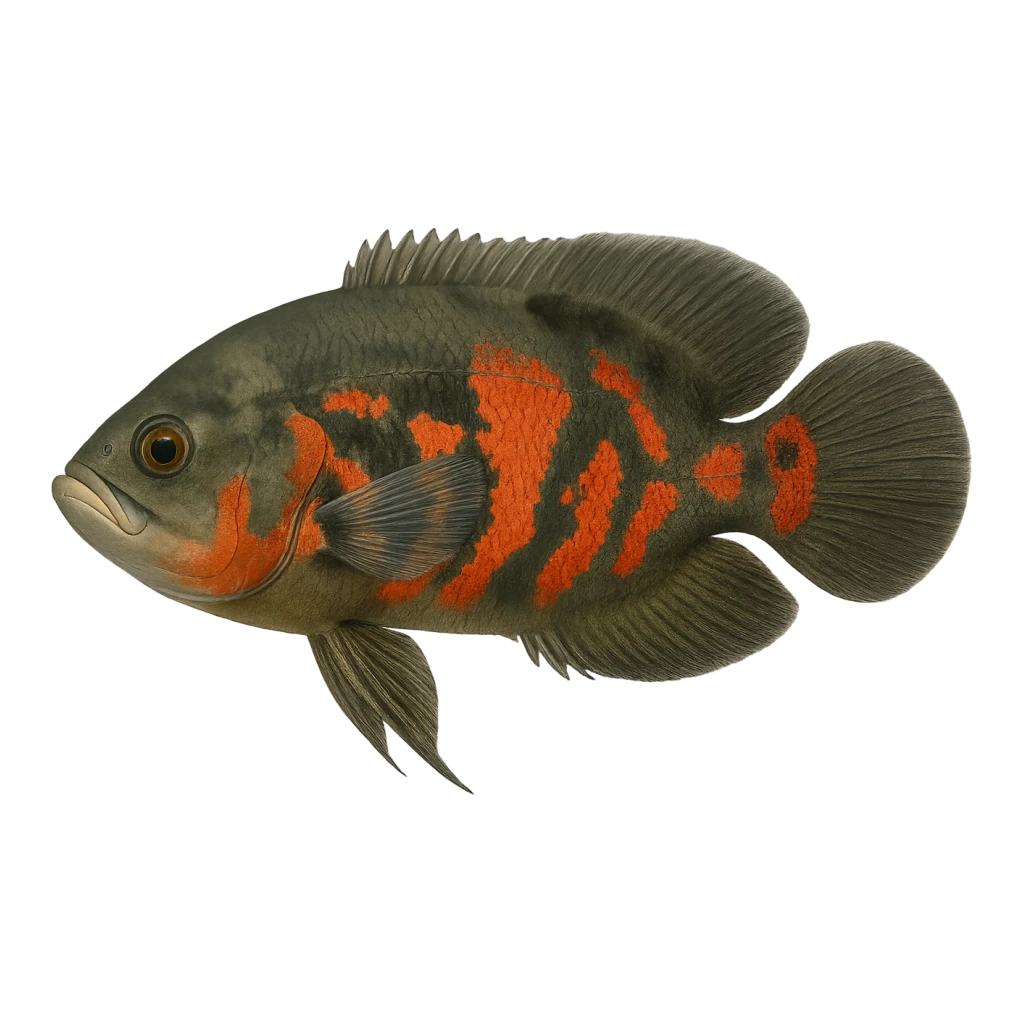
The Oscar (Astronotus ocellatus) is a distinct freshwater fish known for its vibrant colors and unique patterns. Adults typically display a base color that ranges from dark green to black, with bright orange or yellow spots and bands. The fins are elongated and can be quite colorful, often featuring a mix of blue, orange, and yellow hues. Oscars have a large mouth with prominent teeth, which they use to capture prey.
They are often confused with the Jaguar Cichlid (Parachromis managuensis). The key detail that separates them is the presence of a distinct dark spot on the body of the Oscar, which is absent in the Jaguar Cichlid.
Where it lives
In the United States, Oscars are primarily found in Florida and parts of the southern states. They inhabit freshwater environments such as lakes, ponds, and slow-moving rivers. Oscars prefer warm waters and are typically found in depths ranging from 1 to 10 feet. They seek cover in structures like submerged logs, rocks, and dense vegetation. During warmer months, they may move into shallower areas, while in cooler months, they tend to retreat to deeper waters for warmth.
When it bites
Oscars are most active and likely to bite from late spring through early fall. The ideal water temperature for catching Oscars is between 75°F and 85°F. They are often more aggressive during the early morning and late afternoon. Weather changes, such as a passing front or increased wind, can trigger feeding activity. A full moon may also enhance their feeding behavior, making them more likely to bite during this time.
How to catch it
To catch Oscars, use a medium to heavy spinning or baitcasting rig. Recommended line sizes are 10 to 20-pound test, with hooks ranging from size 1/0 to 3/0. Effective baits include live worms, crickets, and small minnows. Lures such as soft plastic worms, jigs, and crankbaits in bright colors (orange, yellow, or chartreuse) can also be effective. Cast near structures where Oscars are likely to hide, and retrieve slowly to mimic natural prey movement. Be patient, as Oscars may take time to strike.
Size, age and the table
Typically, anglers encounter Oscars that range from 8 to 12 inches in length. A trophy Oscar is generally considered to be over 14 inches. They grow rapidly, reaching maturity in about 1 to 2 years. The average lifespan of an Oscar in captivity can exceed 10 years, while in the wild, it may be shorter due to predation and environmental factors. Oscars are known for their good eating quality, with firm, white flesh. When handling Oscars for release, be gentle to avoid damaging their delicate skin and fins.