How to recognise it
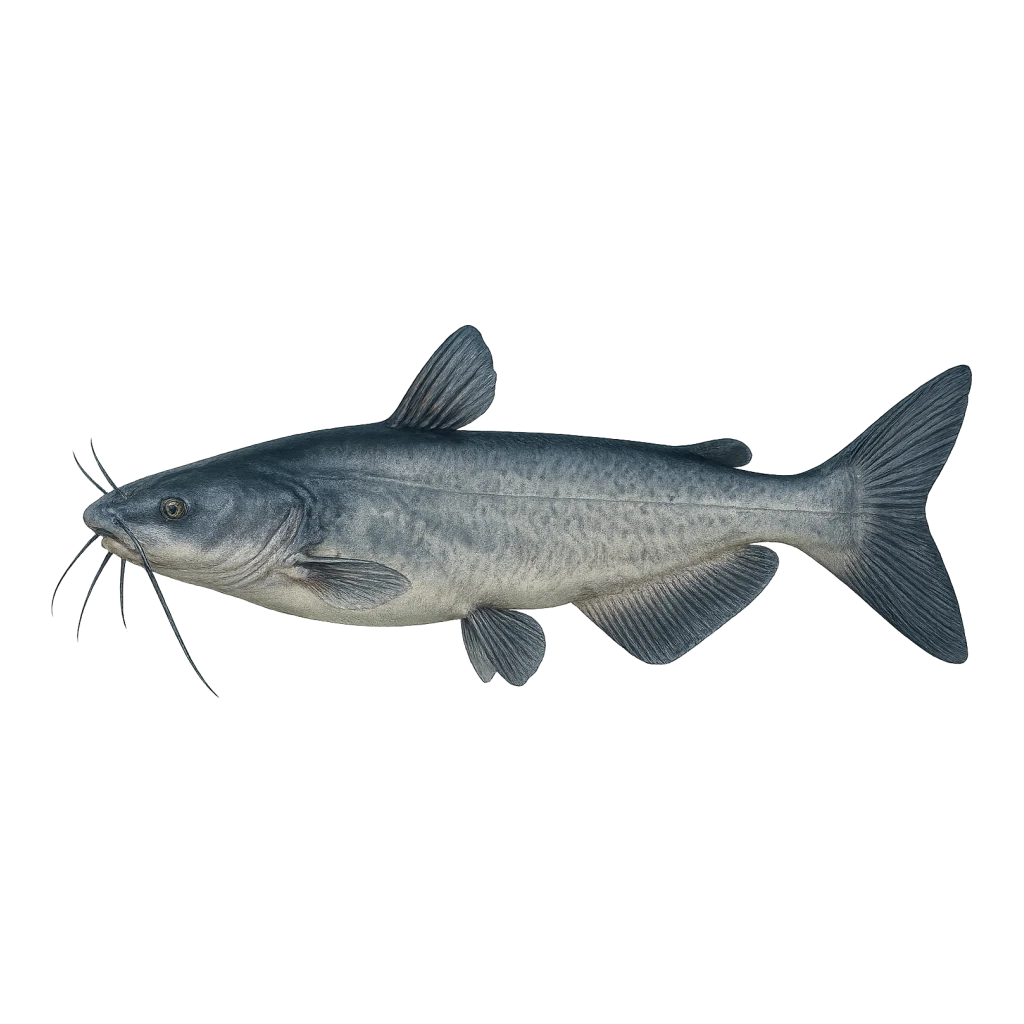
The Blue Catfish (Ictalurus furcatus) is a large freshwater fish known for its distinctive features. It has a long, streamlined body that can reach lengths of up to 58 inches and weights over 100 pounds. The coloration is typically a bluish-gray with a lighter underside. The fish has a deeply forked tail and long, slender pectoral fins. Its mouth is wide and features a series of small, sharp teeth.
This species is often confused with the Channel Catfish (Ictalurus punctatus). The key detail that separates them is the shape of the tail; the Blue Catfish has a more pronounced fork in its tail compared to the Channel Catfish, which has a less forked tail.
Where it lives
The Blue Catfish is found in various regions across the United States. It primarily inhabits the Mississippi River basin, extending from the Great Lakes down to the Gulf of Mexico. They thrive in large rivers, reservoirs, and lakes, preferring deep waters that range from 10 to 50 feet in depth.
During the warmer months, Blue Catfish tend to move to shallower waters, especially near structures like submerged logs, rocks, and ledges. In colder months, they may retreat to deeper waters to avoid the cold. Seasonal changes can significantly affect their location and behavior.
When it bites
Blue Catfish are most active from late spring to early fall. The ideal water temperature for fishing them is between 70 and 85 degrees F. They tend to bite best during the early morning and late evening hours, although they can be caught throughout the day.
Weather conditions also play a role in their feeding habits. A passing front can trigger increased activity, while windy days may lead to more aggressive feeding. Full moons can enhance their feeding patterns, making them more likely to bite during the night.
How to catch it
When targeting Blue Catfish, anglers often use bottom rigs or drift rigs. A common setup includes a 5/0 to 8/0 circle hook paired with a 30 to 50-pound test line. Baits such as cut shad, live baitfish, or chicken liver are effective, with cut shad being particularly popular. Use baits ranging from 4 to 8 inches in size.
Cast near structures or deep holes in the water. Work the bait by allowing it to sit on the bottom or slowly drifting it with the current. Be patient, as Blue Catfish may take time to bite.
Size, age and the table
Anglers typically encounter Blue Catfish ranging from 10 to 30 pounds. A trophy Blue Catfish is generally considered to be over 50 pounds. Growth rates can vary, but they can grow up to 2 inches per year in favorable conditions, reaching maturity at around 3 to 5 years.
The lifespan of Blue Catfish can exceed 20 years in the wild. They are known for their good eating quality, with firm, white flesh. When handling Blue Catfish, use wet hands or gloves to minimize damage to their skin and scales. If releasing, do so gently to ensure their survival.