How to recognise it
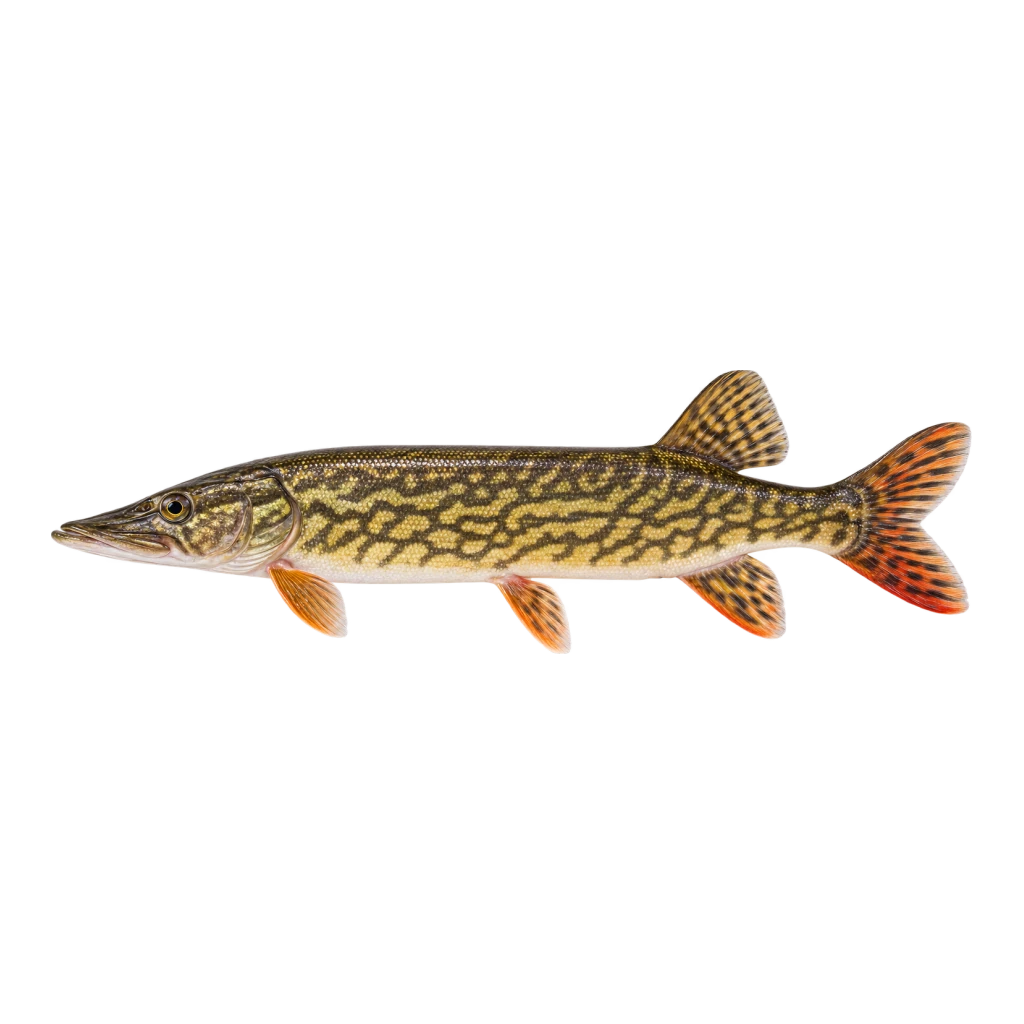
The Redfin Pickerel (Esox americanus) is a slender, elongated fish with a pointed snout. Its body is typically olive-green to light brown, adorned with dark vertical bars. The most distinctive feature is its bright red or orange fins, especially the pelvic and anal fins. The mouth is filled with sharp teeth and extends back to the eye. This species is often confused with the Northern Pike (Esox lucius). The key detail that separates them is the Redfin Pickerel's smaller size and the presence of red or orange in its fins.
Where it lives
The Redfin Pickerel is primarily found in the eastern United States. Its range extends from the Great Lakes region down to the Gulf Coast, including parts of the Atlantic Coast. This species prefers slow-moving waters such as ponds, lakes, and rivers with abundant vegetation. They are typically found in depths of 1 to 10 feet. During spring and summer, they inhabit shallow areas with dense cover like weeds and fallen trees. In fall and winter, they may move to slightly deeper waters but still remain near cover.
When it bites
Redfin Pickerel are most active from late spring to early fall. They bite best when water temperatures range from 60 to 75 degrees F. Early morning and late afternoon are prime times for fishing. Weather changes, such as a passing front, can trigger increased activity. Windy days can also enhance feeding, while a full moon may lead to more aggressive behavior as they hunt for prey.
How to catch it
To catch Redfin Pickerel, use light tackle with a 6 to 10-pound test line. A medium-action rod is ideal. Common rigs include a simple jig head with a soft plastic worm or a spinnerbait. Use lures in sizes ranging from 2 to 4 inches. Colors like chartreuse, fire tiger, and natural shad patterns work well. Cast near weed edges, submerged structures, or around fallen trees. Retrieve lures with a steady, moderate speed, allowing for occasional pauses to entice strikes.
Size, age and the table
Redfin Pickerel typically range from 12 to 24 inches in length, with larger specimens considered trophies at 24 inches or more. They grow quickly, reaching maturity in about 2 to 3 years. The average lifespan is around 5 to 6 years. The flesh is white and mild, making it a decent eating fish. Handle them carefully to avoid damage, and practice catch and release to maintain healthy populations.