How to recognise it
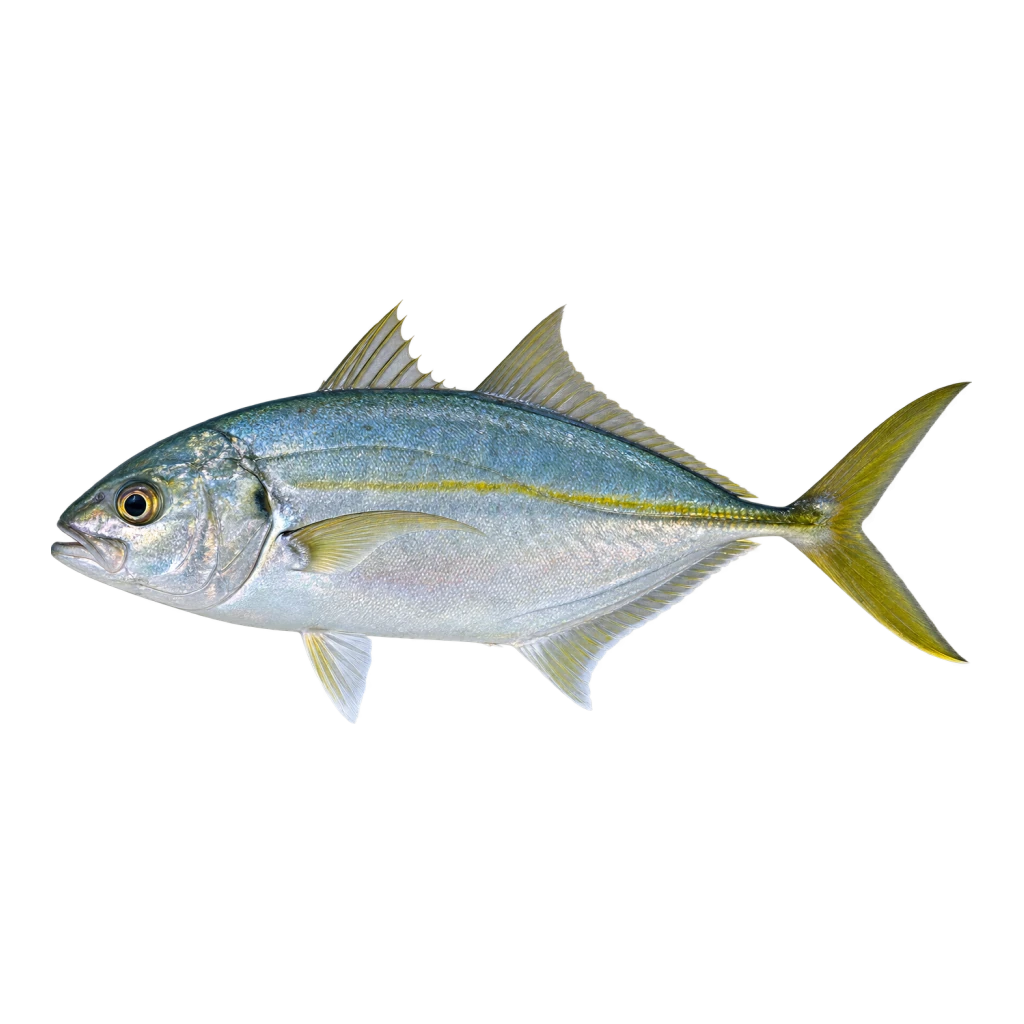
The Blue Runner (Caranx crysos) is a streamlined fish with a distinctive shape. It has a bluish-green back that fades to silver on the sides. The belly is white. One of its most notable features is the yellow stripe that runs along its side. The dorsal fin is long and pointed, while the anal fin is similarly shaped. The mouth is large with sharp teeth, adapted for catching prey.
The Blue Runner is often confused with the Jack Crevalle (Caranx hippos). The key detail that separates them is the Blue Runner's yellow stripe, which is absent in the Jack Crevalle.
Where it lives
The Blue Runner is found along the Atlantic coast of the United States, from New Jersey to Florida, and throughout the Gulf of Mexico. They prefer warm, saltwater environments and are commonly found near reefs, jetties, and piers. They typically inhabit depths ranging from 10 to 100 feet. In warmer months, they may move closer to shore, while in cooler months, they tend to go deeper.
When it bites
The Blue Runner is most active from late spring to early fall, particularly from May to September. They prefer water temperatures between 70°F and 85°F. The best times to fish for them are during early morning and late afternoon. A passing front or a change in wind can trigger feeding activity, while a full moon may lead to increased movement and feeding behavior.
How to catch it
To catch Blue Runners, use a medium to heavy spinning rod with a 20 to 30-pound test line. A 1/0 to 3/0 hook is suitable. Popular rigs include a simple bottom rig or a free-lined live bait setup. Live baits such as small sardines or pinfish work well. Lures like jigs in bright colors (chartreuse or pink) can also be effective. Cast near structures like reefs or jetties and retrieve quickly to mimic the movement of prey.
Size, age and the table
Anglers typically encounter Blue Runners that are 12 to 24 inches long, with weights ranging from 1 to 5 pounds. A trophy Blue Runner is considered to be over 30 inches. They grow quickly, reaching maturity in about 2 to 3 years and can live up to 5 years. The flesh is firm and has a mild flavor, making it a good choice for eating. When handling, use wet hands to minimize slime loss, and if releasing, do so gently to ensure survival.