How to recognise it
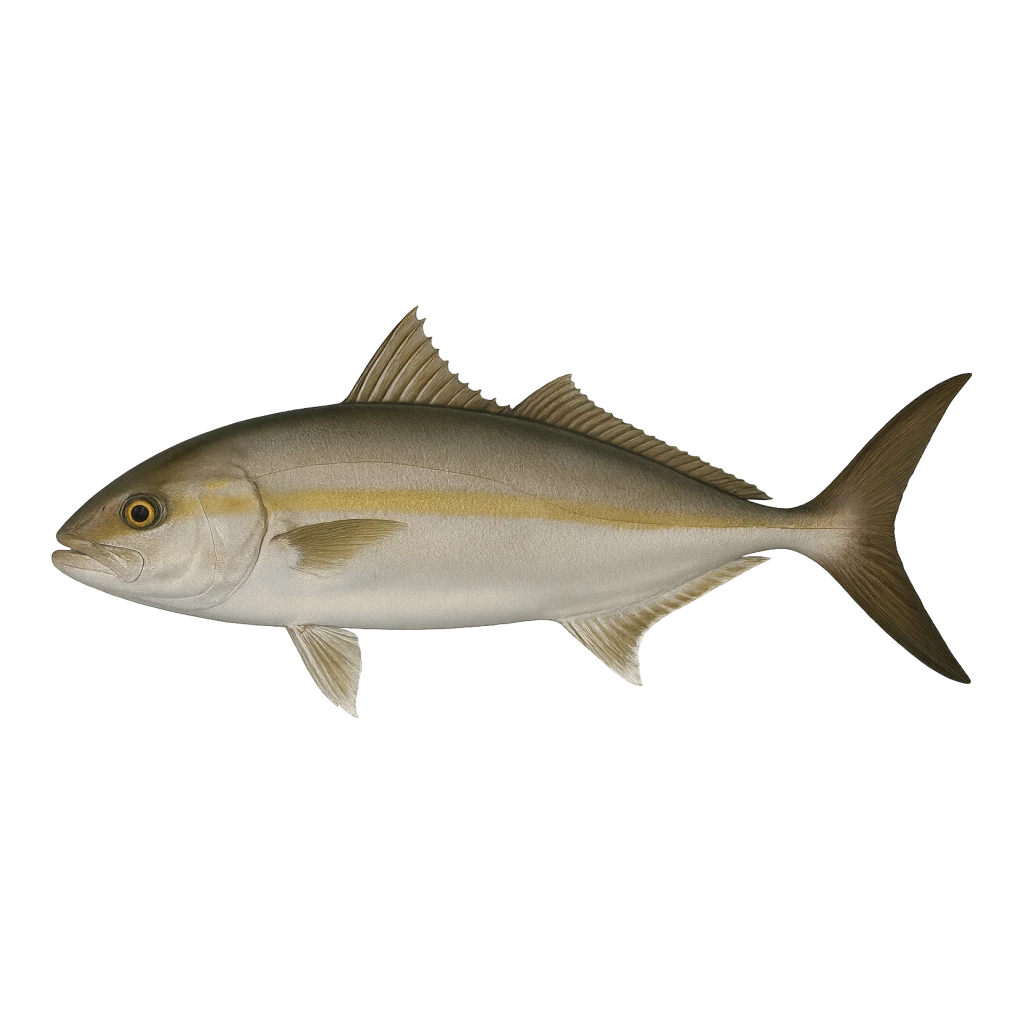
The Greater Amberjack (Seriola dumerili) is a robust fish with a streamlined body. It can be identified by its dark blue to greenish back, silver sides, and a yellow stripe running along its lateral line. The dorsal fin is long and pointed, while the anal fin is shorter and rounded. Its mouth is large with sharp teeth. The species it is most often confused with is the Lesser Amberjack (Seriola fasciata). The key detail that separates them is the number of dorsal fin spines; Greater Amberjack has 8-10 spines, while Lesser Amberjack has 7-9.
Where it lives
Greater Amberjack are found in the western Atlantic Ocean, from Massachusetts to Florida and throughout the Gulf of Mexico. They prefer warm, saltwater environments. Their depth range typically spans from 60 to 240 feet. They are often found around reefs, wrecks, and floating structures. In warmer months, they may move into shallower waters, while in cooler months, they tend to inhabit deeper areas.
When it bites
Greater Amberjack are most active from late spring through early fall, particularly from May to October. They prefer water temperatures between 70°F and 85°F. The best times to fish for them are during early morning and late afternoon. A passing front can trigger increased feeding activity, while strong winds may make them less active. A full moon can also enhance their feeding behavior, making them more likely to bite.
How to catch it
To catch Greater Amberjack, anglers often use vertical jigs, live bait, or cut bait. Recommended jig sizes range from 6 to 12 ounces, with colors like blue, silver, or chartreuse being effective. Live baits such as pinfish or cigar minnows work well, typically in the 4-6 inch range. Use a strong line, preferably 50-80 lb test, with a sturdy hook size of 5/0 to 8/0. Cast near structure or drop straight down near the bottom. Work the jig with a rapid lift-and-drop motion to attract their attention.
Size, age and the table
Anglers typically encounter Greater Amberjack in the 20 to 50-pound range. A trophy specimen is generally considered to be over 60 pounds. They grow rapidly, reaching maturity at about 3-4 years, and can live up to 17 years. The flesh of Greater Amberjack is firm and has a mild flavor, making it a popular choice for eating. When handling, be cautious of their sharp teeth. For release, use proper techniques to minimize stress and increase survival rates.