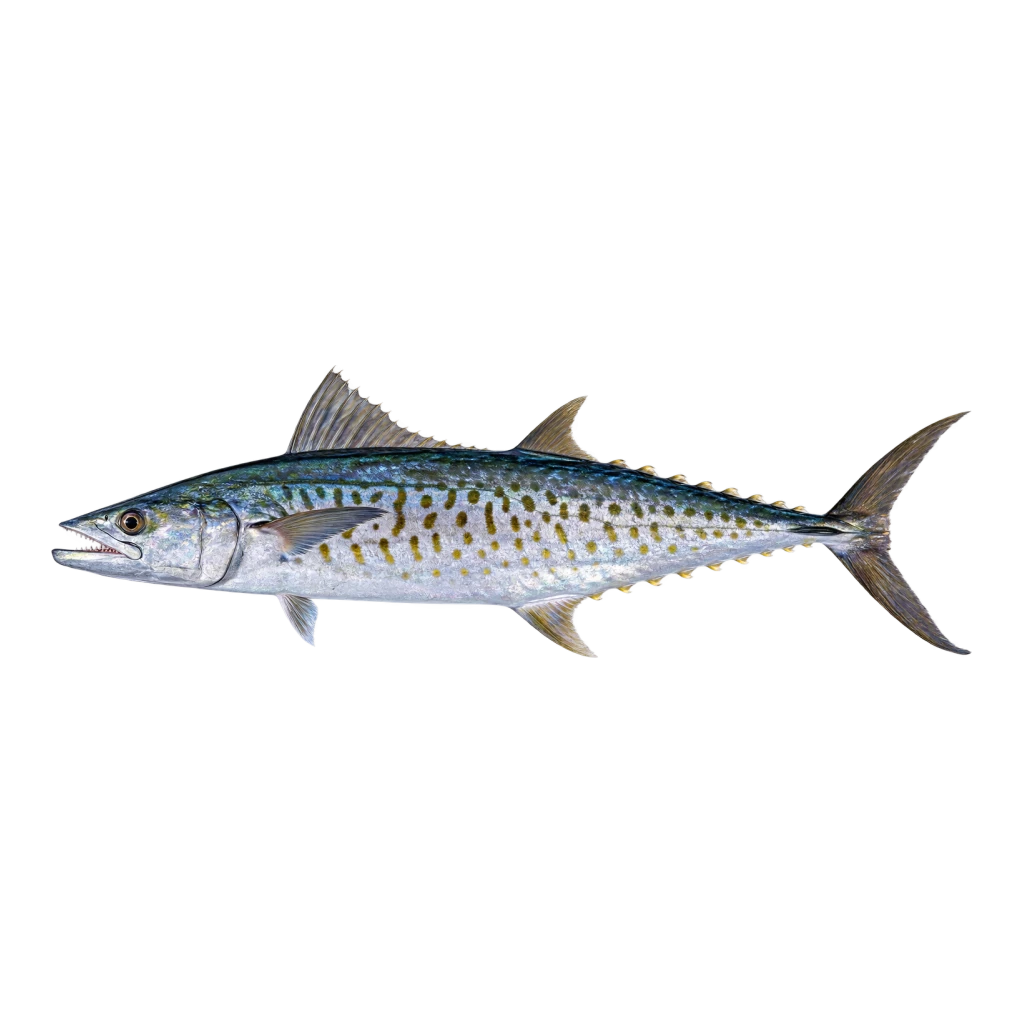
How to recognise it
The Cero, or Scomberomorus regalis, is a sleek, streamlined fish. It has a long, pointed snout and a mouth filled with sharp teeth. The body is a bluish-green on the top, fading to a silver-white on the sides and belly. Its most distinguishing feature is the dark, wavy stripes along its back. This species is often confused with the Spanish mackerel (Scomberomorus maculatus). The key detail that separates them is the absence of spots on the Cero's body, while the Spanish mackerel has distinct spots.
Where it lives
The Cero is primarily found in the western Atlantic Ocean. In the United States, its range extends from North Carolina to Florida and into the Gulf of Mexico. It prefers warm, saltwater environments, typically inhabiting waters over reefs, wrecks, and nearshore areas. The depth range for Cero is generally between 20 to 100 feet. During warmer months, they may move closer to shore, while in cooler months, they tend to migrate to deeper waters.
When it bites
Cero are most active from late spring through early fall. They prefer water temperatures between 70°F and 85°F. The best time of day to catch them is during early morning and late afternoon. A passing front can trigger feeding activity, while strong winds may make them less active. A full moon can also enhance their feeding, as it provides more light for hunting.
How to catch it
To catch Cero, anglers commonly use trolling rigs with lures such as diving plugs or spoons in sizes ranging from 3 to 6 inches. Colors like silver, blue, and green are effective. Live bait, such as small mackerel or sardines, can also be used. A typical line size is 20 to 30-pound test with a 2/0 to 4/0 hook. Cast near structures like reefs or wrecks, and work the lures with a steady retrieve, varying the speed to entice strikes.
Size, age and the table
Anglers typically encounter Cero ranging from 24 to 36 inches in length and weighing between 5 to 15 pounds. A trophy Cero is considered to be over 36 inches. They grow rapidly, reaching sexual maturity by age 2, and can live up to 5 years. The flesh of the Cero is firm and has a mild flavor, making it a popular choice for grilling or smoking. Handle them carefully to ensure a successful release, as they are sensitive to stress.