How to recognise it
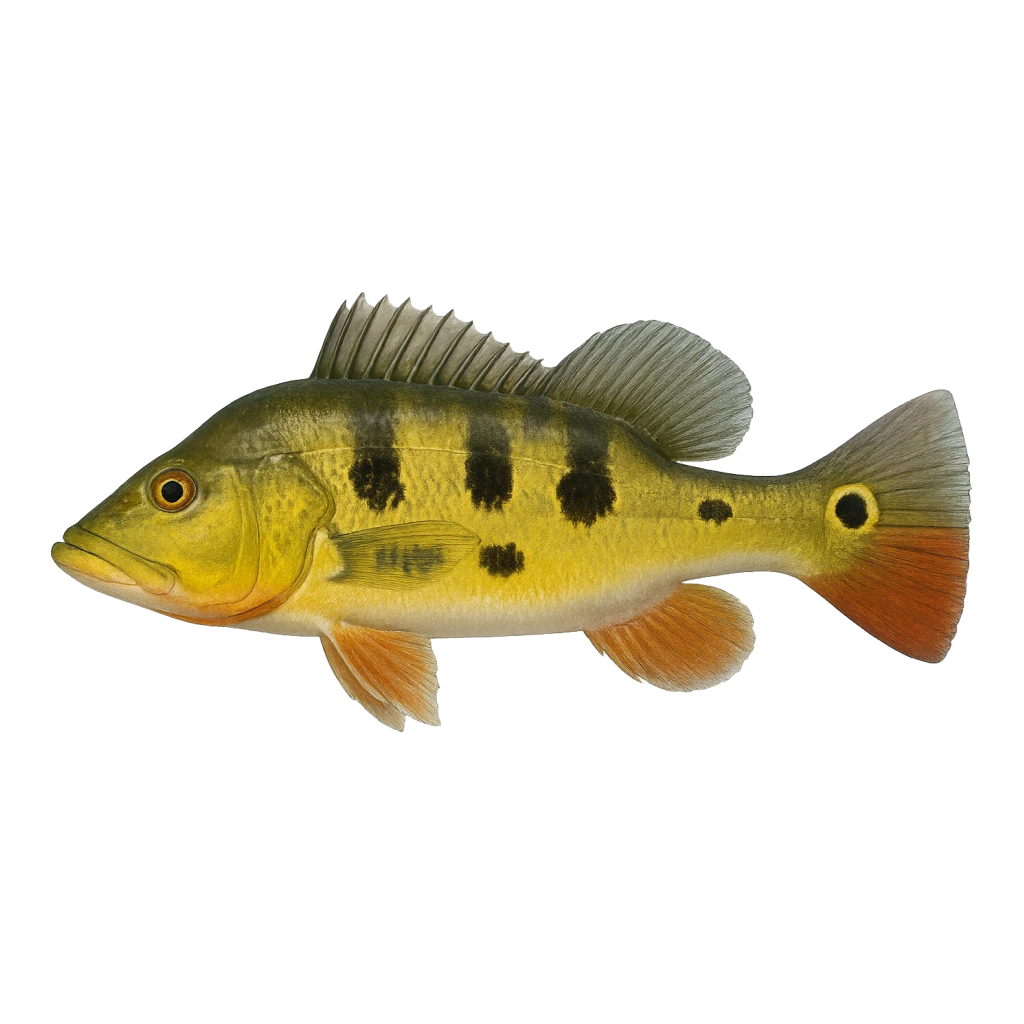
The Butterfly Peacock, or Cichla ocellaris, is a striking freshwater fish. It has a vibrant coloration, featuring a greenish-yellow body with dark vertical bars. The most distinctive field marks are its large, eye-like spots on the tail fin and the blue accents on its scales. The dorsal fin is long and spiny, while the anal fin is rounded. The mouth is large and extends past the eyes, allowing it to capture prey effectively.
This species is often confused with the Cichla monoculus, or the Monocle Bassy. The key detail that separates them is the presence of the prominent eye spot on the tail fin of the Butterfly Peacock, which is absent in the Monocle Bassy.
Where it lives
The Butterfly Peacock is primarily found in the southeastern United States, particularly in Florida. It inhabits freshwater lakes, rivers, and canals. This species prefers warm, shallow waters with plenty of vegetation and cover, such as submerged logs and lily pads. Depths of 3 to 15 feet are common, but they can be found in deeper waters during the heat of summer.
Seasonal changes affect their habitat preferences. In spring and summer, they move into shallower areas for spawning. In fall and winter, they may retreat to deeper waters as temperatures drop.
When it bites
The Butterfly Peacock is most active from late spring through early fall. The ideal water temperature for fishing is between 75°F and 85°F. They tend to bite best during early morning and late afternoon, coinciding with lower light conditions.
Weather changes can influence their feeding behavior. A passing front may trigger increased activity, while strong winds can make them less aggressive. A full moon often enhances their feeding, as they become more active during the night.
How to catch it
To catch Butterfly Peacocks, use spinning or baitcasting gear with a line strength of 15 to 30 pounds. A 3/0 to 5/0 hook size is recommended. Effective rigs include Texas rigs with soft plastic baits, or topwater lures like frogs and poppers. Bright colors such as chartreuse, white, and orange work well.
Cast near vegetation, submerged structures, or along the edges of current. Retrieve lures with a steady, erratic motion to mimic injured prey. For live bait, use small shiners or tilapia, and present them near cover.
Size, age and the table
Anglers typically encounter Butterfly Peacocks ranging from 2 to 5 pounds, with lengths of 12 to 24 inches. A trophy specimen is generally considered to be over 8 pounds. Growth rates vary, but they can reach maturity in about 2 to 3 years, with a lifespan of up to 10 years.
Butterfly Peacocks are known for their excellent eating quality, with firm, white flesh. When handling, use wet hands or a wet cloth to minimize slime loss. For catch and release, use barbless hooks and minimize air exposure to ensure their survival after release.