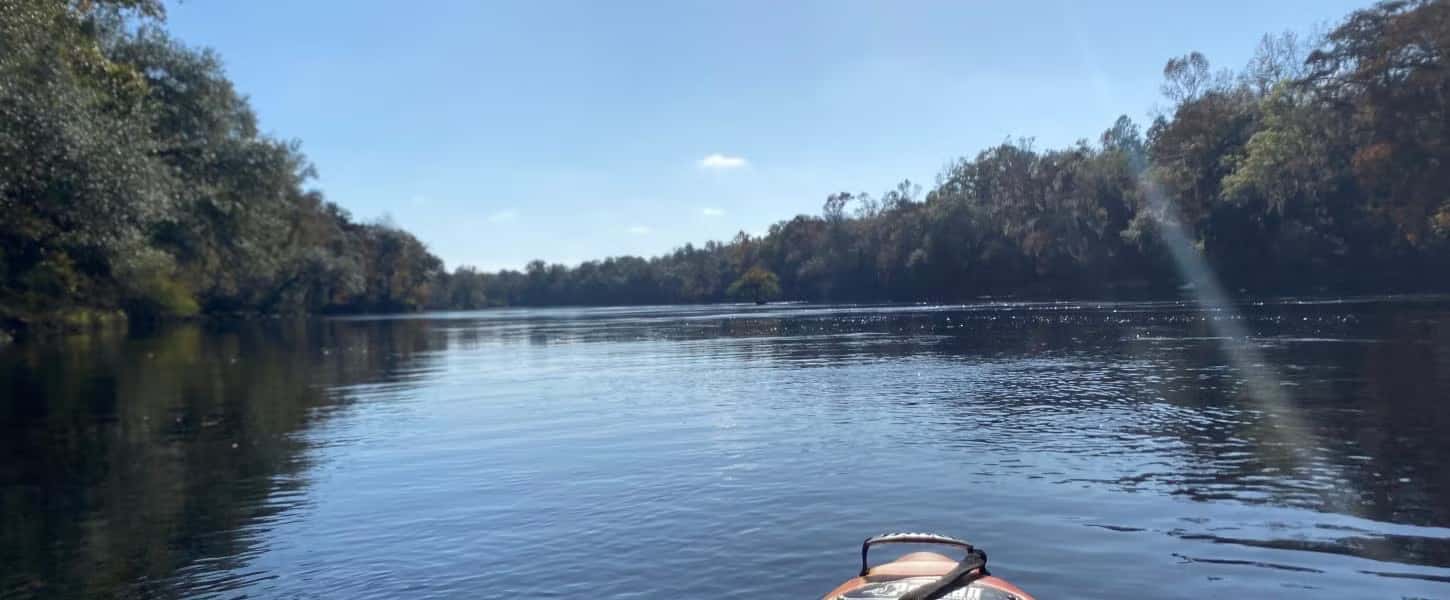
Open year-round, no fee. 10 primitive sites, 8 reservable — 5 are screened sleeping platforms with power and water, 5 are basic tent sites. The riverbank is about 210 feet from camp. There's no road to the camp itself — you paddle or walk in; the nearest place you can drive to is the Woods Ferry Tract canoe launch, 0.9 miles upstream. No fish cleaning station is documented. Reserve free at reserve.floridastateparks.org (park #166), or take your chances first-come.
This is the first stop on the Suwannee River Wilderness Trail, about 10 river miles downstream of White Springs. If you're picturing a drive-up campsite with a boat trailer, this isn't it — read the next section before you plan around this one.
The Seven Things to Know First
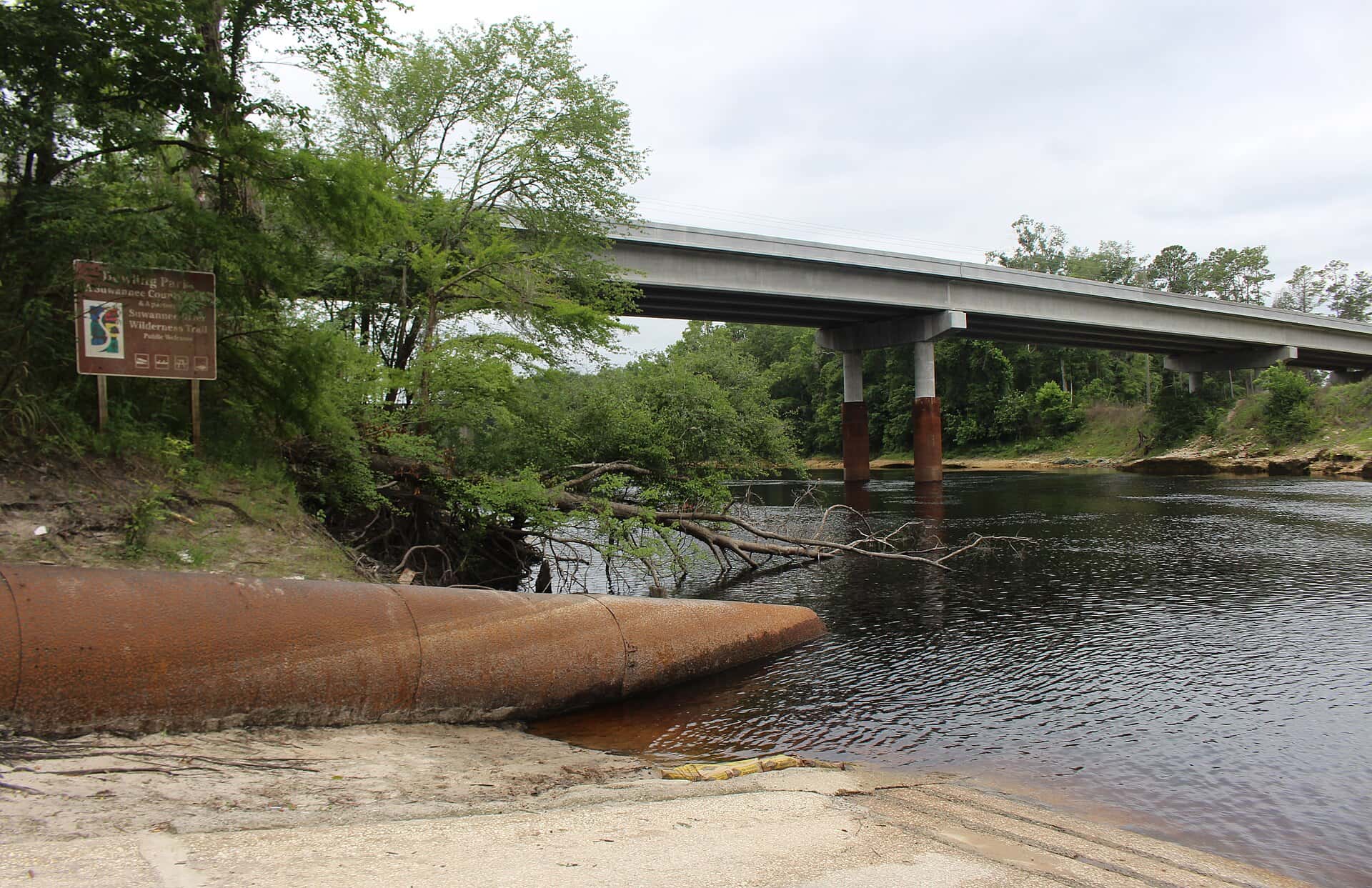
1. Getting there isn't driving. There's no vehicle access to Woods Ferry itself, and no overnight parking at the camp — Florida State Parks is explicit about this. You drive to the Woods Ferry Tract canoe launch (dirt-road access, room for only a few vehicles), then paddle about 0.9 miles to reach the camp. From White Springs, the drive to that launch is short: southwest on CR 136, right on CR 136A, about 3 miles to 57th Drive, then right into the tract. If you're towing a boat trailer, this location isn't for you — plan on Stephen Foster Folk Culture Center State Park's campground instead, a few miles away by road.
2. Fish cleaning station: not documented. Park materials list restrooms, hot showers, grills and fire rings, but nothing about a cleaning station. Plan to handle your catch elsewhere or bring your own setup.
3. Boat trailer at the site. Not applicable — no vehicles of any kind are permitted at the camp.
4. Boat storage. No marina or overnight slip. You tie your canoe or kayak up along the bank at camp.
5. Ice, bait, boat fuel. Nothing on site. Stock up in White Springs or Lake City before you paddle in. Local outfitters, including canoe/kayak rental shops in White Springs, can shuttle gear and in some cases deliver food and coolers directly to the river camps — worth calling ahead if you're packing light.
6. Distance to water. About 210 feet from the riverbank to camp. The nearest drivable put-in, Woods Ferry Tract canoe launch, is 0.9 miles upstream by paddle.
7. Best months. Same pattern as the rest of this stretch of river: October through April for comfortable paddling and camping, May through September for the strongest bass and catfish bite elsewhere on the river. Check river levels before you go — low water on the upper Suwannee can leave sections too shallow to paddle, and high water brings current and downed-tree hazards.
What Kind of Camping This Is
This is a primitive, paddle-in backcountry river camp — not a drive-up, RV, or car-camping site. It's one of five river camps spaced roughly 10 miles apart along the 171-mile Suwannee River Wilderness Trail, built for paddlers doing single-night stops or multi-day trips. There's no vehicle access at all, at any time, for any reason.
Sites, Hookups and Facilities
Five of the 10 sites are screened sleeping platforms: each sleeps up to 8, has a ceiling fan, an electrical outlet, hooks for at least three hammocks, a small table, and an outdoor water spigot. The other 5 are more basic tent sites without power or water hookup. Every site has a picnic table; 6 of the 10 have a grill and fire ring. A shared bathhouse with hot showers and restrooms and a picnic pavilion serve the whole camp.
Site Selection
If you want power and a bug-screened platform to sleep on, ask for one of the 5 platform sites when you reserve — they're the ones with the electrical hookup and water spigot. The 5 plain tent sites are more basic but still come with a picnic table and, in most cases, a grill and fire ring.
Location and Arrival
The camp itself has no street address — Florida State Parks lists it only by GPS coordinates (N 30° 21.22', W 82° 51.37'), because you can't drive there. The mailing address tied to this park in some listings, 3631 201st Path in Live Oak, is an administrative address for the river camp system, not a place to point your GPS if you're trying to find the campsite.
To reach the put-in: from White Springs, take CR 136 southwest, turn right on CR 136A, go about 3 miles to 57th Drive, and turn right into the Woods Ferry Tract. From Live Oak, take US 129 north, turn right on CR 136A, go 4 miles east, turn left on 57th Drive, and go 1 mile north to the entrance. The last stretch is dirt road with limited parking. From there, wooden steps lead down to a sandbar launch, and camp is a short paddle upstream.
Water Access
The Suwannee River sits right at camp — about 210 feet from the sites to the bank. The nearest place you can actually drive to and launch a canoe or kayak is the Woods Ferry Tract launch, 0.9 miles away by water. Some paddlers instead put in 10 river miles upstream at Stephen Foster Folk Culture Center State Park and make Woods Ferry their first overnight stop on a longer trip.
Check river conditions before you go. Florida State Parks recommends checking for flooding before any visit, and leaving a float plan with someone on land — cell service reaches the camp but is limited.
Reservations
Reserve free through the Florida State Parks system (park #166) or by calling 800-326-3521. Eight of the 10 sites can be booked ahead; the rest go first-come, first-served to paddlers who show up without a reservation. Advance reservations are encouraged, especially in the cooler months when river camping is most popular. The camp underwent access-platform and boardwalk repairs earlier in 2026; it's shown as open with no restrictions as of this writing, but call 386-294-3667 if you want to confirm before a multi-day trip.
Fees
None. No nightly rate, no reservation fee, no utility fee.
Rules
No vehicles or overnight parking, at any site, at any time. Review the official River Camp Rules before you go — the full list covers fires, pets, and group size and isn't reproduced here. Pack out what you pack in.
Rules and conditions can change, so paddlers should verify current status with the park or managing agency before traveling.
Nearby Activities
Paddling is the point here — this camp exists to support trips along the Suwannee River Wilderness Trail. Big Shoals, Florida's only Class III whitewater, sits upriver near White Springs if you want a side trip before or after your stay. The Florida Trail runs along the river bluffs nearby for hiking.
Nearby Services
White Springs is the closest hub, with a handful of shops, restaurants and canoe/kayak outfitters that can arrange shuttles and gear drop-offs. For groceries, gas or a wider selection of gear, Lake City is the better bet, though it's a longer drive from this camp than it is from White Springs itself. Stock up before you head to the put-in — there's nothing at Woods Ferry itself.
Wildlife and Safety
Alligators are part of this stretch of the Suwannee — don't wade or swim without knowing what's around you. Cottonmouths turn up in the vegetated banks typical of this river. Gulf sturgeon are present and protected; you must release one immediately if you hook it, and they jump as the water warms, which has injured boaters elsewhere on the river — keep your speed down and stay alert. Check flood conditions before you paddle in, since high water brings strong current and debris, and low water can leave stretches too shallow to run. Cell service is limited at the camp — leave a float plan with someone before you go, and get off the water ahead of afternoon storms in summer.
Pros and Cons
Pros
- Free, no fee to stay
- Right on the river — 210 feet to the bank
- Screened platforms with power beat a plain tent site
- Genuinely remote, quiet overnight on the water
Cons
- No vehicle access — you paddle or carry gear in
- No fish cleaning station documented
- No ice, bait or fuel on site
- Wrong pick if you're towing a boat trailer
Verdict
Book Woods Ferry if you're paddling your own canoe or kayak and want a free, genuinely remote night on the Suwannee, with a short 0.9-mile carry from the nearest road access. If you've got a trailered boat, an RV, or just want to drive up and unload, skip this one and book Stephen Foster Folk Culture Center State Park instead — same river, a few miles away by road, full hookups and a boat launch you can actually drive to.