How to recognise it
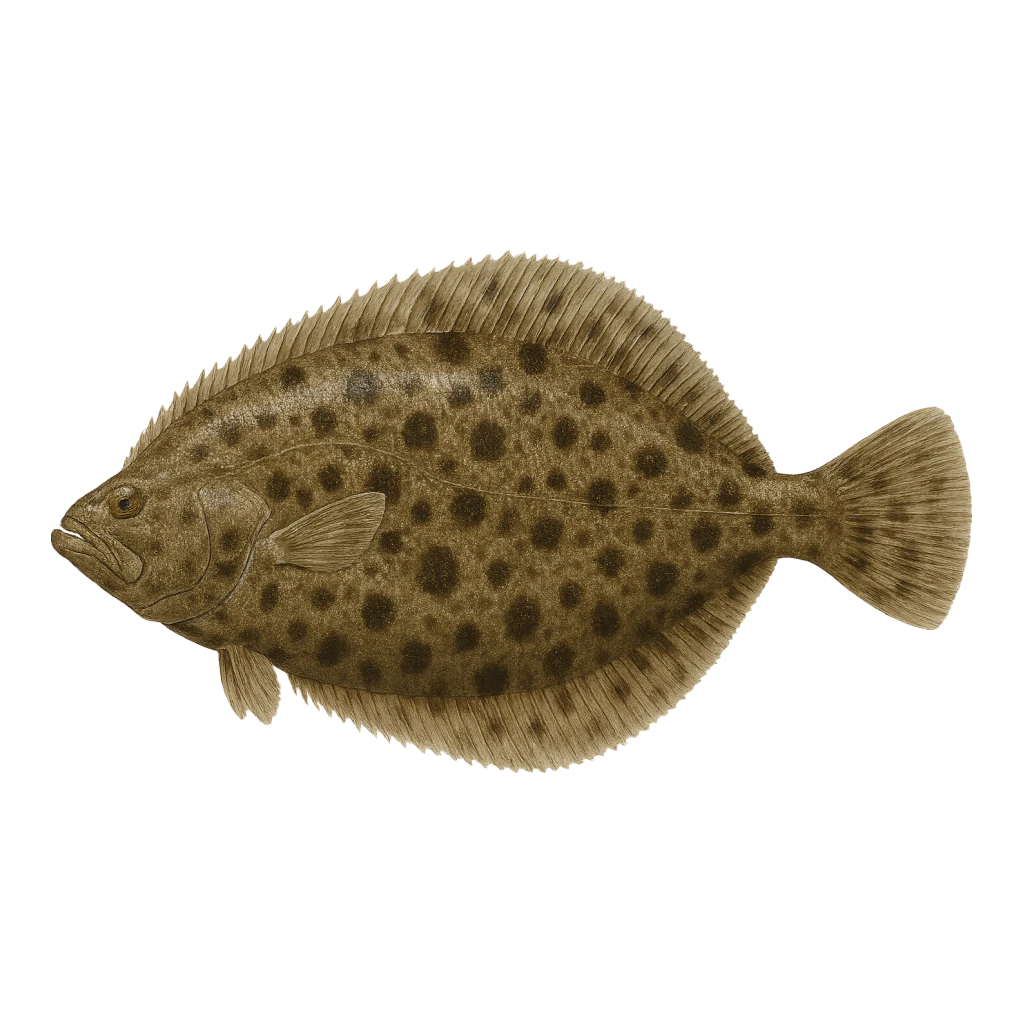
The Southern Flounder (Paralichthys lethostigma) is a flatfish with a distinct body shape. It has a flattened, oval body that is wider than it is thick. The coloration is typically a brown or olive on the upper side, with lighter shades on the underside. The upper side may have dark spots or blotches, providing camouflage against the ocean floor.
The Southern Flounder has a long dorsal fin that runs along the length of its body. Its mouth is large and extends past the eyes, which are located on the upper side of the body. This species is often confused with the Gulf Flounder (Paralichthys albigutta). The key detail that separates them is the number of dorsal fin rays; the Southern Flounder has 75 to 85 rays, while the Gulf Flounder has 60 to 70.
Where it lives
The Southern Flounder is found along the southeastern coast of the United States. Its range extends from New Jersey to Texas, primarily inhabiting estuaries and coastal waters. This species prefers brackish and saltwater environments, often found in bays, inlets, and nearshore areas.
Southern Flounder typically inhabit depths of 10 to 60 feet, but they can be found in shallower waters during certain times of the year. In spring and summer, they move into shallower areas to spawn, while in fall and winter, they tend to migrate to deeper waters for cooler temperatures.
When it bites
Southern Flounder are most active from late spring to early fall. They prefer water temperatures between 65 and 80 degrees F. The best time to fish for them is during the early morning or late afternoon when they are feeding. Weather conditions can influence their activity; a passing front or strong winds can trigger feeding, while a full moon may increase their movement and feeding patterns.
How to catch it
To catch Southern Flounder, anglers often use bottom rigs or jigging techniques. A common rig includes a Carolina rig with a 1 to 3-ounce weight, depending on the current. Baits such as live finger mullet, shrimp, or cut bait are effective, typically in sizes ranging from 3 to 6 inches. Lures like soft plastic grubs or jigs in natural colors (such as white or brown) can also be successful.
Use a medium to heavy-action rod with a 15 to 30-pound test line and a 2/0 to 4/0 hook. Cast near structures like rocks, piers, or grass beds, and work the bait along the bottom with a slow, steady retrieve. Flounder often lie in wait, so patience is key.
Size, age and the table
Anglers typically encounter Southern Flounder ranging from 15 to 25 inches in length. A trophy Southern Flounder is generally considered to be over 30 inches. The growth rate is relatively fast; they can reach maturity in 2 to 3 years and have a lifespan of up to 10 years.
Southern Flounder are known for their excellent eating quality, with a mild flavor and firm texture. When handling them, use wet hands or a wet cloth to avoid removing their protective slime. If releasing, do so gently to minimize stress and increase survival chances.