How to recognise it
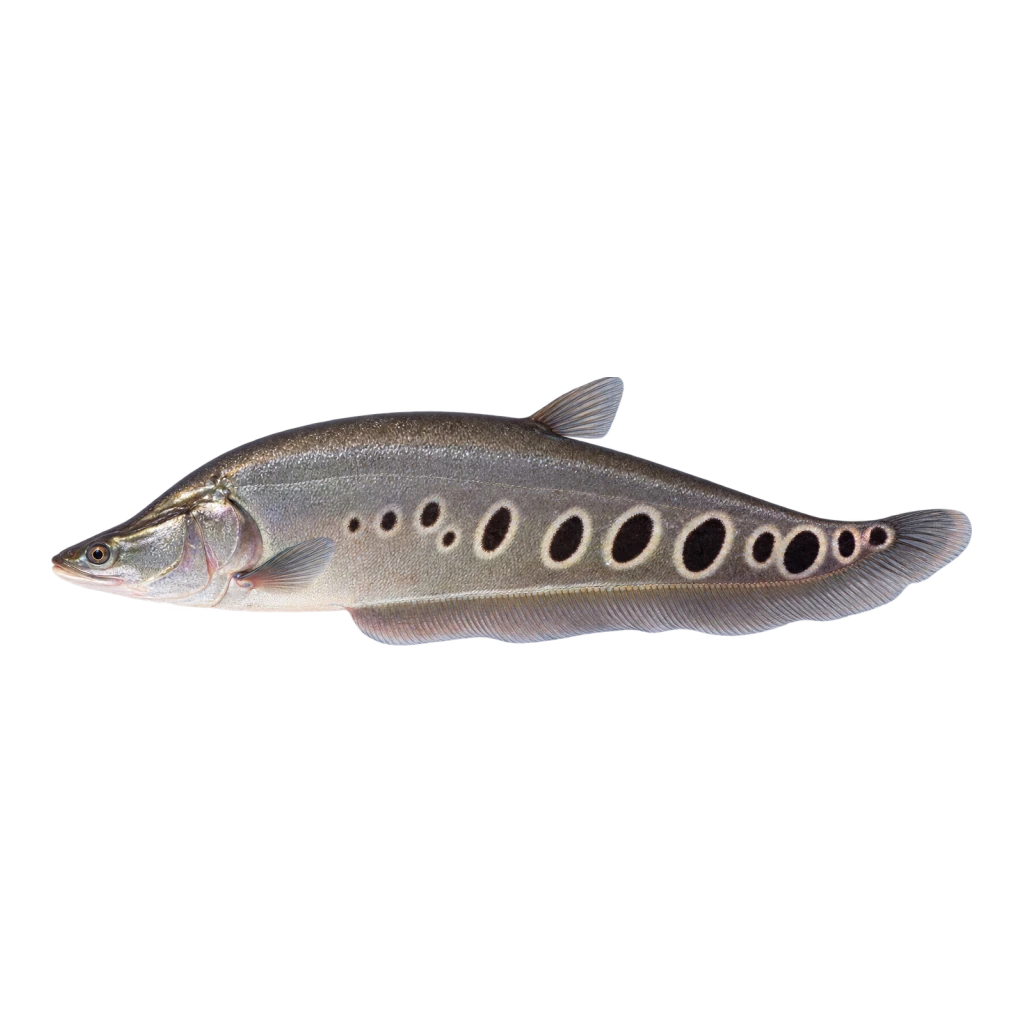
The Clown Knifefish (Chitala ornata) is a distinctive freshwater species. It has an elongated body that can reach lengths of up to 40 inches. The coloration is a mix of silver and dark brown, with a series of prominent black spots along its sides. The dorsal fin is long and extends from the head to the tail, while the anal fin is also elongated and runs parallel to the body. The mouth is large and slightly upturned, which helps it capture prey.
This species is often confused with the Asian Arowana (Scleropages formosus). The key detail that separates them is the Clown Knifefish's unique pattern of spots, while the Arowana has a more uniform coloration without spots.
Where it lives
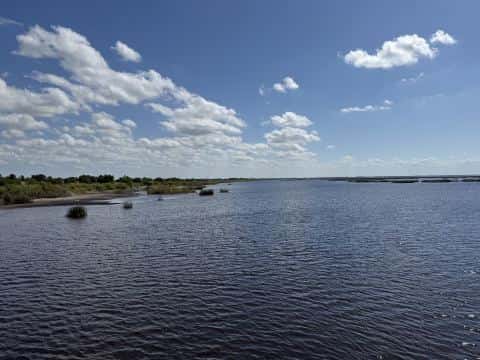
The Clown Knifefish is primarily found in the southeastern United States, particularly in Florida. It prefers freshwater habitats such as lakes, rivers, and canals. This species is often found in depths ranging from 3 to 15 feet. It typically holds to structures like submerged logs, vegetation, and rocky areas.
Seasonally, the Clown Knifefish may change its habitat. In warmer months, it tends to move into shallower waters with more cover. During cooler months, it may retreat to deeper areas where the water temperature remains more stable.
When it bites
The best months for targeting Clown Knifefish are from late spring through early fall. They are most active when water temperatures range from 75 to 85 degrees F. Early morning and late evening are prime times for bites, as these fish are more likely to feed during low light conditions.
Environmental factors can influence their activity. A passing front may trigger increased feeding, while strong winds can make them less active. A full moon often leads to heightened activity, as they may be more inclined to hunt during the night.
How to catch it
Effective rigs for catching Clown Knifefish include a simple float rig or a bottom rig. Use live bait such as small shad or minnows, typically 3 to 5 inches long. Artificial lures like swimbaits or topwater plugs in silver or black colors can also be effective.
For line, a 15 to 30-pound test monofilament or braided line is recommended. Use hooks sized 1/0 to 3/0, depending on the bait. Cast near structures where the fish are likely to hide and retrieve slowly to mimic injured prey. Vary your retrieve speed to find what triggers a bite.
Size, age and the table
Anglers typically encounter Clown Knifefish ranging from 10 to 30 inches in length. A trophy specimen is generally considered to be over 30 inches. Growth rates can vary, but they can reach maturity in about 3 to 4 years, with a lifespan of up to 15 years in the wild.
Clown Knifefish are known for their mild, flaky flesh, making them a popular choice for eating. When handling, use wet hands or gloves to minimize slime loss. If releasing, do so gently to ensure the fish's survival. Always check current regulations for specific guidelines regarding size limits and harvesting practices.