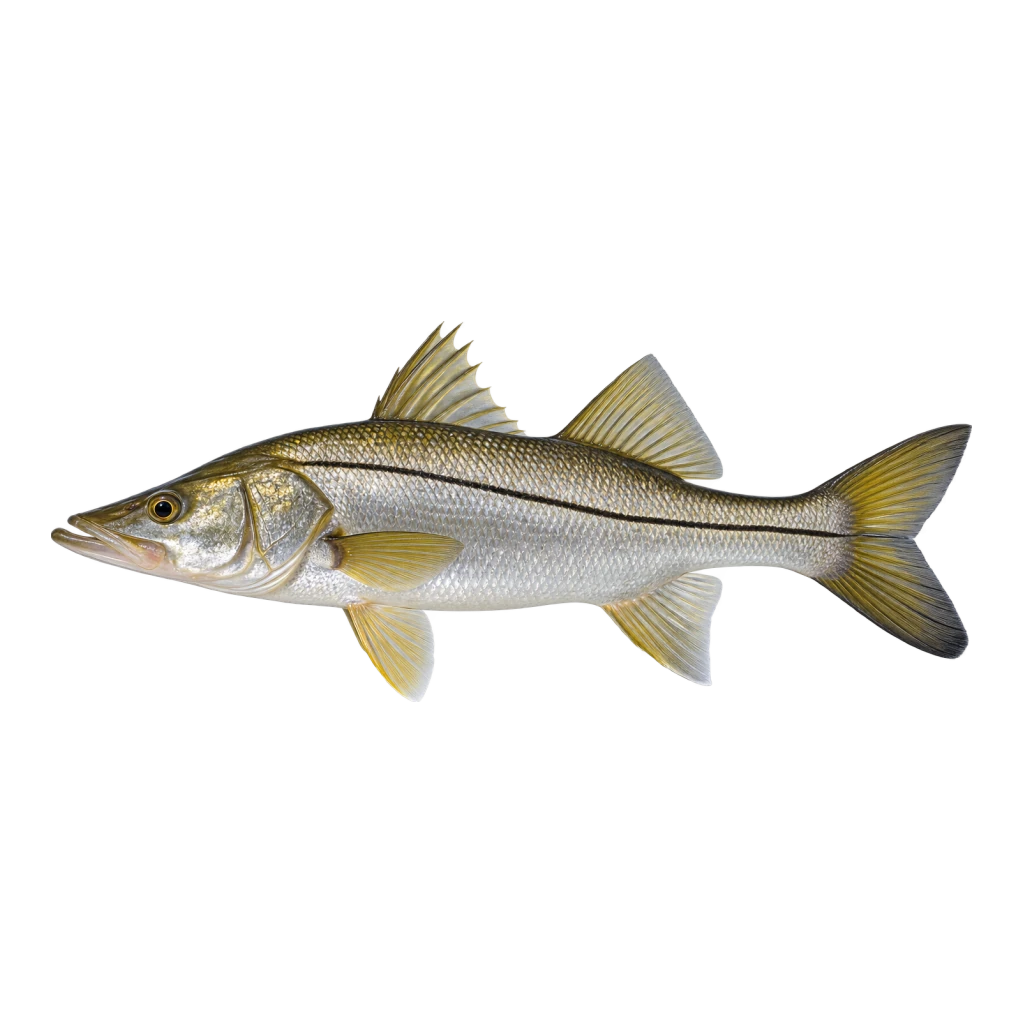
How to recognise it
The Tarpon Snook, or Centropomus pectinatus, is a distinctive fish. It has a long, slender body with a slightly flattened head. The coloration is typically a golden yellow to olive green on the back, fading to a lighter belly. The fins are mostly transparent with a hint of yellow. The mouth is large and extends past the eyes, which is a key feature. This species is often confused with the Common Snook (Centropomus undecimalis), but the Tarpon Snook has a more pronounced, elongated dorsal fin and a more tapered body shape.
Where it lives
The Tarpon Snook is primarily found in the southeastern United States, particularly in Florida. It inhabits brackish waters, such as estuaries, mangroves, and coastal lagoons. The species prefers depths of 3 to 20 feet. During warmer months, they tend to move into shallower waters, while in cooler months, they may seek deeper areas. They often hold near structures like submerged rocks, mangrove roots, and piers, which provide cover from predators.
When it bites
The best months to target Tarpon Snook are from April to October. They are most active when water temperatures range from 75 to 85 degrees F. Early morning and late evening are prime times for fishing, as they are more likely to feed during these hours. Weather changes, such as a passing front or increased wind, can trigger feeding activity. A full moon can also enhance their bite, making them more aggressive and willing to strike.
How to catch it
To catch Tarpon Snook, use a variety of rigs. A popular choice is the live bait rig with a 3/0 to 5/0 circle hook. Live baits like shrimp, mullet, or pilchards are effective. If using lures, try topwater plugs or soft plastics in sizes 4 to 6 inches, preferably in natural colors like white or silver. Cast near structures and work the lure with a steady retrieve, incorporating occasional pauses to mimic injured prey. Target areas with current, as Snook often ambush prey in these spots.
Size, age and the table
Anglers typically encounter Tarpon Snook ranging from 12 to 30 inches in length. A trophy specimen is generally considered to be over 30 inches. The growth rate is moderate, with many reaching sexual maturity around 2 to 3 years of age. The lifespan can extend up to 10 years in the wild. While Tarpon Snook are edible, their quality varies. Handling should be done with care to minimize stress, and it is recommended to release larger individuals to ensure the population remains healthy.