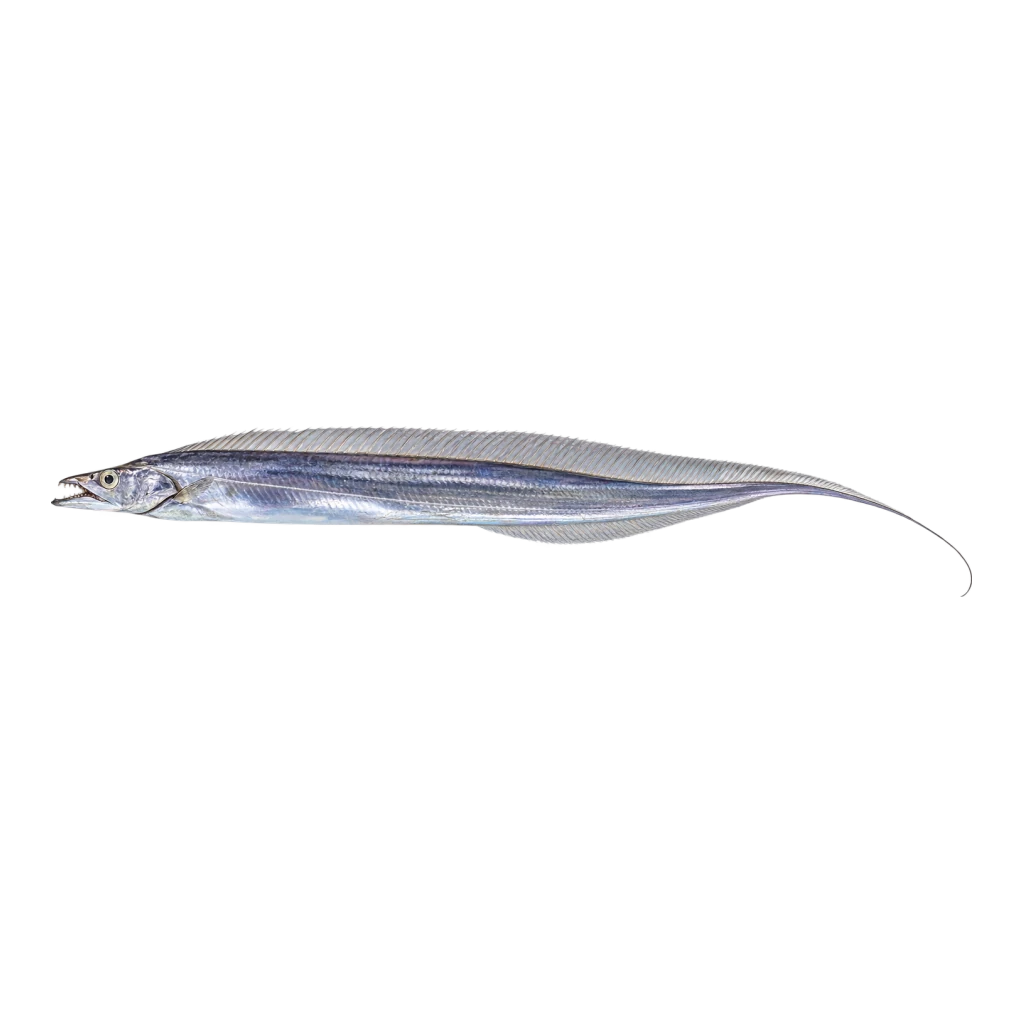
How to recognise it
The Hairtail, or Trichiurus lepturus, is a distinctive saltwater fish. It has a long, slender body that can reach lengths of up to 6.5 feet. The coloration is typically a silver or bluish hue on the upper side, fading to a lighter silver on the belly. The fish has a unique hair-like tail, which gives it its common name. The dorsal fin runs along the length of the back, and the mouth is large with sharp teeth. The Hairtail is often confused with the Atlantic mackerel (Scomber scombrus). The key detail that separates them is the Hairtail's elongated, ribbon-like body compared to the more robust, torpedo shape of the mackerel.
Where it lives
The Hairtail is primarily found in the Atlantic Ocean, from the Gulf of Maine down to Florida, and in the Gulf of Mexico. It prefers warm, saltwater environments and is often found in coastal waters. The typical depth range is between 30 to 300 feet. During warmer months, Hairtails are more prevalent in shallower waters, while in colder months, they tend to move to deeper areas. They often seek cover around structures such as reefs, wrecks, and floating debris, which provide shelter and hunting grounds.
When it bites
The Hairtail is most active from late spring to early fall, with peak months being June through September. The ideal water temperature for fishing Hairtail is between 70°F and 85°F. They are known to bite during the early morning and late afternoon hours. Weather changes, such as a passing front or increased wind, can trigger feeding activity. A full moon can also enhance their feeding patterns, making them more aggressive and easier to catch during this time.
How to catch it
To catch Hairtail, anglers often use a variety of rigs. A popular choice is the high-low rig, which allows for multiple hooks at different depths. Use 2/0 to 4/0 hooks, depending on the size of the bait. Baits such as live shrimp, small fish, or squid are effective. Lures in silver or blue colors that mimic small fish can also attract Hairtail. When casting, aim for areas near structures or schools of baitfish. Retrieve the lure with a steady, moderate speed, allowing it to mimic the movement of prey.
Size, age and the table
Anglers typically encounter Hairtail ranging from 2 to 4 feet in length, with weights between 5 to 15 pounds. A trophy Hairtail is generally considered to be over 5 feet long. The growth rate is relatively fast, with fish reaching maturity in about 2 to 3 years. The lifespan of Hairtail can extend up to 10 years. They are known for their firm, white flesh, making them a popular choice for eating. When handling Hairtail, use care as they have sharp teeth. If releasing, do so gently to minimize stress and injury to the fish.