How to recognise it
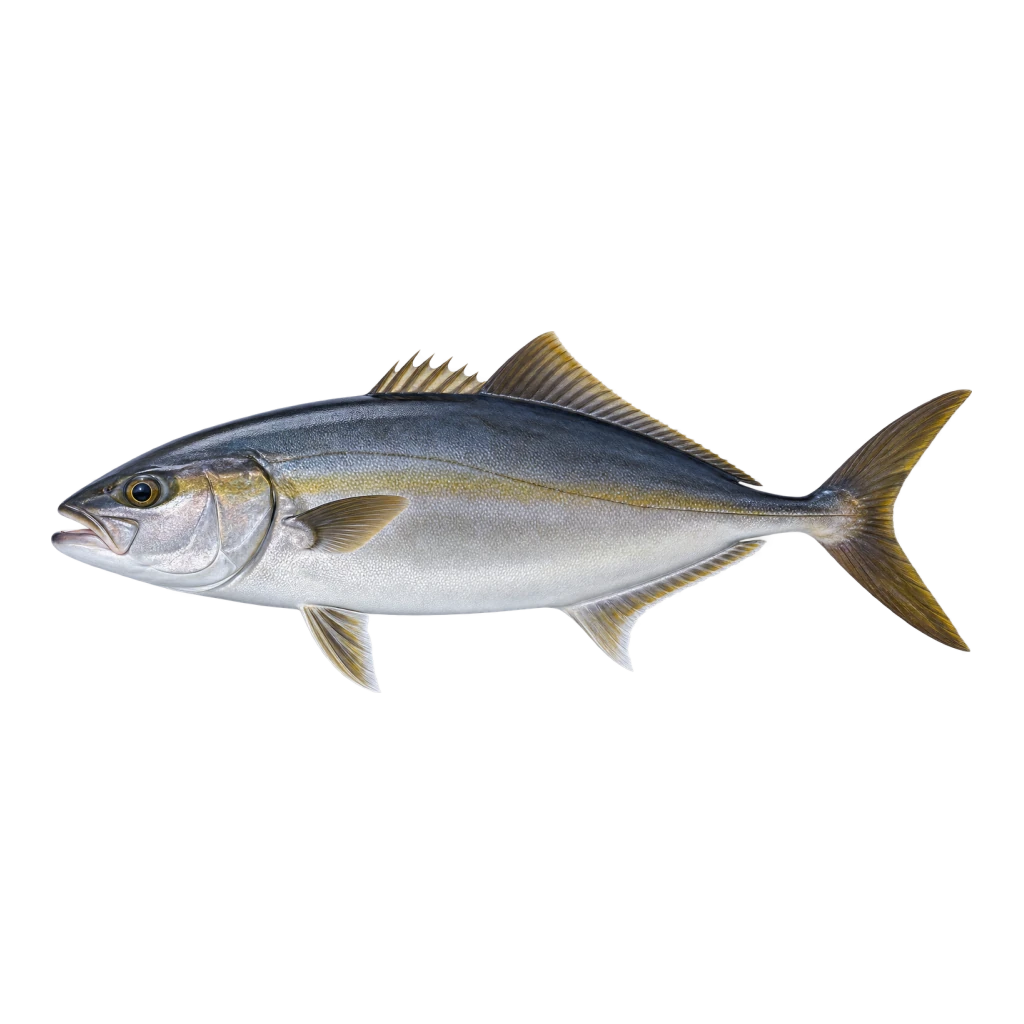
The Almaco Jack (Seriola rivoliana) is a robust fish with a streamlined body. It has a bluish-green back, silver sides, and a yellowish tint on the lower part of its body. The fins are generally yellow, especially the dorsal and anal fins. The mouth is large and extends past the eyes, which are relatively small. A distinguishing feature is the presence of a single, prominent lateral line that runs from the head to the tail.
This species is often confused with the Greater Amberjack (Seriola dumerili). The key detail that separates them is the Almaco Jack's more pronounced yellow coloration on the fins and the absence of a dark stripe along the side, which is present in Greater Amberjacks.
Where it lives
The Almaco Jack is primarily found in the western Atlantic Ocean. In the United States, its range extends from North Carolina to Florida and into the Gulf of Mexico. They inhabit offshore waters, typically around reefs, wrecks, and other structures. Almaco Jacks prefer depths ranging from 30 to 300 feet. They are often found near the surface during warmer months but may move deeper as temperatures drop in the winter.
During the summer, they are more likely to be found near floating debris or schools of baitfish. In winter, they tend to seek deeper waters where temperatures remain stable.
When it bites
Almaco Jacks are most active from late spring through early fall. They prefer water temperatures between 70°F and 85°F. The best times to fish for them are early morning and late afternoon when they are more likely to feed. Weather changes can also affect their behavior; a passing front may trigger increased feeding activity, while strong winds can make them less active. A full moon can enhance their feeding times, making them more aggressive.
How to catch it
To target Almaco Jacks, anglers can use a variety of rigs. A common setup is a live bait rig with a 5/0 to 7/0 circle hook. Live baits such as pilchards, cigar minnows, or small jacks work well. For artificial lures, consider using jigs weighing 1 to 3 ounces in bright colors like chartreuse or blue.
Cast near reefs or wrecks and let the bait sink to the desired depth. Retrieve the bait with a steady, moderate speed. If using jigs, employ a vertical jigging technique, allowing the lure to drop and then quickly reeling it back up. Almaco Jacks are known for their aggressive strikes, so be prepared for a strong fight.
Size, age and the table
Anglers typically encounter Almaco Jacks ranging from 10 to 30 pounds. A trophy Almaco Jack is generally considered to be over 40 pounds. They grow relatively quickly, reaching sexual maturity around 3 to 4 years of age. The lifespan of an Almaco Jack can exceed 10 years.
In terms of eating quality, Almaco Jacks are known for their firm, white flesh, which is excellent for grilling or frying. When handling them, use wet hands or a wet cloth to prevent damage to their skin. For catch and release, minimize the time they spend out of water and handle them gently to ensure their survival.