How to recognise it
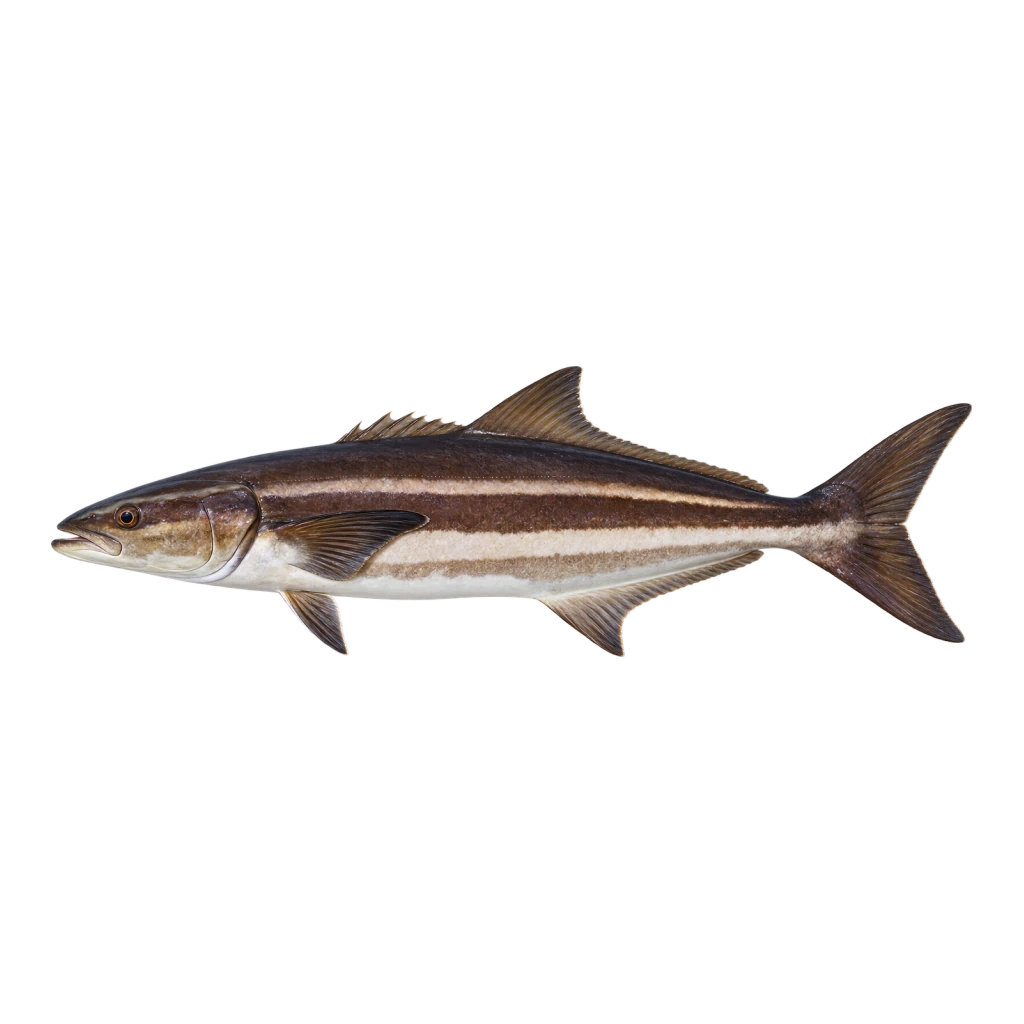
The Cobia (Rachycentron canadum) is a streamlined fish with a long, slender body. It has a dark brown or grayish back, fading to a white underside. The fish features a prominent, slightly forked tail. Its dorsal fin is long and continuous, with the first part being spiny and the rest soft. The mouth is large, with a distinctive lower jaw that protrudes slightly. Cobia are often confused with the similar-looking remora. The key detail that separates them is the lack of a suction disc on the top of the remora's head, which is present in remoras but absent in cobia.
Where it lives
Cobia are primarily found along the Atlantic coast of the United States, from New Jersey to Florida, and in the Gulf of Mexico. They inhabit warm, coastal waters and are often found near structures such as buoys, wrecks, and reefs. Cobia prefer depths ranging from 10 to 100 feet, but they can be found deeper in some areas. In spring and summer, they move closer to shore, while in fall and winter, they tend to migrate to deeper waters.
When it bites
Cobia are most active from late spring through early fall, particularly from May to September. They prefer water temperatures between 70°F and 85°F. Early morning and late afternoon are the best times to catch them. Weather changes, such as a passing front or strong winds, can trigger feeding activity. A full moon can also enhance their feeding behavior, making them more likely to bite.
How to catch it
To catch Cobia, anglers often use a variety of rigs. A popular choice is the fish finder rig, which allows for a natural presentation. Live baits such as crabs, eels, or live menhaden are effective, typically ranging from 6 to 12 inches in length. When using lures, consider large jigs or swimbaits in colors like chartreuse or white. Use a strong monofilament or braided line in the 50 to 80-pound test range, paired with a circle hook size 6/0 to 8/0. Cast near structures or schools of baitfish, and retrieve your bait with a steady, moderate speed to entice a strike.
Size, age and the table
Anglers typically encounter Cobia ranging from 20 to 40 inches in length, with weights between 10 to 50 pounds. A trophy Cobia is generally considered to be over 50 inches long. Cobia grow quickly, reaching maturity at around 3 years of age, and can live up to 12 years. They are known for their excellent eating quality, with firm, white flesh. When handling Cobia, use care to avoid damaging their skin. If releasing, do so gently to ensure their survival.