How to recognise it
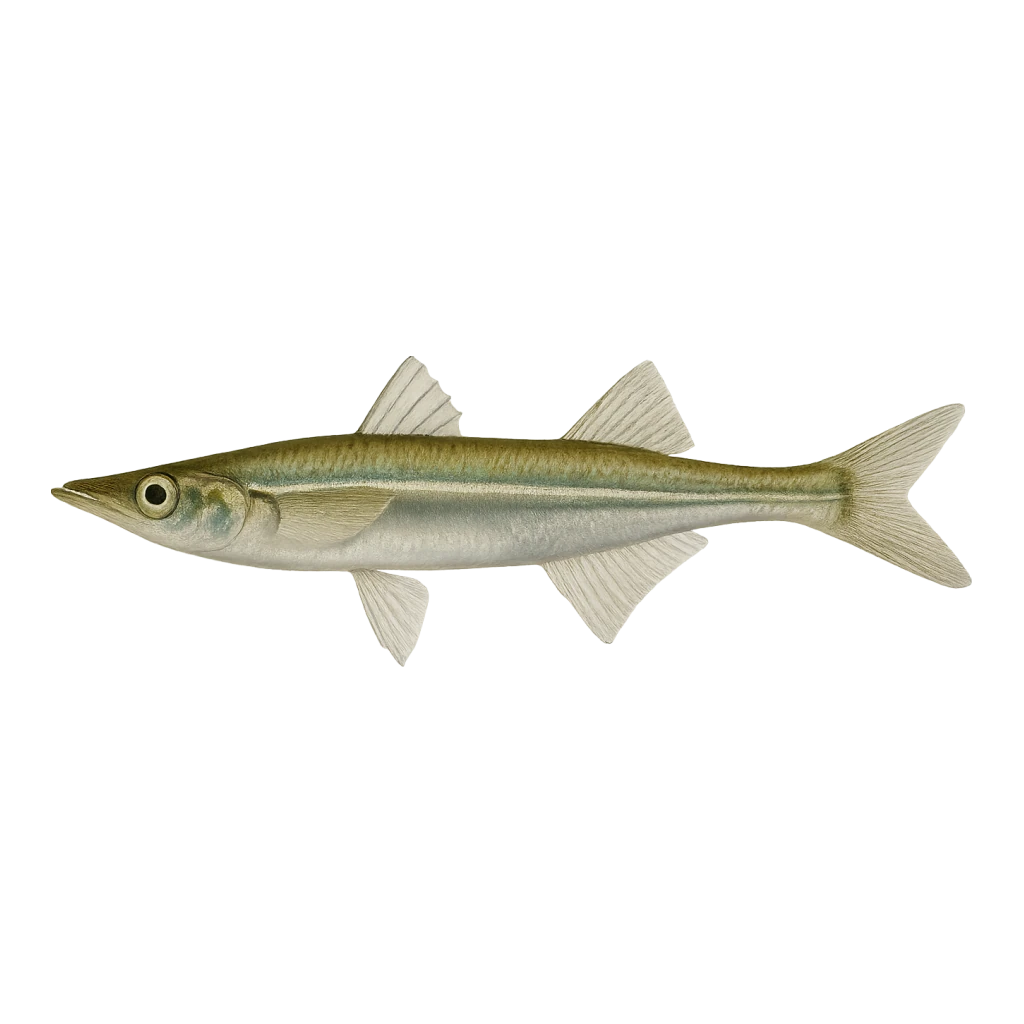
The Brook Silverside (Labidesthes sicculus) is a slender, elongated fish. It typically measures 3 to 6 inches in length. The body is silver with a distinctive lateral line that runs from head to tail. The dorsal fin is located far back on the body, and the anal fin is long and extends towards the tail. The mouth is small and slightly upturned, which aids in surface feeding.
This species is often confused with the Inland Silverside (Menidia beryllina). The key detail that separates them is the Brook Silverside's more pronounced lateral line, which is more visible and distinct compared to that of the Inland Silverside.
Where it lives
The Brook Silverside is found primarily in the eastern United States. Its range extends from the Great Lakes region down to the Gulf Coast. This species prefers freshwater environments such as lakes, rivers, and ponds. They are typically found in shallow waters, usually at depths of 1 to 10 feet.
During warmer months, Brook Silversides are often found near vegetation or submerged structures. In colder months, they may move to slightly deeper waters but still remain close to cover. Seasonal changes influence their location, as they seek warmer waters in spring and summer.
When it bites
Brook Silversides are most active from late spring to early fall. They bite best when water temperatures range from 65 to 75 degrees F. Early morning and late evening are peak feeding times, as they are more likely to surface during these hours.
Weather conditions can affect their activity. A passing front may trigger increased feeding, while strong winds can make them less active. A full moon can also enhance their feeding behavior, as they are more likely to be near the surface during these times.
How to catch it
To catch Brook Silversides, use light tackle. A 4 to 6-pound test line is ideal, with hooks ranging from size 10 to 14. Small jigs, spinners, and spoons work well, especially in silver or white colors. Live bait such as small worms or insects can also be effective.
Cast near vegetation, rocks, or any submerged structure. Retrieve your lure slowly to mimic the movement of small prey. A steady retrieve with occasional pauses can entice strikes. Focus on early morning or late evening for the best chances.
Size, age and the table
Anglers typically encounter Brook Silversides measuring between 3 and 6 inches. A trophy specimen is considered to be over 7 inches. Growth rates vary, but they generally reach maturity within 1 to 2 years. The lifespan of a Brook Silverside is typically around 3 years.
While they are not commonly targeted for food, they are edible and have a mild flavor. If you choose to keep them, handle them gently to avoid stress. For catch and release, use barbless hooks and minimize air exposure to ensure their survival after release.