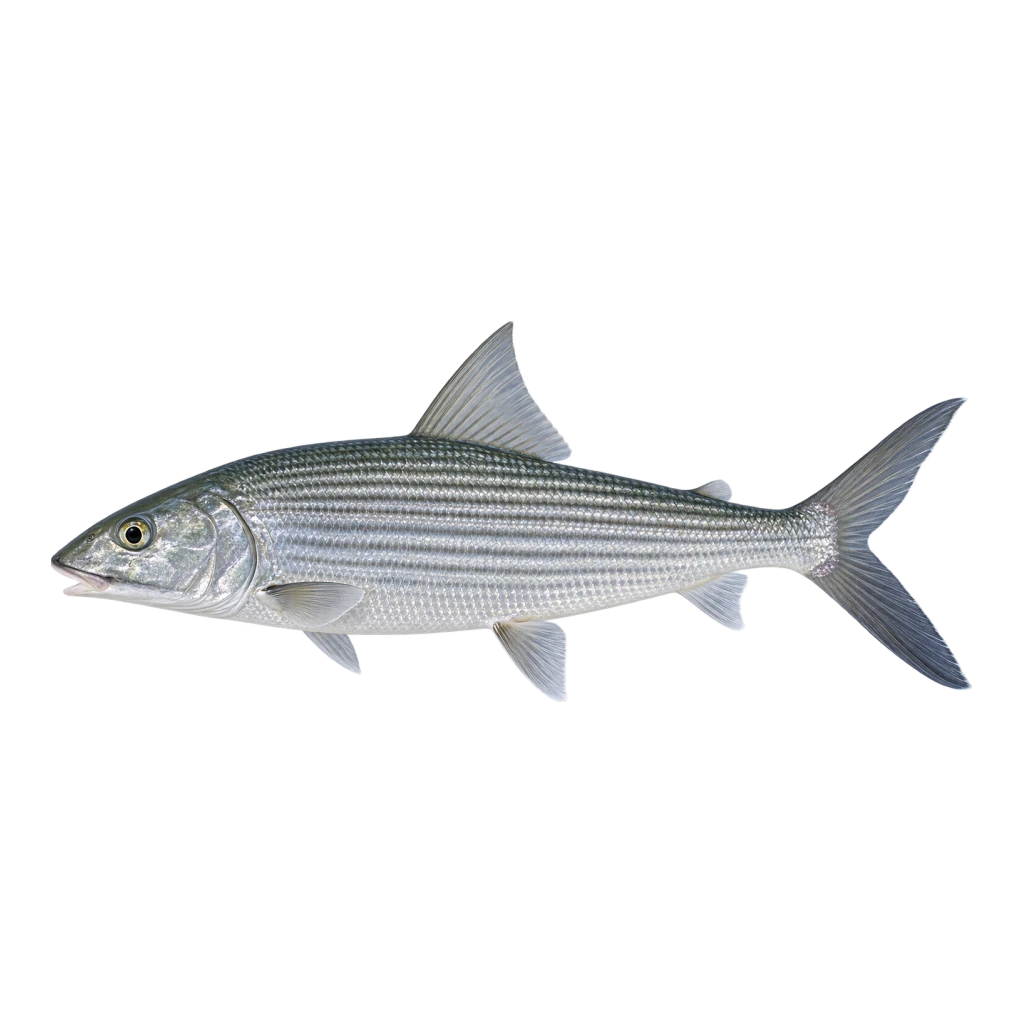
How to recognise it
The bonefish (Albula vulpes) is a sleek, streamlined fish known for its speed and agility. It typically has a silver-gray body with a slightly darker back. The fins are translucent, and the tail is forked, aiding in its swift movements. The mouth is small and located at the underside of the head, adapted for feeding on small invertebrates. Bonefish are often confused with the permit (Trachinotus falcatus). The key detail that separates them is the shape of the dorsal fin; bonefish have a longer, more pointed dorsal fin compared to the rounded dorsal fin of the permit.
Where it lives
Bonefish are primarily found in the shallow waters of the western Atlantic Ocean. In the United States, they inhabit coastal regions from Florida to the Gulf of Mexico and into the Caribbean. They prefer sandy or muddy bottoms in shallow flats, typically ranging from 1 to 10 feet deep. Bonefish are often found near seagrass beds, coral reefs, and mangroves. Their habitat preferences can change with the seasons; during warmer months, they may move into shallower waters, while in cooler months, they may seek deeper areas to avoid temperature fluctuations.
When it bites
Bonefish are most active from March to November. They prefer water temperatures between 70 and 85 degrees F. Early morning and late afternoon are the prime times for fishing, as bonefish are more likely to feed during these periods. Weather changes can affect their behavior; a passing front may make them less active, while stable conditions can lead to increased feeding. Wind can help mask an angler's presence, making it easier to catch them. A full moon can also enhance their feeding activity, as they tend to be more active during the night.
How to catch it
To catch bonefish, anglers commonly use a variety of rigs, including the standard bonefish rig with a 10 to 15-pound test line and a size 1 to 2 hook. Popular baits include shrimp, crabs, and small baitfish. Lures such as Clouser minnows or Crazy Charlie flies in sizes 4 to 6 are effective. Colors that mimic local prey, such as tan, olive, or pink, are recommended. When casting, aim for sandy or muddy areas where bonefish are likely to feed. Retrieve the bait or lure slowly and steadily, mimicking the movement of natural prey.
Size, age and the table
Bonefish typically range from 10 to 30 inches in length, with most anglers encountering fish around 20 inches. A trophy bonefish is generally considered to be over 30 inches. They grow rapidly, reaching maturity in about 3 to 4 years, and can live up to 10 years. Bonefish are not commonly eaten, as they are primarily sought after for sport. However, if kept, they should be handled carefully to preserve their quality. When releasing, it is best to do so quickly and gently to ensure their survival.