Blue Spring State Park Camping Guide
Blue Spring State Park, on the St. Johns River in Orange City, Florida, is best known as one of the state's premier manatee-viewing spots — but it's also a solid, no-frills base camp with 50 full-service pitches just a short walk from the spring run. Here's what you actually need to know before booking a site.
Campground Overview
The campground sits within Blue Spring State Park, a Florida State Park managed by the Florida Department of Environmental Protection at 2100 W. French Ave., Orange City, FL 32763 (28.94674, -81.33477). It's a developed, family-oriented campground rather than a primitive or dispersed site — every pitch comes with power, water, a picnic table, and a grill, and the loop is set back in sand pine scrub within walking distance of the spring itself.
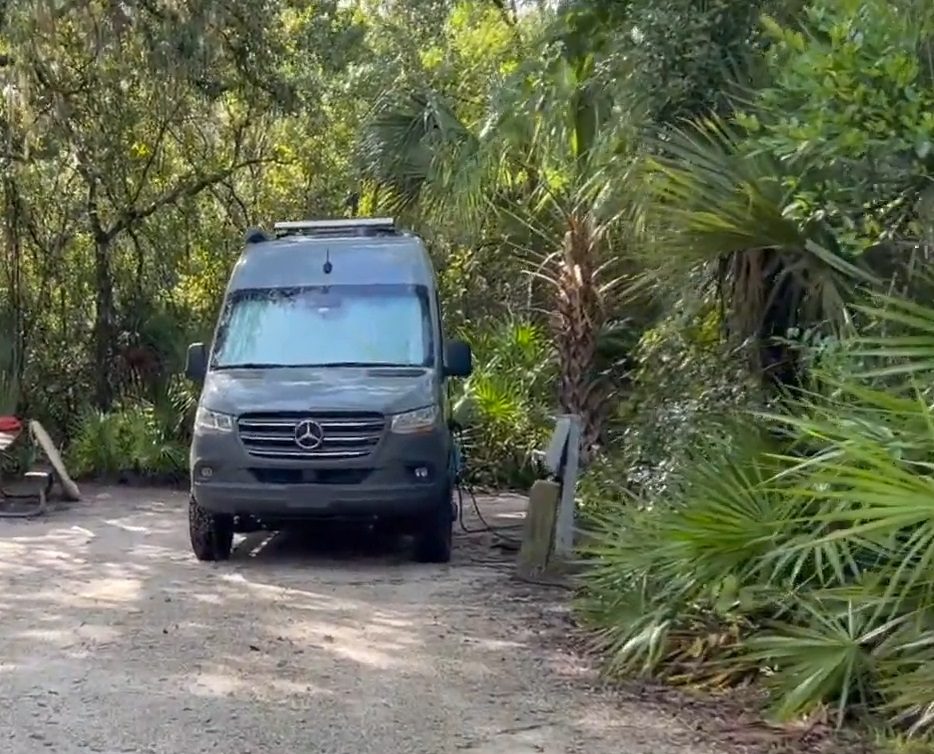
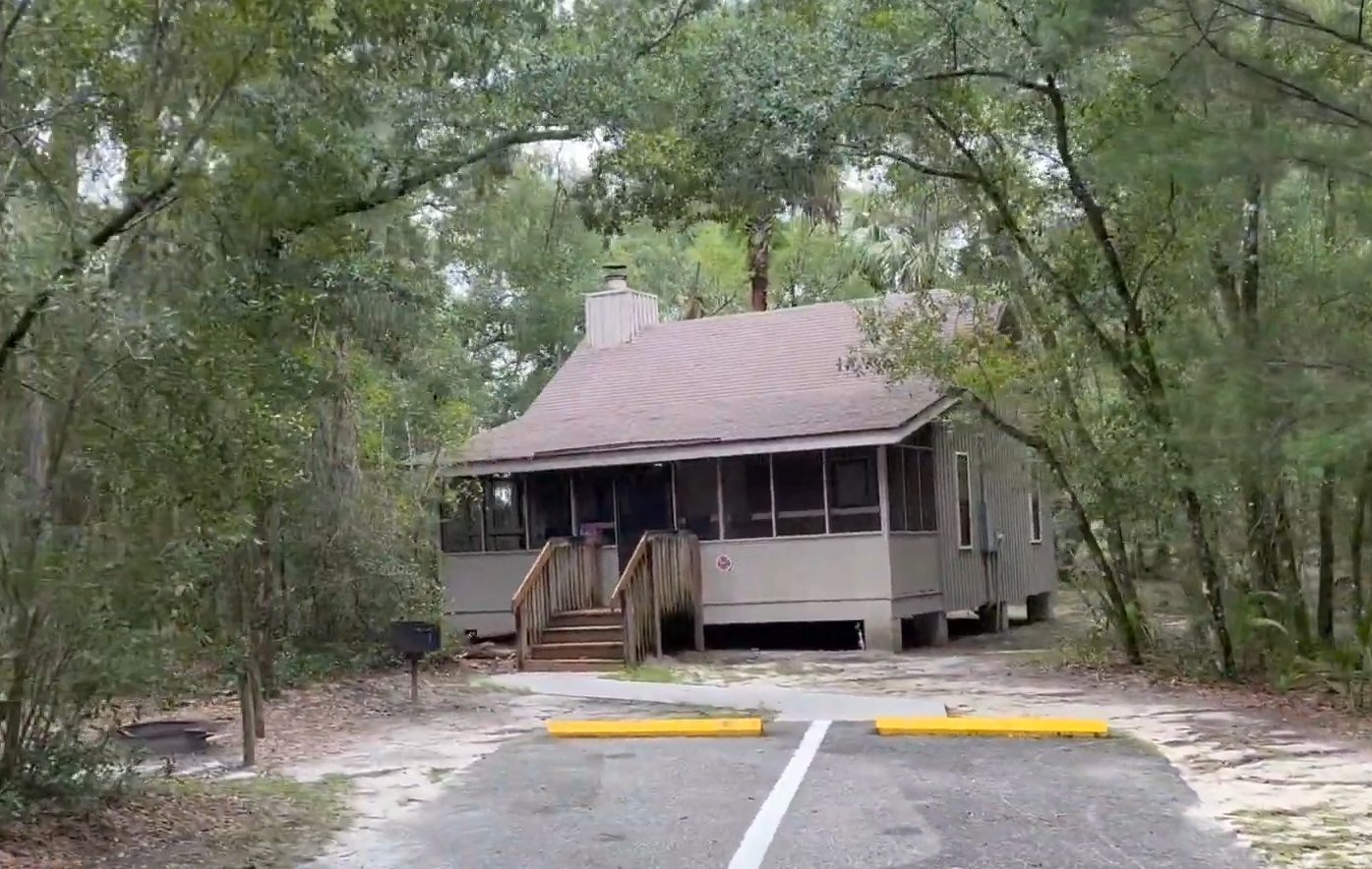
There are 50 camping pitches total, and the park also rents six two-bedroom cabins nearby for travelers who'd rather skip the tent. The campground accepts a wide range of camping equipment — tents (including large 9x12 tents), pop-ups, tent-trailers, truck/SUV/van camping, travel trailers, fifth wheels, motorhomes, camper vans, and buses — so it works for both a weekend tent trip and a full-size RV rig.
Location and Access
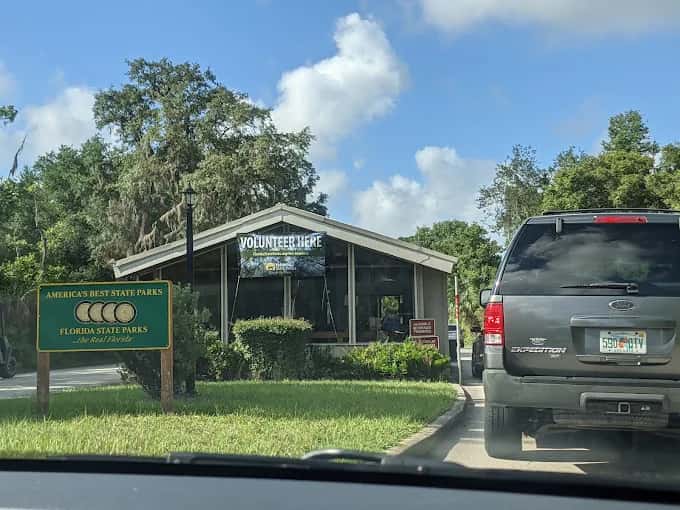
Blue Spring is in Volusia County, just outside Orange City and a short drive from DeLand. It's roughly a 40-minute drive from Orlando, making it a realistic weekend option for Central Florida campers or a stopover for anyone road-tripping along I-4. The park entrance is off W. French Ave., with the campground as the first turnoff once you're inside the gate.
The park is open 8 a.m. to sundown, 365 days a year, for day visitors. Registered campers arriving after sunset should call the park office at 386-775-3663 before 5 p.m. on their arrival day to get the after-hours gate combination.
One current condition worth knowing: as of July 15, 2026, Blue Spring launched a day-use reservation program requiring all day visitors to book ahead just to enter the park. This applies to day-trippers, not to campers — guests with a camping or boat tour reservation are still admitted even when the park temporarily closes to day traffic, which it does periodically during high-visitation periods, especially manatee season.
Camping Options
Tent Camping
Every one of the 50 pitches — not just a separate "tent loop" — is set up for tents, including large 9x12 family tents, so tent campers get the same water, power, picnic table, and grill as everyone else. The sites sit in a shaded sand pine scrub setting and are close enough to the spring to walk over rather than drive. Tent campers do not pay the RV utility fee, which is a meaningful savings over a multi-night stay.
RV Camping
The campground is RV-capable across its pitches, with maximum RV length capped at 40 feet. Accepted RV-type units include travel trailers, fifth wheels, motorhomes, camper vans, pop-ups, and tent-trailers. Every pitch has a 50-amp electrical outlet and a water connection, but there is no sewer hookup at individual sites — RVers needing to empty tanks will use the park's central dump station rather than a site-side sewer line. Practically, that means self-contained rigs with reasonably sized holding tanks are the best fit; anyone planning a long stay should plan on at least one dump-station trip.
Electricity and Hookups
All 50 pitches are wired with 50-amp power, which is enough to run AC, a fridge, and onboard equipment without leaning on a generator — a genuine convenience for RVers, especially during Florida's warm months. Every site also has a water connection. There's no sewer hookup at the sites themselves; a dump station is available elsewhere in the park for RVers who need it.
Campsite Facilities
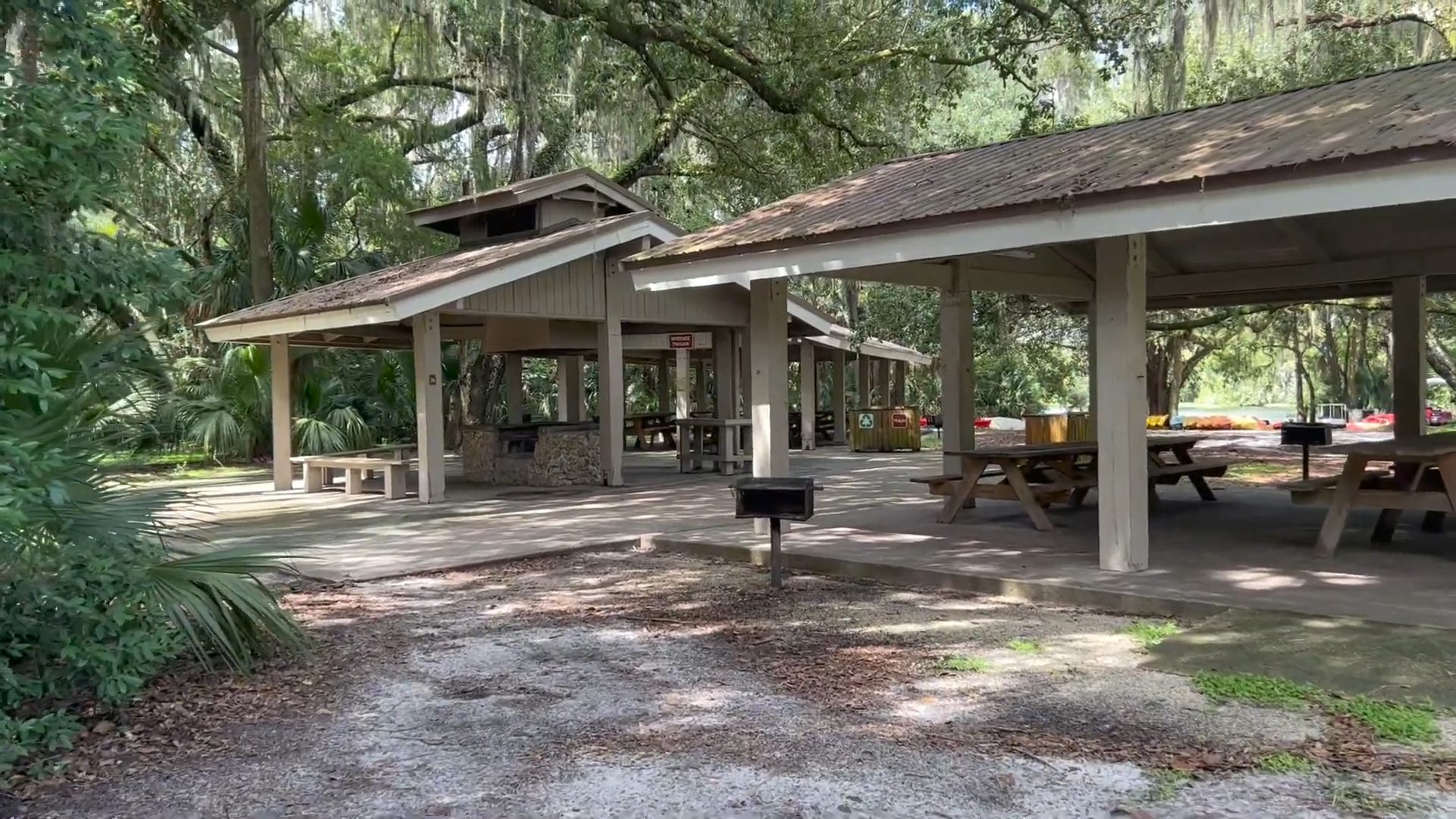
Each of the 50 pitches includes power, water, a picnic table, and a grill as standard. Beyond the individual sites, the park has bathhouses with restrooms and showers serving the campground loop — Florida State Parks upgraded these to accessible showers and stalls in recent years. There's no sewer at individual sites, but the dump station covers that need centrally. This is a developed campground rather than a primitive one, so expect a straightforward, amenity-equipped stay rather than a backcountry experience.
For campers who actually want backcountry conditions, the park's Pine Island Trail — a 3.6-mile one-way route through pine flatwoods, marsh, and oak hammock — has four primitive campsites along its perimeter route, a genuinely different option from the main developed loop.
Water Access
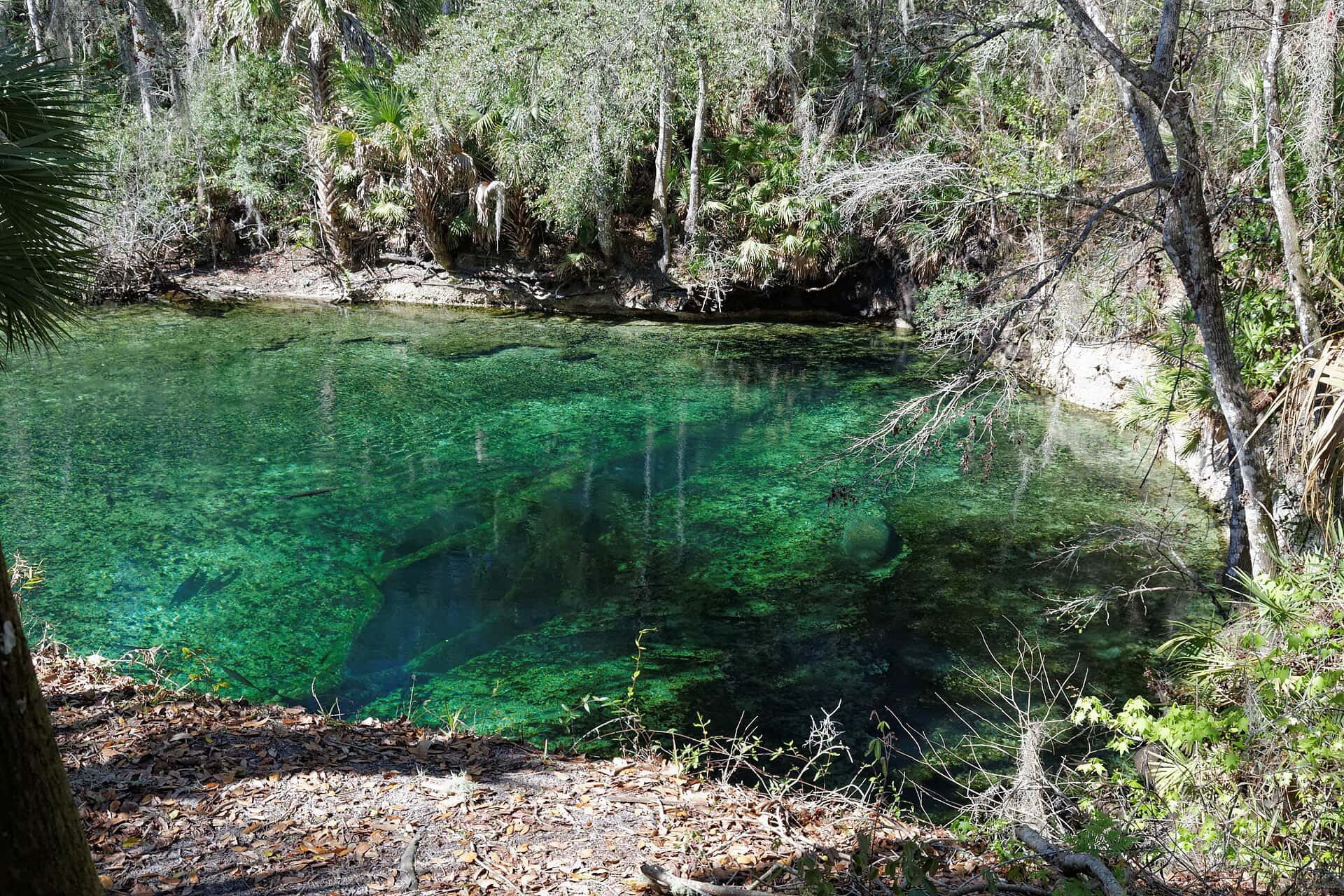
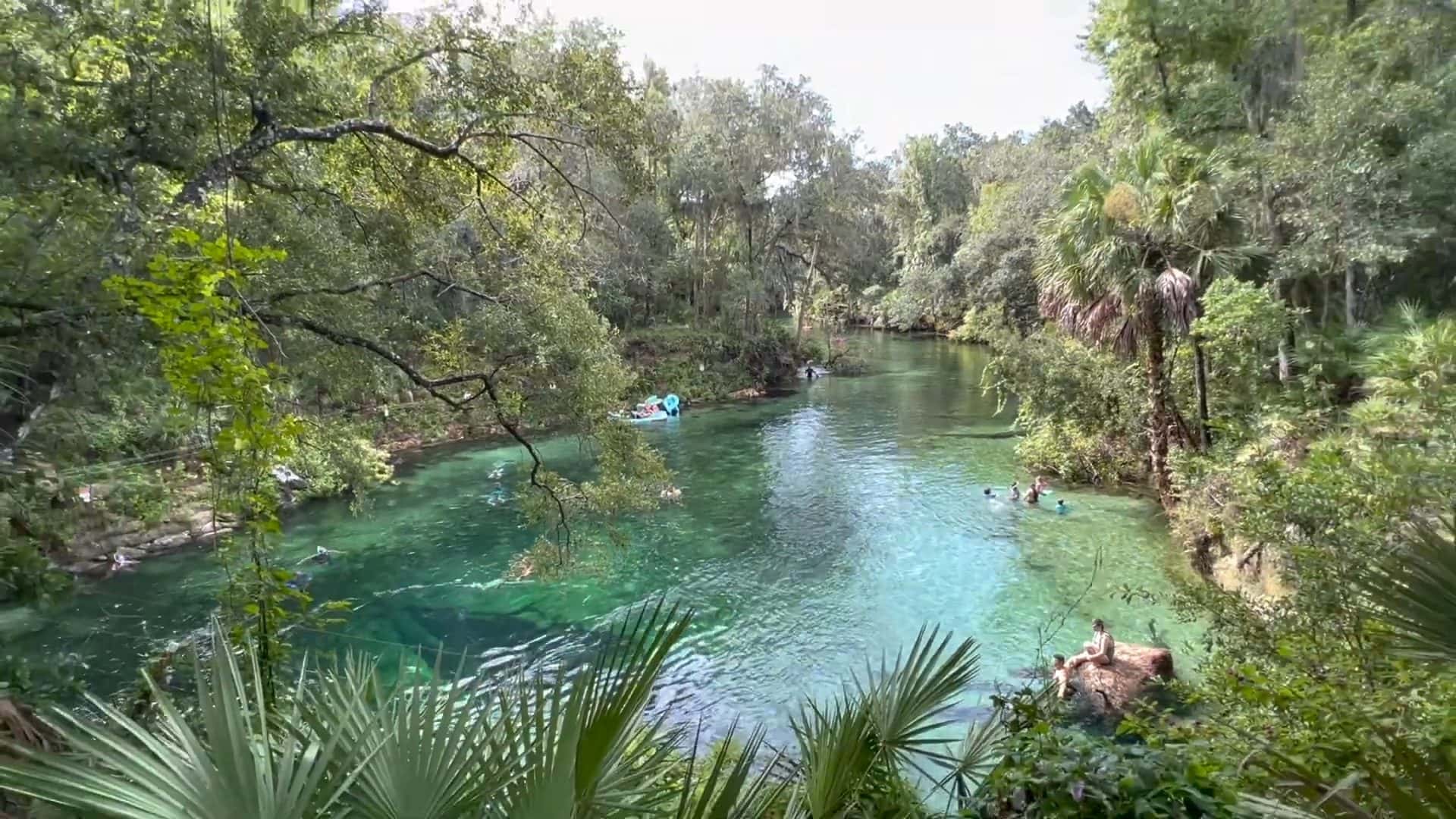
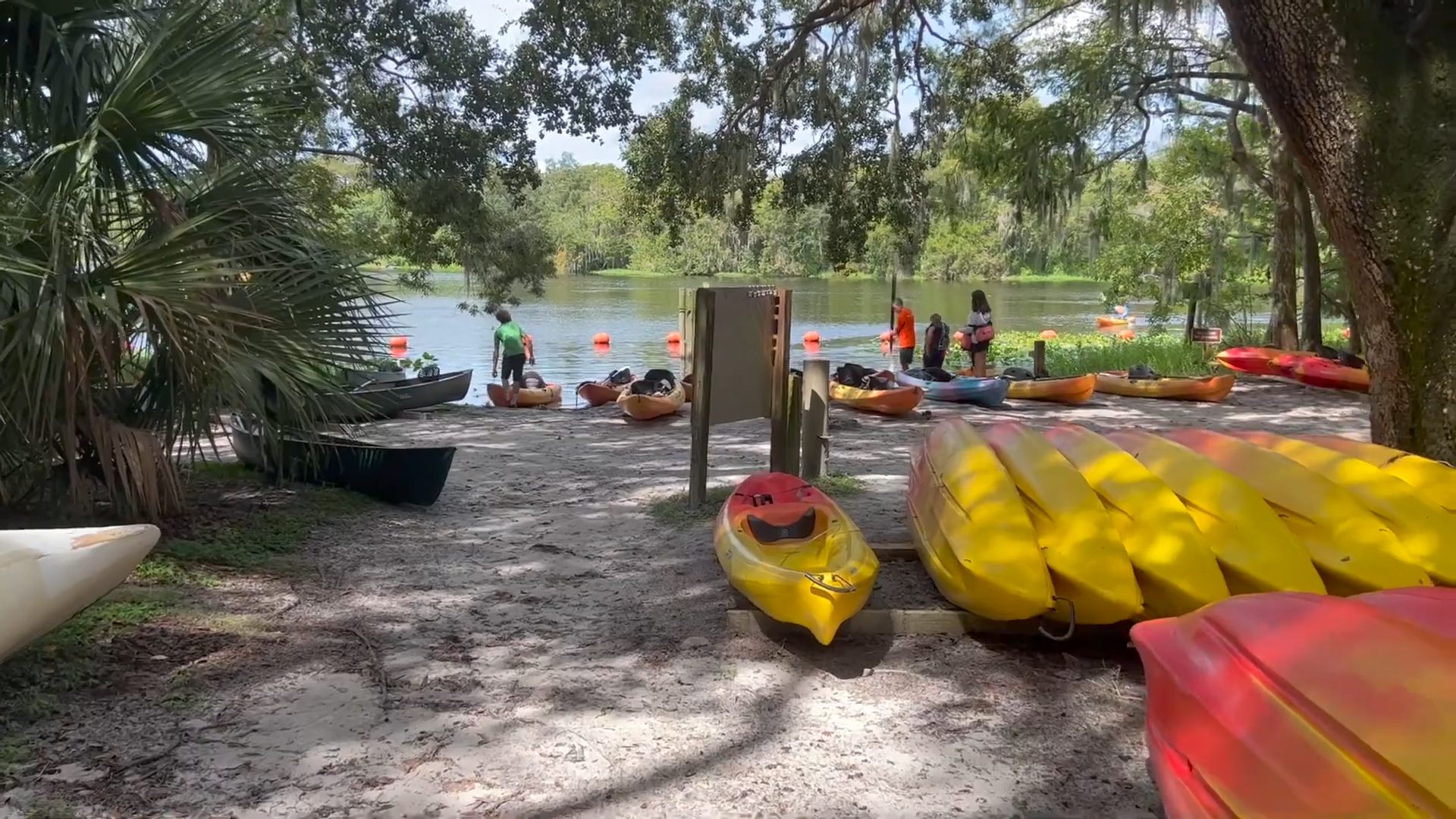
The St. Johns River is about half a mile from the campground to the riverbank, and the park's own canoe and kayak launch on the river is a comparable distance away, a little over half a mile. That's close enough to walk gear down for a paddle but far enough that the campground itself doesn't sit directly on the water — this is a short-walk-to-the-water setup, not true waterfront camping. The spring run itself, the park's main draw, is also within walking distance of the campground.
Because Blue Spring is a designated manatee refuge, water access rules shift seasonally: the spring run is open to swimming, snorkeling, and diving from April 1 through Nov. 14, then closes to all water activities — including boating — from roughly mid-November through March to protect wintering manatees.
Best Campsite Characteristics
Individual site-by-site details (specific numbers, view, or exact spacing) aren't independently verified here, so treat the campground as a whole: it's an upland loop in sand pine scrub, close to the park's main entrance and to a paved section of the Spring to Spring rail trail, with the spring and bathhouses within walking distance. Accessible sites are available for campers who need them — worth requesting specifically when booking, since accessible inventory is limited.
Reservations and Availability
Of the 50 pitches, 45 are reservable in advance; the rest are typically held for other uses, so it's worth checking current availability directly if a specific date matters. Reservations can be made up to 11 months ahead for Florida residents and up to 10 months ahead for non-residents, through the Florida State Parks reservation system (reserve.floridastateparks.org) or by phone at 800-326-3521 (TDD 888-433-0287). Same-day bookings are accepted online until 1 p.m. local time. Any pitch that isn't reserved or occupied can go to walk-in campers on a first-come, first-served basis.
Standard Florida State Parks check-in is 3 p.m. and check-out is 1 p.m. Changing a reservation costs $10; cancelling more than 24 hours before arrival costs a $17.75 cancellation fee (and you avoid the separate $6.70 reservation fee); cancelling on the day of arrival adds the first night's fee on top of that. Given the park's popularity — especially for winter manatee season — booking well ahead is the safer play.
Fees
As of this writing, Blue Spring's camping fee is $24 per night plus tax. There's a nonrefundable $6.70 reservation fee per booking, and RVs pay an additional $7 nightly utility fee covering water and electricity (tent campers don't pay this). Florida residents 65 and older, or campers with a qualifying Social Security or federal disability certificate, may qualify for a 50% discount on the camping fee. Cabins run $95 per night plus tax, with the same reservation and utility fees.
Day-use entrance, separate from camping, is $6 per vehicle (2–8 people), $4 for a single-occupant vehicle, and $2 for pedestrians, bicyclists, and extra passengers — though campers with an overnight reservation are covered for park entry as part of their stay.
Fees and surcharges are set by Florida State Parks and can change; verify current pricing when booking.
Rules and Regulations
There's no sewer hookup at individual sites, so RVers plan around the central dump station. Swimming, snorkeling, diving, and boating in the spring run are restricted to April 1–Nov. 14 and closed the rest of the year to protect wintering manatees — swimming or diving with manatees is prohibited and strictly enforced year-round in the areas where manatees are present. During any park-declared burn ban, charcoal or propane grills are allowed for cooking, but open campfires are not. As with all Florida State Parks, rules and fees can change, so campers should verify current regulations with the park or the managing agency before traveling.
Pets and Campfires
Pets are welcome in the campground (though not in the cabins), must be leashed at all times, and are limited depending on site type and buffer zone — generally no more than four per site. Service animals are permitted throughout the park. Pets are not allowed in the spring or river water and can't board the park's tour boats.
Each pitch's grill supports cooking and casual fire use; if a burn ban is in effect, switch to charcoal or propane rather than an open flame.
Nearby Activities
Manatee viewing is the headline draw, typically running mid-November through March, when the spring's constant 72-degree water pulls in hundreds of West Indian manatees — the park recorded a record 729 manatees in winter 2023. Outside manatee season, the spring run is open for swimming, snorkeling, and certified scuba diving in the same 72-degree water. The park's concessionaire runs kayak, canoe, and tube rentals, a two-hour narrated boat cruise on the St. Johns River, and a guided Segway tour. On land, the Pine Island Trail (3.6 miles one-way) crosses pine flatwoods and marsh to an oak hammock, the short Sand Pine Scrub Trail loops near the campground and is a good spot for the endemic Florida scrub-jay, and a paved section of the Spring to Spring rail trail runs through the park for biking. The 1872 Thursby House museum near the boat dock covers the site's history.
Current Conditions
The spring run is currently open to swimming, snorkeling, and diving under its April 1–Nov. 14 season. The park's new day-use reservation requirement (effective July 15, 2026) means non-camping visitors need an advance reservation to enter; campers are unaffected but should expect the park to occasionally reach capacity and close temporarily to day traffic during busy stretches. As always with a popular Florida spring park, conditions and restrictions can shift with the season — check the park's official page before a trip, particularly heading into manatee season.
Safety
The main site-specific safety issue is the manatee protection rule: swimming with or approaching manatees is prohibited and enforced. As with most Florida rivers, alligators can be present in the St. Johns River, so normal river-safety awareness applies for paddlers and anglers. Central Florida summers bring heat, humidity, and afternoon thunderstorms — worth factoring into a warm-season visit, especially for tent campers without AC.
Nearby Services
Orange City and DeLand, both just minutes from the park, have grocery stores, gas stations, and restaurants for anything not packed in. Orlando, about 40 minutes away, covers anything more specialized.
Pros and Cons
Pros:
- Every pitch has water and 50-amp power, no generator required
- Grill and picnic table at every site
- Short walk to the spring run and the river
- Accepts everything from tents to full-size RVs and fifth wheels
- One of Florida's best manatee-viewing locations, right at the campground's doorstep
- Cabins available as a non-tent alternative
Cons:
- No sewer hookup at individual sites — dump station only
- Only 45 of 50 sites are reservable in advance, and the park is popular enough that last-minute availability is unreliable
- Spring run water access is closed to swimming/diving/boating roughly mid-November through March
- Campground doesn't sit directly on the water — it's a short walk, not true waterfront
- Day-use crowding and periodic park closures during peak (especially manatee) season
Final Verdict
Blue Spring works well for campers who want real hookups and a short walk to a famous spring, without needing a fully primitive experience. It suits tent campers and RVers alike — every site has power and water, RVs up to 40 feet fit, and tent campers skip the RV utility surcharge. Families should find it manageable thanks to the developed bathhouses, grills, and easy access, though it's not a resort-style campground with a playground or pool. Electricity is a given at every site, so it's a genuine option for RVers who don't want to run a generator.
Reserve ahead — 45 reservable sites and heavy seasonal demand (especially manatee season) mean walk-up availability is a gamble. If your main goal is swimming or paddling in the spring itself, plan around the April–mid-November open water season; if it's manatee viewing you're after, aim for the mid-November-through-March window, when the water closes to swimmers but fills with manatees instead. Campers who need a site directly on the river, or full sewer hookups at their pitch, should look elsewhere — this is a walk-to-the-water campground with a dump station, not a waterfront RV resort.