
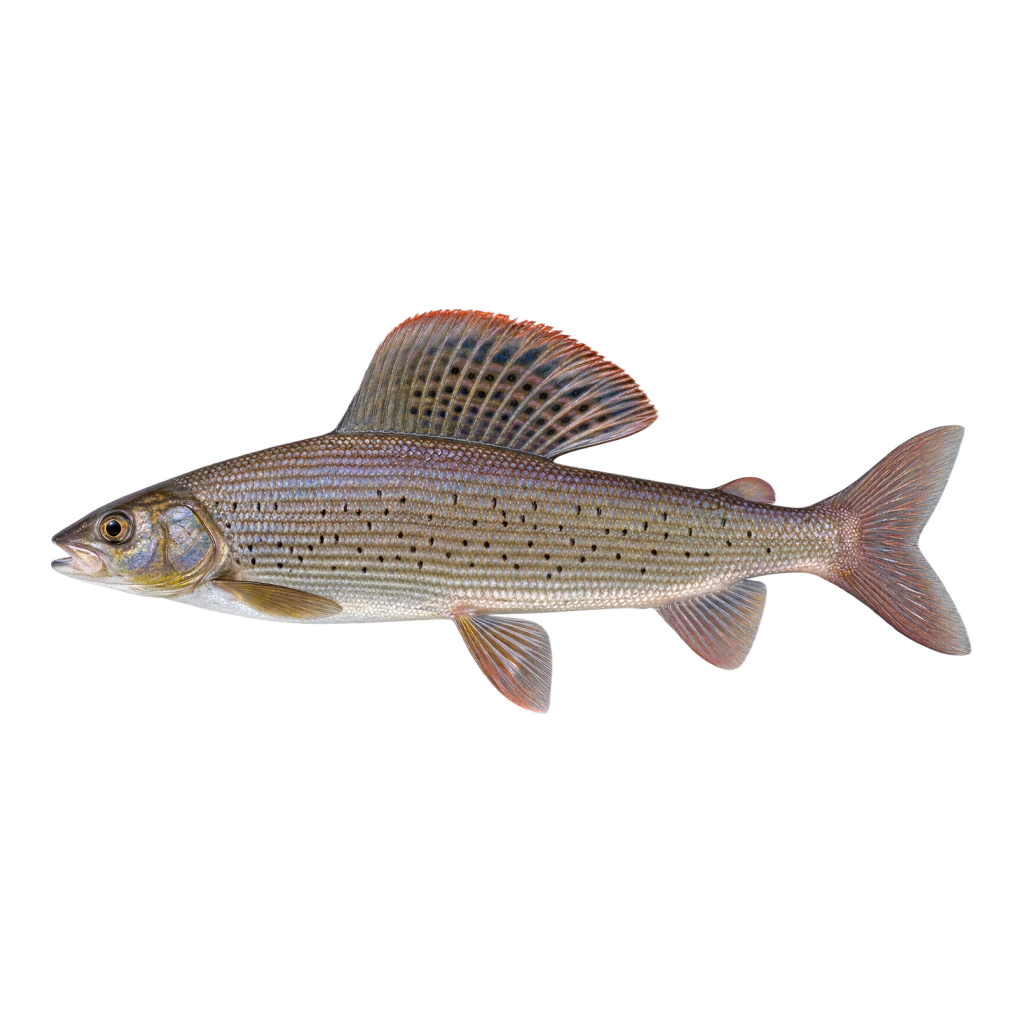
How to recognise it
The Arctic Grayling (Thymallus arcticus) is a distinctive freshwater fish. It has a streamlined body that can reach lengths of up to 20 inches and weigh around 5 pounds. The most notable feature is its large, sail-like dorsal fin, which is often brightly colored with shades of blue, pink, or purple. The body is generally a silvery-gray with dark spots along the back and sides. The mouth is small and slightly upturned.
This species is often confused with the brook trout (Salvelinus fontinalis). The key detail that separates them is the presence of a pronounced dorsal fin in the Arctic Grayling, while brook trout have a more rounded dorsal fin.
Where it lives
The Arctic Grayling is primarily found in the northern regions of the United States, particularly in Alaska and parts of Montana and Wyoming. They inhabit cold, clear freshwater streams, rivers, and lakes. These fish prefer depths ranging from 3 to 15 feet but can be found in deeper waters during warmer months.
In summer, Arctic Grayling seek out cooler, shaded areas with cover such as rocks, fallen trees, and aquatic vegetation. During winter, they may move to deeper pools where the water is less likely to freeze. Seasonal changes in temperature and flow can affect their habitat preferences.
When it bites
Arctic Grayling are most active from late spring to early fall, typically from May to September. They prefer water temperatures between 50 and 65 degrees F. Early morning and late evening are the best times to fish for them, as they are more likely to feed during these cooler parts of the day.
Weather conditions can influence their feeding behavior. A passing front may trigger increased activity, while strong winds can make them less likely to bite. A full moon can also affect their feeding patterns, often leading to increased activity during the night.
How to catch it
To catch Arctic Grayling, anglers can use various rigs. A simple nymph rig with a size 14 to 18 beadhead nymph is effective. Dry flies, such as a size 14 to 16 Adams or Elk Hair Caddis, can also work well. When using lures, small spinners in silver or gold, around 1/8 to 1/4 ounce, are recommended.
Use a light line, typically 4 to 6-pound test, with a size 10 to 12 hook. Cast near the cover where grayling are likely to hide. Retrieve slowly, allowing the bait or lure to mimic natural movement. Vary your retrieve speed to find what triggers a bite.
Size, age and the table
Anglers typically encounter Arctic Grayling in the 12 to 18-inch range. A trophy grayling is generally considered to be over 20 inches. Growth rates can vary, but they generally reach sexual maturity by 3 to 4 years of age and can live up to 7 years or more.
Arctic Grayling have good eating quality, with a mild flavor. If you plan to keep one, handle it carefully to minimize stress. When releasing, do so gently, ensuring the fish is revived before letting it go. Proper handling techniques will help maintain healthy populations for future anglers.


