
How to recognise it
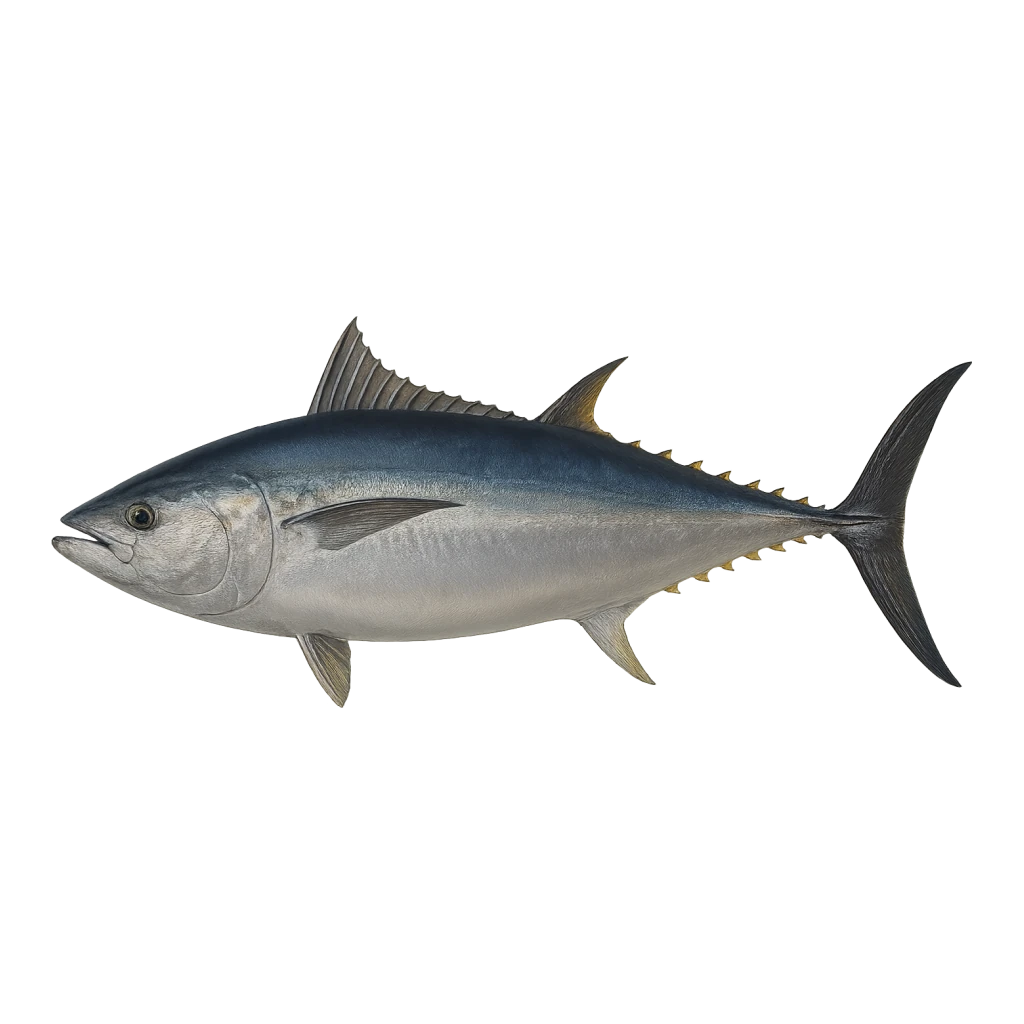
The Bluefin Tuna (Thunnus thynnus) is a large, powerful fish known for its streamlined body and impressive speed. It can be recognized by its dark blue top and silver sides. The belly is a lighter silver color. The first dorsal fin is long and pointed, while the second dorsal fin is smaller and more rounded. The pectoral fins are relatively short and stiff. The mouth is large, with sharp teeth.
It is often confused with the Yellowfin Tuna (Thunnus albacares). The key detail that separates them is the presence of a pronounced yellow stripe along the dorsal fin of the Yellowfin Tuna, which is absent in the Bluefin Tuna.
Where it lives
The Bluefin Tuna is found in the Atlantic Ocean, with a range that extends from the Gulf of Mexico to the northeastern coast of the United States. They inhabit both coastal and offshore waters. In the U.S., they are commonly found in the Gulf of Maine, the Mid-Atlantic, and the waters off Florida.
Bluefin Tuna prefer deeper waters, typically ranging from 300 to 1,200 feet. They are pelagic fish, often found near the surface but can dive deeper in search of prey. Their habitat changes with the seasons; during summer, they move closer to the coast, while in winter, they migrate to deeper offshore waters.
When it bites
Bluefin Tuna are most active from May to October. They prefer water temperatures between 60°F and 75°F. Early morning and late afternoon are the best times to catch them, as they tend to feed more actively during these hours.
Weather conditions can influence their feeding behavior. A passing front can trigger increased activity, while strong winds may scatter baitfish, making them harder to locate. A full moon often leads to better feeding opportunities, as it provides more light for hunting.
How to catch it
To catch Bluefin Tuna, anglers commonly use trolling rigs with large lures or live bait. Popular lures include large skirted trolling lures in colors like blue and white or red and black, typically ranging from 8 to 12 inches in length. Live baits such as mackerel or herring are also effective.
Use heavy tackle with line weights of 80 to 130 pounds. Circle hooks in sizes 8/0 to 10/0 are recommended for better hook sets. When trolling, maintain a speed of 4 to 8 knots and vary your depth to find where the fish are holding. Pay attention to birds and surface activity, as these can indicate the presence of tuna.
Size, age and the table
Anglers typically encounter Bluefin Tuna ranging from 50 to 300 pounds. A trophy Bluefin Tuna is generally considered to be over 400 pounds. They grow rapidly, reaching maturity at around 4 to 5 years of age and can live up to 40 years or more.
Bluefin Tuna are highly sought after for their quality meat, particularly in sushi and sashimi. Proper handling is essential to maintain quality. Use a wet cloth to handle the fish and avoid excessive stress. If releasing, do so quickly and gently to increase survival chances.


