
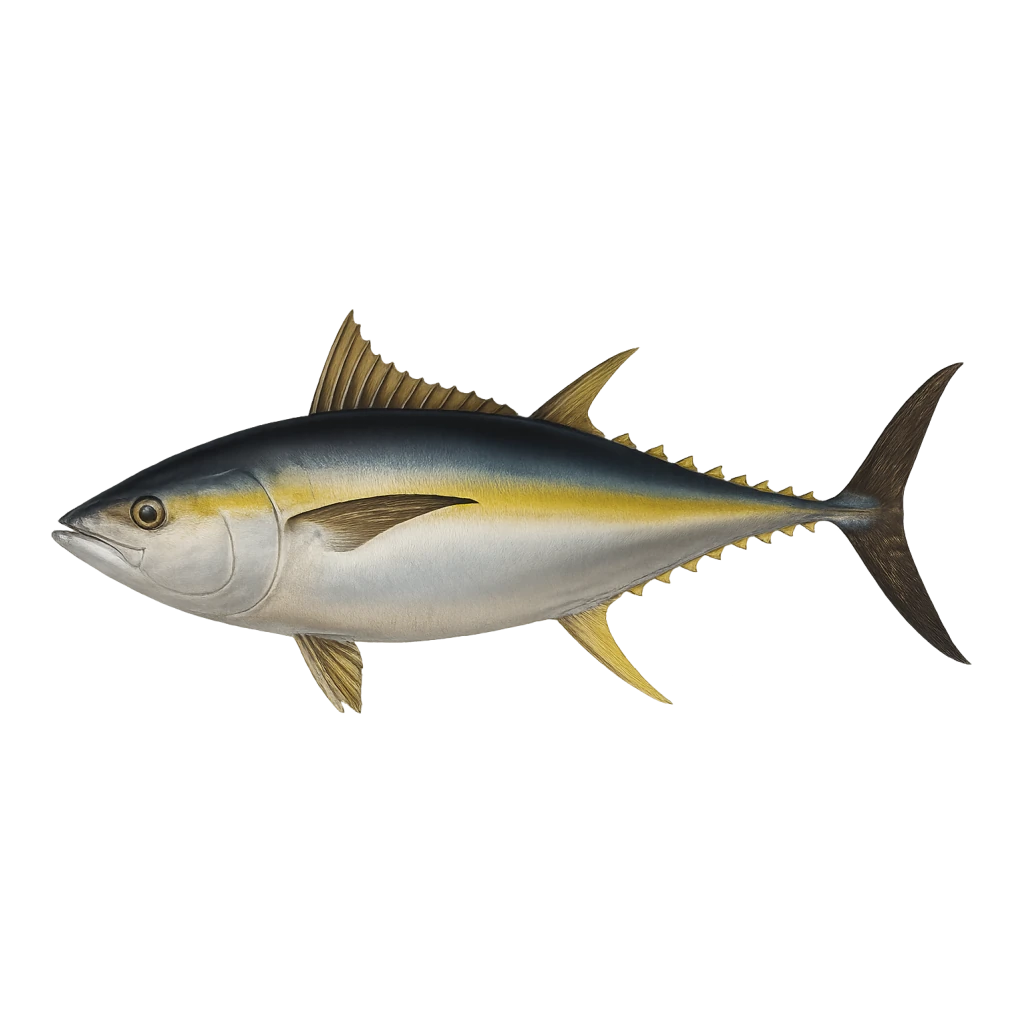
How to recognise it
The Yellowfin Tuna (Thunnus albacares) is a streamlined fish known for its vibrant coloration. It has a dark blue to greenish-blue back, bright yellow fins, and a silver belly. The species features long, slender pectoral fins that can extend beyond the origin of the dorsal fin. The dorsal fin is also distinctive, with a long first dorsal fin that is tall and pointed. Yellowfin Tuna can be confused with the Bigeye Tuna (Thunnus obesus). The key detail that separates them is the size of the eyes; Yellowfin Tuna have smaller eyes compared to Bigeye Tuna.
Where it lives
Yellowfin Tuna are found in tropical and subtropical waters worldwide. In the U.S., they are commonly located in the Gulf of Mexico and along the Atlantic coast, particularly from Florida to North Carolina. They prefer offshore waters, typically found in depths ranging from 100 to 1,500 feet. These fish often associate with floating objects, such as buoys or debris, and are known to school with other species. Seasonal changes influence their behavior, as they may move closer to shore during warmer months and deeper during cooler months.
When it bites
Yellowfin Tuna are most active from late spring through early fall, with peak months being June to September. They prefer water temperatures between 70°F and 85°F. Early morning and late afternoon are the best times to target them, as they tend to feed more actively during these periods. Weather conditions can impact their feeding behavior; a passing front may trigger feeding activity, while strong winds can make fishing more challenging. A full moon often leads to increased activity, as the light encourages feeding.
How to catch it
To catch Yellowfin Tuna, anglers often use trolling rigs with lures or live bait. Popular lures include cedar plugs, jet heads, and skirted trolling lures in sizes ranging from 6 to 12 inches, typically in bright colors like pink, blue, or green. When using live bait, small skipjack tuna or sardines are effective. A 30 to 50-pound test line is recommended, with hooks sized 5/0 to 8/0. Cast near floating objects or schools of fish, and work the lure with a steady retrieve, allowing for occasional pauses to mimic injured prey.
Size, age and the table
Anglers typically encounter Yellowfin Tuna ranging from 20 to 100 pounds, with fish over 200 pounds considered trophies. Growth rates vary, but they can reach maturity at around 3 to 4 years of age. Yellowfin Tuna have a lifespan of up to 7 years. They are known for their excellent eating quality, with firm, flavorful flesh that is highly sought after. Proper handling is crucial; keep the fish cool and avoid prolonged exposure to air. For catch and release, use circle hooks and minimize handling to increase survival rates.


