
How to recognise it
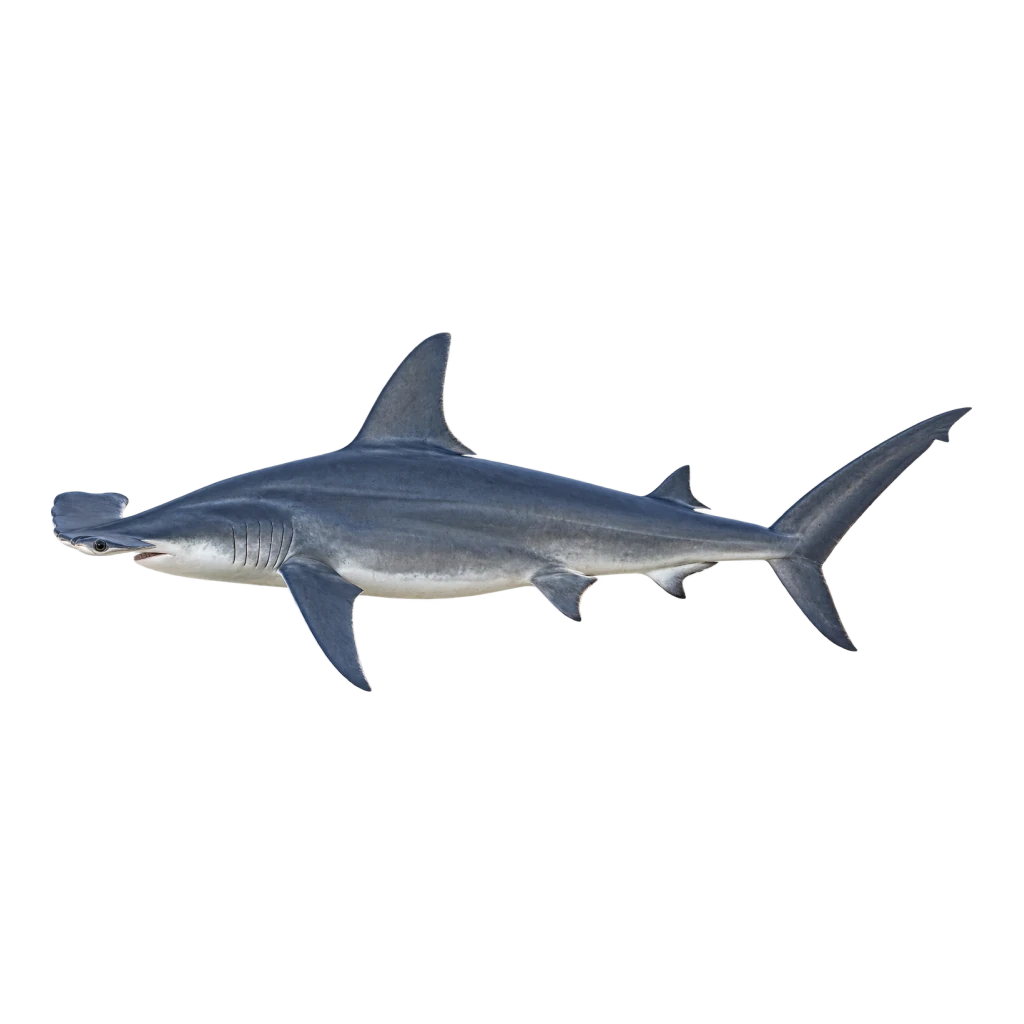
The Scalloped Hammerhead (Sphyrna lewini) is easily identifiable by its unique hammer-shaped head. The head has a distinct scalloped shape with a central indentation. Its body is slender and streamlined, typically featuring a grayish-brown color on the top and a lighter shade on the belly. The dorsal fin is tall and triangular, while the pectoral fins are long and wide. The mouth is located on the underside of the head and contains numerous small teeth. This species is often confused with the Great Hammerhead (Sphyrna mokarran). The key detail that separates them is the shape of the head; the Great Hammerhead has a more pronounced, straight edge compared to the scalloped shape of the Scalloped Hammerhead.
Where it lives
The Scalloped Hammerhead is found in the warm waters of the Atlantic and Pacific Oceans. In the United States, they are commonly located along the southeastern coast, particularly from Florida to North Carolina, and in the Gulf of Mexico. They also inhabit the waters off the West Coast, from California to Mexico. This species prefers coastal waters, often found near continental shelves and inshore areas. They typically inhabit depths ranging from 30 to 300 feet. During warmer months, they may move closer to shore, while in cooler months, they tend to migrate to deeper waters.
When it bites
Scalloped Hammerheads are more active and likely to bite during the warmer months, particularly from May to October. They prefer water temperatures between 70°F and 80°F. The best times to fish for them are early morning and late afternoon. Weather changes, such as a passing front or increased wind, can trigger feeding activity. A full moon may also enhance their feeding behavior, leading to increased catches during this time.
How to catch it
To catch Scalloped Hammerheads, anglers can use a variety of rigs. A common setup includes a heavy-duty spinning or conventional rod paired with a reel that can handle 50-80 lb test line. Use a wire leader of at least 12-18 inches to prevent bite-offs. Effective baits include live fish such as mackerel or bonito, as well as cut bait. Lures like large jigs or topwater plugs in bright colors (such as chartreuse or pink) can also be effective. Cast near structures like reefs, drop-offs, or schools of baitfish. Retrieve the lure with a steady, fast motion to attract their attention.
Size, age and the table
Anglers typically encounter Scalloped Hammerheads ranging from 4 to 8 feet in length, with weights between 100 to 200 pounds. A trophy-sized Scalloped Hammerhead is generally considered to be over 8 feet. They grow rapidly, reaching maturity around 5 years of age and can live up to 20 years. The meat of the Scalloped Hammerhead is edible but is often considered of lower quality compared to other shark species. When handling and releasing, use wet hands or a wet cloth to minimize damage to their skin. Avoid keeping them out of the water for extended periods to ensure their survival upon release.


