
How to recognise it
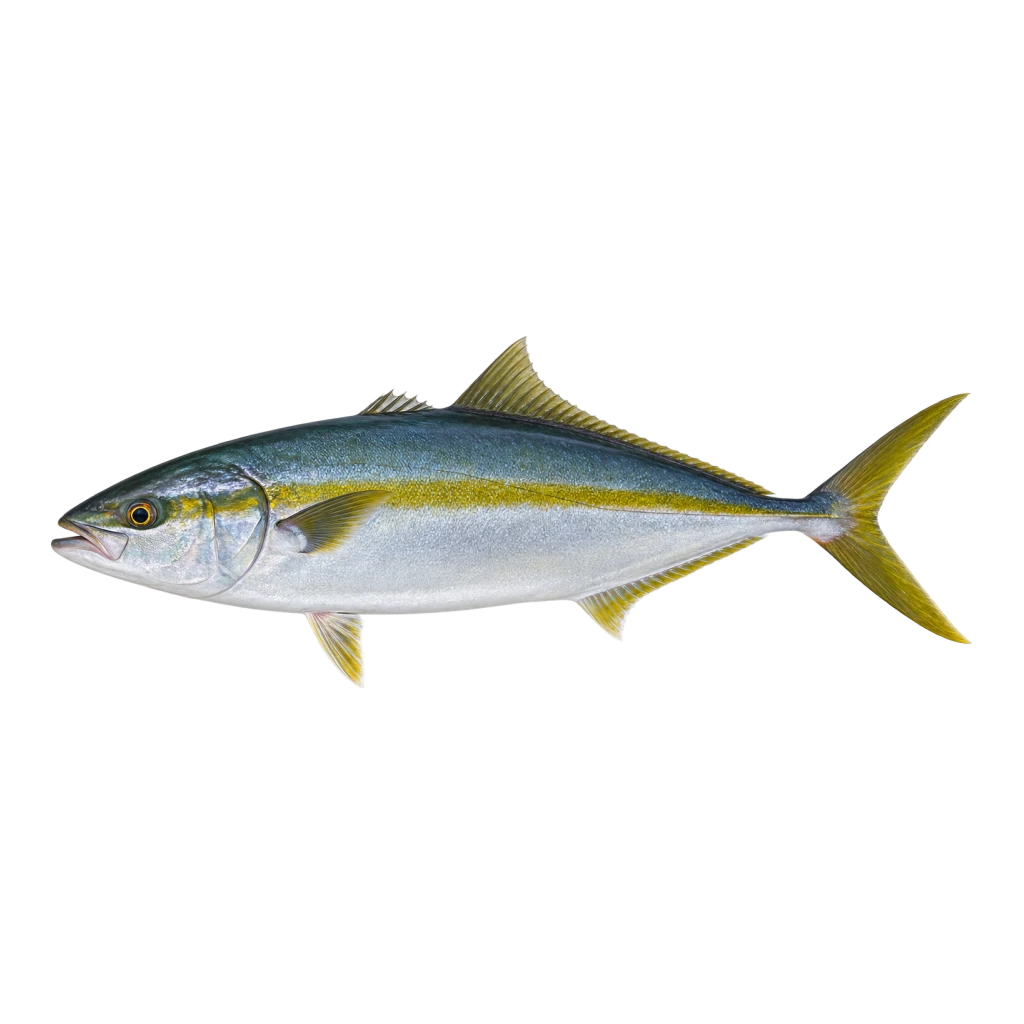
The Yellowtail (Seriola lalandi) is a streamlined fish with a sleek body. Its coloration is a bright yellow on the sides, fading to a silver-white belly. The most distinguishing feature is the long, yellow stripe running from the eye to the tail. The dorsal fin is tall and pointed, while the anal fin is shorter and rounded. The mouth is large with sharp teeth, adapted for catching prey.
Yellowtail is often confused with the similar-looking Amberjack (Seriola dumerili). The key difference is that Yellowtail has a more pronounced yellow stripe along its body, while Amberjack has a more robust body and a less distinct coloration.
Where it lives
In the United States, Yellowtail are primarily found along the Pacific Coast, from Southern California down to Mexico. They inhabit warm, offshore waters, often near rocky reefs and kelp forests. Yellowtail prefer depths ranging from 30 to 300 feet, but they can be found deeper in certain areas.
During the summer months, they tend to move closer to the surface and into shallower waters, while in winter, they may retreat to deeper areas. They are often found near structures such as wrecks, buoys, and underwater canyons, which provide cover and feeding opportunities.
When it bites
Yellowtail are most active from late spring through early fall, typically from May to October. They prefer water temperatures between 65°F and 75°F. Early morning and late afternoon are prime times for fishing, as Yellowtail are more likely to feed during these hours.
Weather changes can affect their behavior. A passing front may trigger increased feeding activity, while strong winds can make them less active. A full moon can also enhance their feeding patterns, making them more likely to bite during the night.
How to catch it
To catch Yellowtail, anglers often use live bait such as sardines or mackerel, typically in the 4 to 8-inch range. When using lures, jigs in bright colors like blue and white or green and yellow can be effective. A common rig is a dropper loop with a 40 to 60-pound test line and a 4/0 to 6/0 hook.
Cast near structures like reefs or kelp beds, and retrieve your bait with a steady, moderate speed. Vary your retrieve to find what triggers a bite. Trolling with larger lures can also be effective when searching for schools.
Size, age and the table
Yellowtail typically range from 10 to 30 pounds, with larger specimens reaching up to 40 pounds. A trophy Yellowtail is generally considered to be over 30 pounds. They grow rapidly, reaching maturity at around 3 to 4 years of age and can live up to 10 years.
Yellowtail are known for their excellent eating quality, with firm, white flesh that is mild in flavor. When handling, it is important to minimize stress and injury to the fish for successful release. If keeping for consumption, proper handling and immediate icing will enhance the quality of the meat.


