
How to recognise it
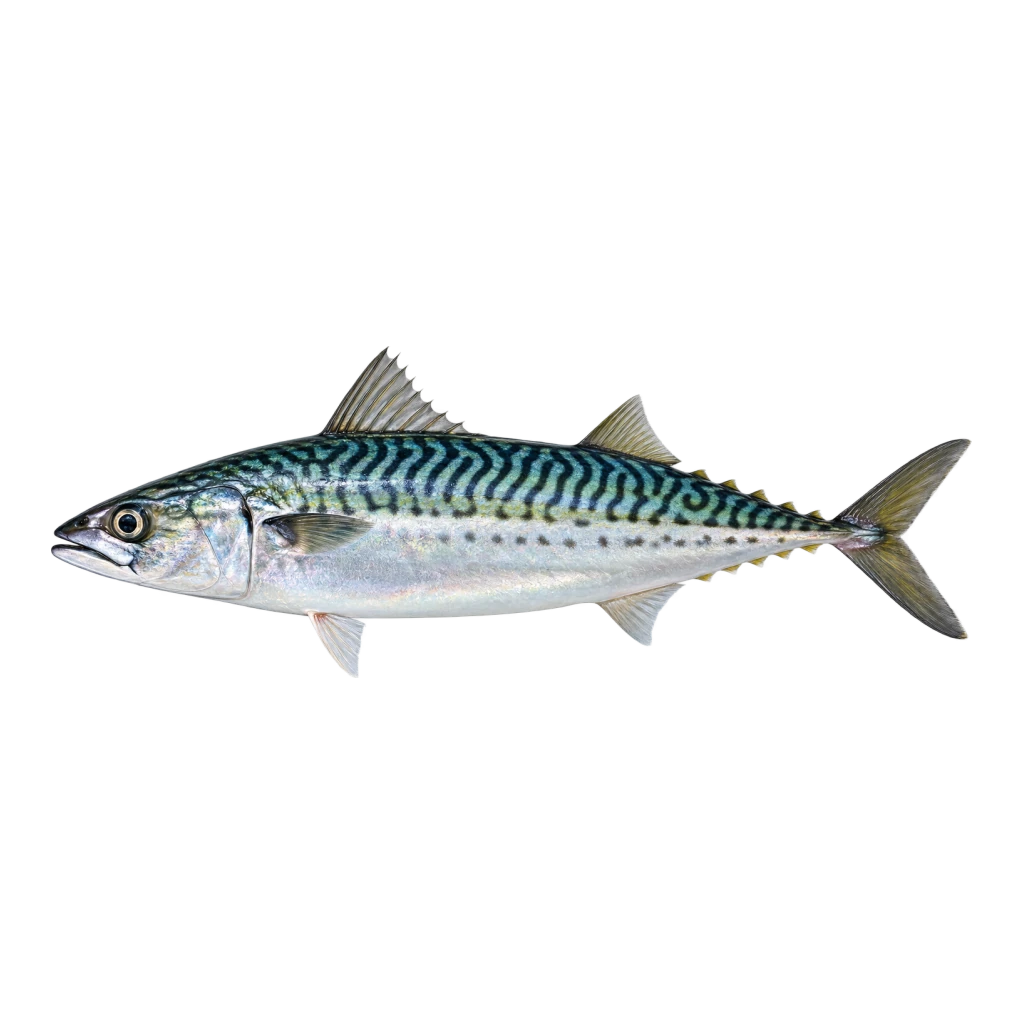
The Pacific Mackerel (Scomber japonicus) is a streamlined fish with a distinctive appearance. It has a metallic blue-green back with vertical black stripes. The sides are silver, and the belly is white. Its body is elongated and torpedo-shaped, which aids in fast swimming.
The Pacific Mackerel has two dorsal fins. The first is spiny and shorter, while the second is longer and softer. Its mouth is large, with sharp teeth, and extends past the eyes. This species is often confused with the Atlantic Mackerel (Scomber scombrus). The key detail that separates them is the number of fin rays in the second dorsal fin; Pacific Mackerel typically has 14 to 16 rays, while Atlantic Mackerel has 17 to 19.
Where it lives
The Pacific Mackerel is primarily found along the West Coast of the United States. Its range extends from Southern California to Alaska. This species prefers saltwater environments, often inhabiting coastal waters and offshore areas. They are commonly found in depths ranging from 30 to 300 feet.
During the warmer months, Pacific Mackerel tend to move closer to shore, while in cooler months, they may migrate to deeper waters. They often associate with schools of smaller fish and are known to inhabit areas with abundant food sources, such as near kelp beds or around floating debris.


