
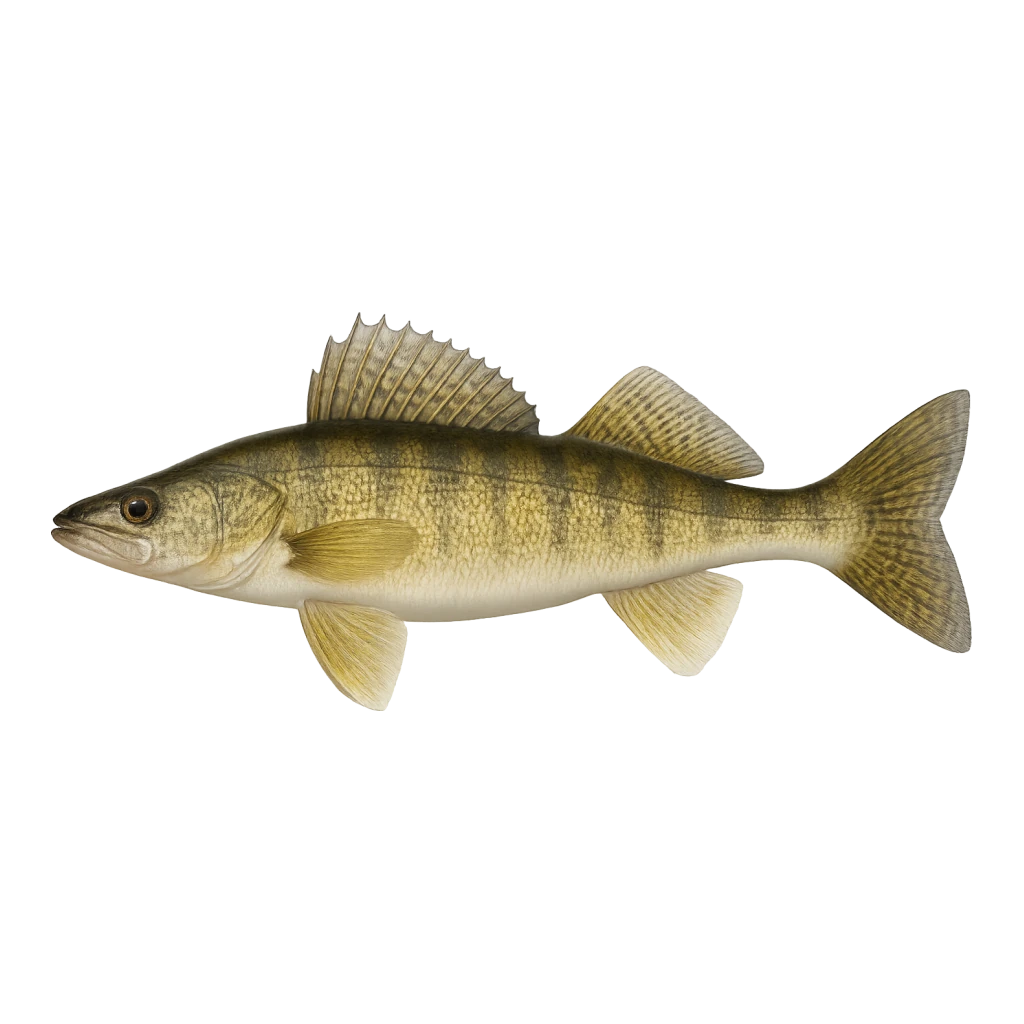
How to recognise it
The walleye (Sander vitreus) is a distinct freshwater fish. It has a long, slender body with a pointed snout. The coloration varies from olive green to golden yellow, with a white belly. The sides often have dark vertical bars. The dorsal fin is spiny and has a dark spot near the back. The mouth is large, filled with sharp teeth. Walleye are often confused with sauger (Sander canadensis). The key difference is that walleye have a white tip on the lower lobe of the tail fin, while sauger do not.
Where it lives
Walleye are found across the northern United States and parts of Canada. They inhabit lakes, rivers, and reservoirs. They prefer clear, cool waters with a depth range of 10 to 30 feet. During warmer months, they move to deeper waters during the day and come shallower at night. In colder months, they tend to stay deeper, often near structures like rocks and submerged trees.
When it bites
Walleye are most active from late spring to early fall. They prefer water temperatures between 60 and 75 degrees F. Early morning and late evening are prime times for fishing. A passing cold front can trigger feeding, while a warm front may slow them down. Windy conditions can also improve fishing, as it stirs up the water and makes them more aggressive. A full moon often leads to increased activity during the night.
How to catch it
Effective rigs for walleye include jigging rigs, slip bobbers, and bottom bouncers. Use jigs in sizes 1/8 to 1/2 ounce, with colors like chartreuse, white, or orange. Live bait such as minnows or nightcrawlers works well. For lures, consider crankbaits in sizes 3 to 5 inches, particularly those that mimic baitfish. Use a monofilament or fluorocarbon line in the 8 to 12-pound test range. Hooks should be size 2 to 4. Cast near structures or drop-offs and retrieve slowly, allowing the lure to mimic natural movement.
Size, age and the table
Most anglers encounter walleye in the 15 to 25-inch range. A trophy walleye is typically over 28 inches. Walleye grow about 1 inch per year in their early years, slowing as they age. They can live up to 10 years or more. The flesh is white and flaky, known for its excellent taste. Handle walleye carefully to avoid damaging their slime coat, which protects them from disease. If releasing, do so gently to ensure their survival.


