
How to recognise it
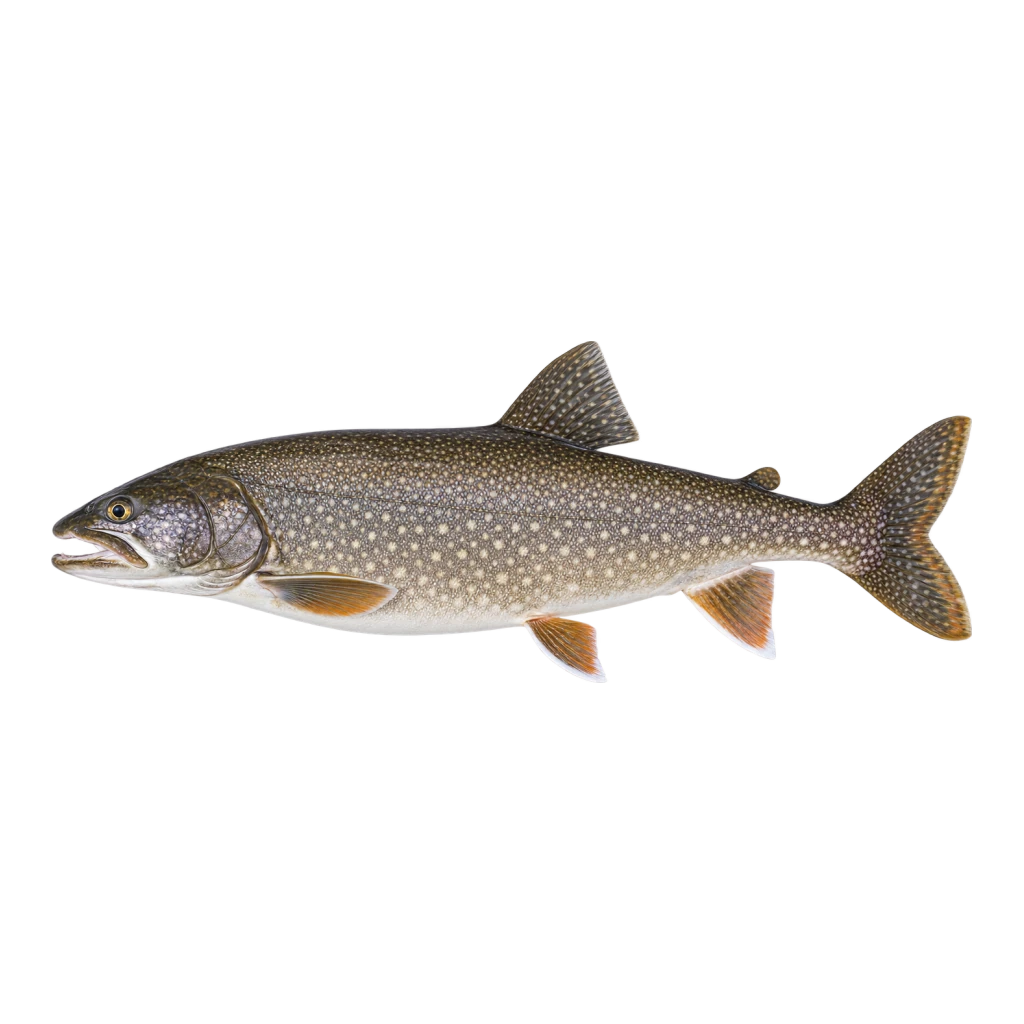
Lake Trout (Salvelinus namaycush) are easily identifiable by their distinct features. They have a streamlined body that can reach lengths of up to 36 inches and weights of 30 pounds or more. Their coloration varies from dark green to blue-green on the back, with lighter sides and a white belly. They are marked with pale, irregular spots that can be white or yellow. The fins are typically dark with light spots, and the tail is deeply forked.
Lake Trout are often confused with Brook Trout (Salvelinus fontinalis). The key detail that separates them is that Lake Trout have a more elongated body and a deeply forked tail, while Brook Trout have a square tail.
Where it lives
Lake Trout are primarily found in the northern regions of the United States. Their range includes the Great Lakes, northern New England, and parts of the Rocky Mountains. They inhabit cold, clear freshwater lakes and prefer depths ranging from 30 to 150 feet, often found near the bottom. In summer, they may move deeper to escape warmer surface temperatures, while in winter, they can be found at varying depths depending on ice cover and water temperature.
During the spring, they tend to move into shallower waters for spawning. In the fall, they may return to deeper areas as water temperatures drop.
When it bites
Lake Trout are most active from late spring to early fall. They typically bite from May through September, with peak activity occurring when water temperatures range from 50 to 65 degrees F. Early morning and late evening are the best times to fish for them, as they are more likely to feed during these cooler parts of the day.
Weather conditions can also influence their behavior. A passing front may trigger increased feeding activity, while strong winds can make them less active. Full moons can enhance their feeding patterns, making them more likely to bite.
How to catch it
To catch Lake Trout, anglers often use downriggers or lead core lines to reach the desired depths. Common rigs include the use of spoons, jigs, and live bait. Spoons in sizes 3 to 5 inches, particularly in silver, blue, or chartreuse, are effective. Jigs in the 1 to 2-ounce range, tipped with minnows or soft plastics, can also yield good results.
When using live bait, small minnows or smelt are preferred. Use a medium to heavy action rod with a line strength of 10 to 20 pounds. Hooks should be in the range of size 1 to 3/0. Cast near underwater structures, drop-offs, and points, and work the bait with a steady retrieve or a jigging motion to attract their attention.
Size, age and the table
Typical Lake Trout caught by anglers range from 18 to 30 inches, with fish over 30 inches considered trophies. Growth rates vary by region and food availability, but they can grow about 1 inch per year in optimal conditions. Lake Trout can live for over 20 years, with some individuals reaching ages of 30 years or more.
Lake Trout have a mild flavor and firm texture, making them a popular choice for eating. Proper handling is essential to ensure their survival if released. Use wet hands or a landing net to minimize damage to their skin. If you plan to keep them, ensure they are kept cool and cleaned promptly for the best quality. Always check local regulations regarding size limits and bag limits before fishing.


