
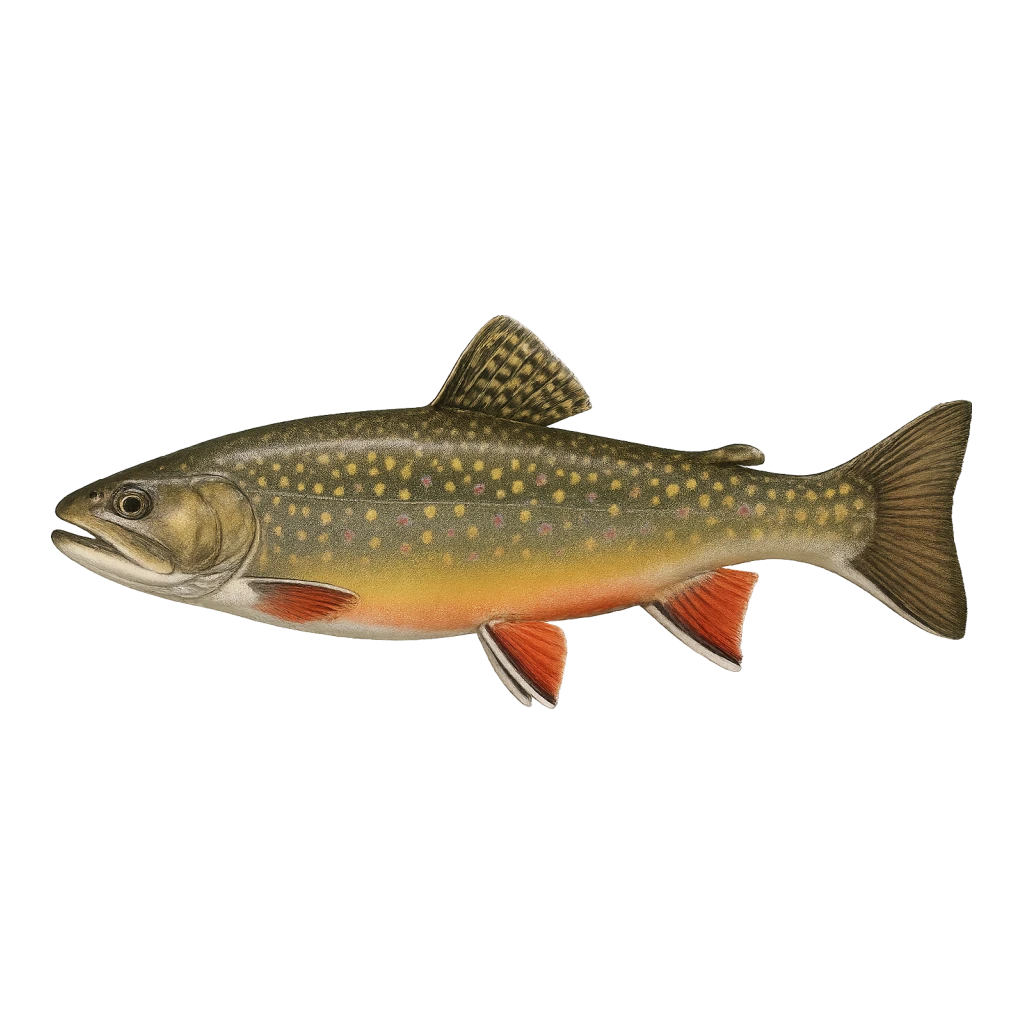
How to recognise it
The brook trout (Salvelinus fontinalis) is a striking fish. It has a dark green to blue-green back with a distinctive marbled pattern. The sides are often a lighter green or yellow, adorned with red spots surrounded by blue halos. Its belly is typically a creamy white. The fins are also notable; they are usually dark with white edges. The mouth is small and extends to the middle of the eye.
This species is often confused with the similar-looking lake trout (Salvelinus namaycush). The key detail that separates them is the presence of small, light-colored spots on the lake trout's back and sides, while brook trout have red spots surrounded by blue halos.
Where it lives
Brook trout are primarily found in the eastern United States. Their range extends from Maine to Georgia, with significant populations in the Appalachian Mountains. They thrive in cold, clear streams, rivers, and lakes. Ideal water temperatures range from 50 to 60 degrees F.
Brook trout prefer shallow waters with a depth range of 1 to 10 feet. They seek cover in areas with rocks, fallen trees, and overhanging vegetation. In warmer months, they may move to deeper pools to escape heat. In winter, they can be found in deeper waters where temperatures remain stable.
When it bites
Brook trout are most active from late spring to early fall. They typically bite from April through October. The ideal water temperature for fishing is between 55 and 65 degrees F. Early morning and late evening are the best times to catch them, as they tend to feed more actively during these periods.
Weather changes can affect their behavior. A passing front may trigger increased feeding activity. Wind can also stir up food sources, making them more aggressive. A full moon often leads to increased activity at night, but fishing during the day can still yield good results.
How to catch it
To catch brook trout, use light tackle. A 4 to 6-pound test line is recommended, with hooks sized 10 to 14. Popular rigs include small spinners, spoons, and fly setups. For bait, worms, minnows, and small jigs work well.
When using lures, opt for sizes ranging from 1/16 to 1/8 ounce. Colors like silver, gold, and natural patterns are effective. Cast near cover, such as rocks or fallen trees, and retrieve slowly. For fly fishing, use dry flies or nymphs that mimic local insects.
Size, age and the table
Brook trout typically range from 8 to 12 inches in length. A trophy brook trout is generally considered to be over 16 inches. Growth rates vary based on habitat and food availability, but they can grow about 1 inch per year in optimal conditions.
The lifespan of brook trout can reach up to 5 to 7 years. They are known for their excellent eating quality, with a mild, delicate flavor. When handling brook trout, wet your hands to avoid damaging their slime coating. If you plan to release them, do so gently to ensure their survival.


