
How to recognise it
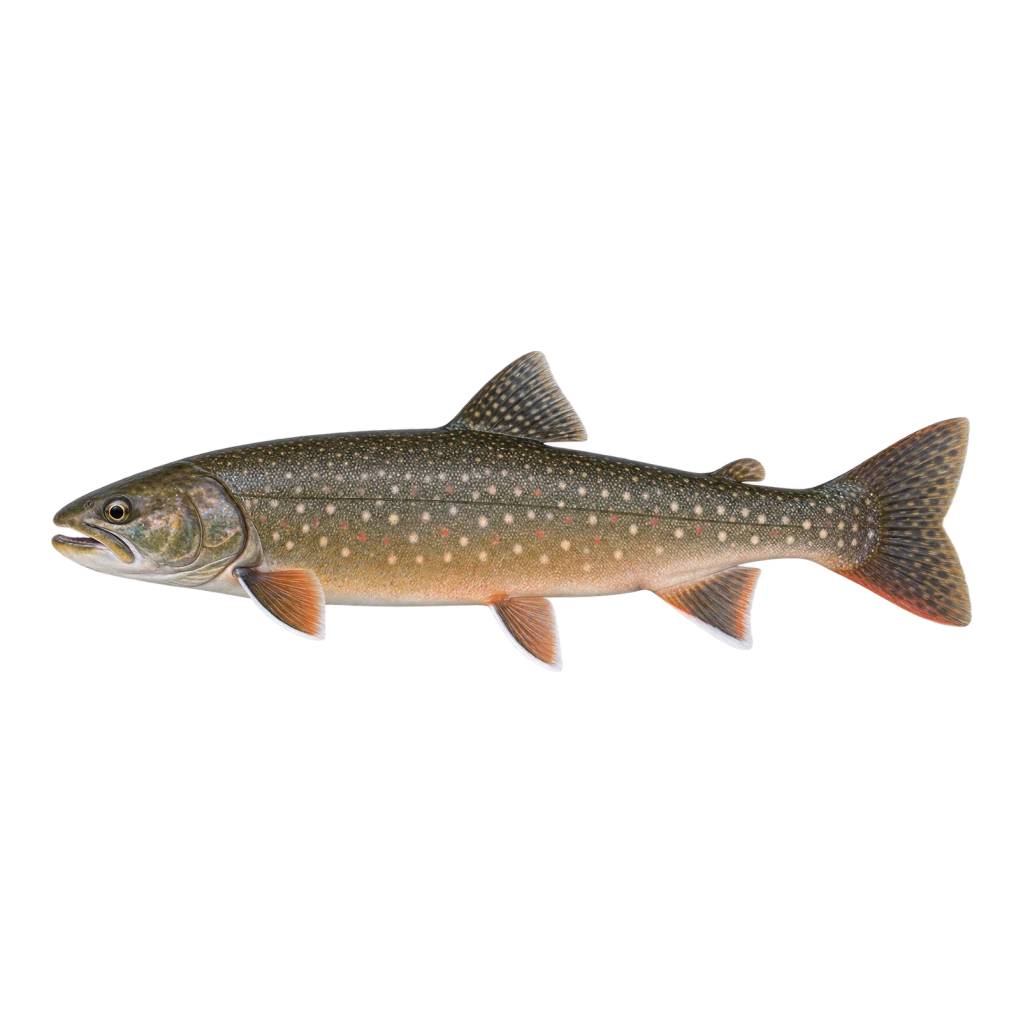
The Bull Trout (Salvelinus confluentus) is a member of the salmon family. It has a streamlined body, typically olive green to gray on the back, with lighter sides and a pale belly. The fish features distinctive yellow or white spots on its back and fins. Its fins are often marked with a white edge, particularly on the dorsal and tail fins. The mouth is large, with sharp teeth, and extends past the eye. Bull Trout are often confused with the Brook Trout (Salvelinus fontinalis). The key detail that separates them is the lack of red spots on the Bull Trout, which are present on the Brook Trout.
Where it lives
Bull Trout are primarily found in the western United States. Their range includes the Pacific Northwest, northern Rockies, and parts of the Great Basin. They inhabit cold, clean freshwater streams, rivers, and lakes. Bull Trout prefer depths of 10 to 30 feet but can be found deeper in larger lakes. They seek cover in rocky structures, undercut banks, and submerged logs. In summer, they may move to deeper waters to escape warmer surface temperatures, while in winter, they often stay in deeper, slower-moving waters.
When it bites
Bull Trout are most active from late spring to early fall, typically from May to September. They prefer water temperatures between 50 to 60 degrees F. Early morning and late evening are the best times to fish for them. Weather changes, such as a passing front or increased wind, can trigger feeding activity. A full moon may also enhance their feeding behavior, making them more aggressive during the night.
How to catch it
Effective rigs for Bull Trout include drift fishing with a float or bottom bouncing with weights. Use baits like salmon eggs, nightcrawlers, or small minnows. Lures such as spinners, spoons, and streamers in sizes 1/4 to 1/2 ounce work well. Colors like silver, gold, and bright patterns are effective. Use a line strength of 8 to 12 pounds and hooks sized 6 to 2. Cast near rocky structures or deep pools, and retrieve lures with a steady, moderate speed. For bait, allow it to drift naturally with the current.
Size, age and the table
Anglers typically encounter Bull Trout ranging from 12 to 20 inches in length, with weights between 1 to 5 pounds. A trophy Bull Trout is generally considered to be over 20 inches. Growth rates vary by habitat, but they can reach maturity in 4 to 6 years. Bull Trout can live up to 12 years or more. They are known for their excellent eating quality, with firm, white flesh. Handle them carefully to ensure a successful release, as they are sensitive to temperature changes and handling stress.


