
How to recognise it
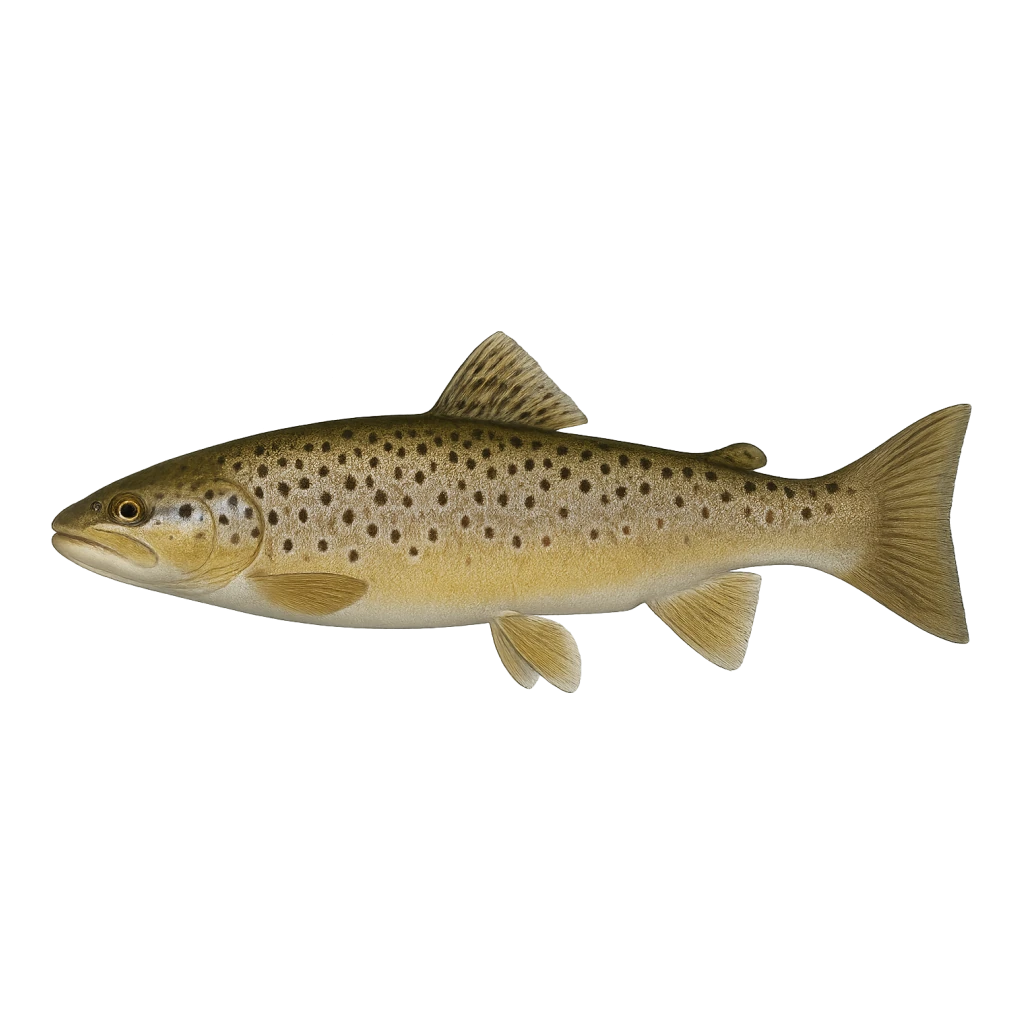
The Brown Trout (Salmo trutta) is known for its distinctive coloration. It typically has a golden-brown body with dark spots scattered across its back and sides. The belly is usually lighter, often white or yellowish. The fins are often spotted, especially the dorsal and adipose fins. Its mouth is large, extending past the eyes, and contains sharp teeth.
This species is often confused with the Rainbow Trout (Oncorhynchus mykiss). The key detail that separates them is the presence of black spots on the Brown Trout, which are absent on the Rainbow Trout.
Where it lives
Brown Trout are widely distributed across the United States. They thrive in the cold waters of the Northeast, Midwest, and parts of the West. They prefer freshwater rivers, streams, and lakes, typically found in depths ranging from 3 to 30 feet. Brown Trout often seek cover in structures like rocks, logs, and undercut banks.
In summer, they may move to deeper, cooler waters. In winter, they can be found in slower-moving sections of rivers or deeper pools. Seasonal changes in temperature and water flow influence their habitat preferences.
When it bites
Brown Trout are most active from March to October. They prefer water temperatures between 50°F and 65°F for optimal feeding. Early mornings and late evenings are the best times to catch them. They tend to be less active during the heat of the day.
Weather conditions can affect their feeding behavior. A passing front may trigger increased activity, while strong winds can make them more cautious. A full moon can also enhance their feeding, as it provides more light during the night.
How to catch it
Effective rigs for Brown Trout include the slip sinker rig and the float rig. Use live bait such as worms or minnows, typically in sizes 3 to 5 inches. Lures like spinners and spoons in sizes 1 to 3 are also effective, with colors like silver, gold, and bright patterns attracting attention.
For line, use 4 to 8-pound test monofilament or fluorocarbon. Hooks should be size 8 to 12 for bait and size 6 to 10 for lures. Cast near structures like rocks or fallen trees and retrieve slowly to mimic natural prey. Vary your retrieve speed to find what triggers bites.
Size, age and the table
Anglers typically encounter Brown Trout ranging from 10 to 20 inches. A trophy Brown Trout is generally considered to be over 24 inches. Growth rates vary by region and habitat, but they can grow about 1 inch per year in optimal conditions. Brown Trout can live up to 10 years or more.
They are known for their excellent eating quality, with a mild flavor. When handling, wet your hands to minimize slime loss and avoid using a net if possible. For catch and release, use barbless hooks and minimize air exposure to ensure survival.


