
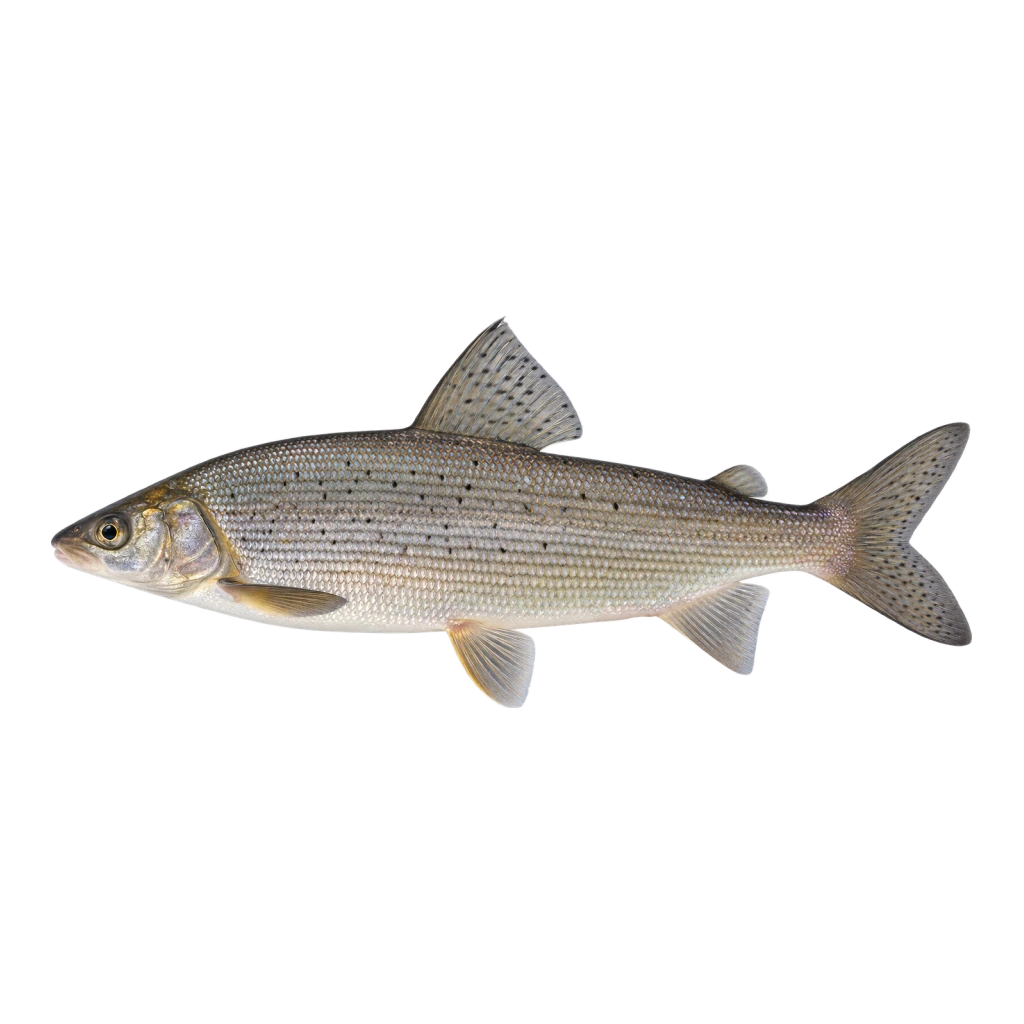
How to recognise it
The Mountain Whitefish (Prosopium williamsoni) is a slender fish with a streamlined body. It typically measures 6 to 12 inches in length. The coloration is generally light olive to silver on the back, fading to a white belly. It has a distinct dark lateral line running from head to tail. The fins are translucent with a slight yellow or orange hue. The mouth is small and terminal, with no prominent teeth.
This species is often confused with the closely related Arctic Grayling. The key detail that separates them is the presence of a small dorsal fin on the Mountain Whitefish, which is absent in the Arctic Grayling.
Where it lives
The Mountain Whitefish is primarily found in the western United States. Its range includes the Rocky Mountains, from Montana to New Mexico. It inhabits cold, clear streams and rivers, often in areas with gravel or rocky substrates. The preferred depth ranges from 1 to 6 feet.
During the summer, Mountain Whitefish tend to move to deeper pools with cover such as rocks and submerged logs. In winter, they may migrate to slower-moving waters with warmer temperatures. Seasonal changes in water flow and temperature influence their habitat preferences.
When it bites
Mountain Whitefish are most active from April to October. They prefer water temperatures between 50 and 65 degrees F. Early morning and late evening are the best times to catch them, as they feed more actively during these periods.
Weather conditions can impact their feeding behavior. A passing front may trigger increased activity, while strong winds can make them less likely to bite. A full moon often results in higher feeding activity, especially during the night.
How to catch it
To catch Mountain Whitefish, use light tackle. A 4 to 6-pound test line is recommended, with hooks ranging from size 14 to 18. Common rigs include a simple nymph rig or a dry fly setup. Popular baits include small nymphs, such as pheasant tails or hares' ears, and dry flies like Adams or Elk Hair Caddis in sizes 14 to 16.
Cast upstream and allow the bait to drift naturally with the current. Retrieve slowly, mimicking the movement of natural prey. Focus on areas with structure, such as undercut banks and rocky outcrops, where fish are likely to hold.
Size, age and the table
Anglers typically encounter Mountain Whitefish in the 8 to 12-inch range. A trophy Mountain Whitefish is considered to be over 14 inches. They grow quickly, reaching maturity in about 2 to 3 years, and can live up to 5 years.
Mountain Whitefish have good eating quality, with a mild flavor and firm texture. When handling, wet your hands to minimize slime loss. For catch and release, use barbless hooks and minimize air exposure to ensure their survival.


