
How to recognise it
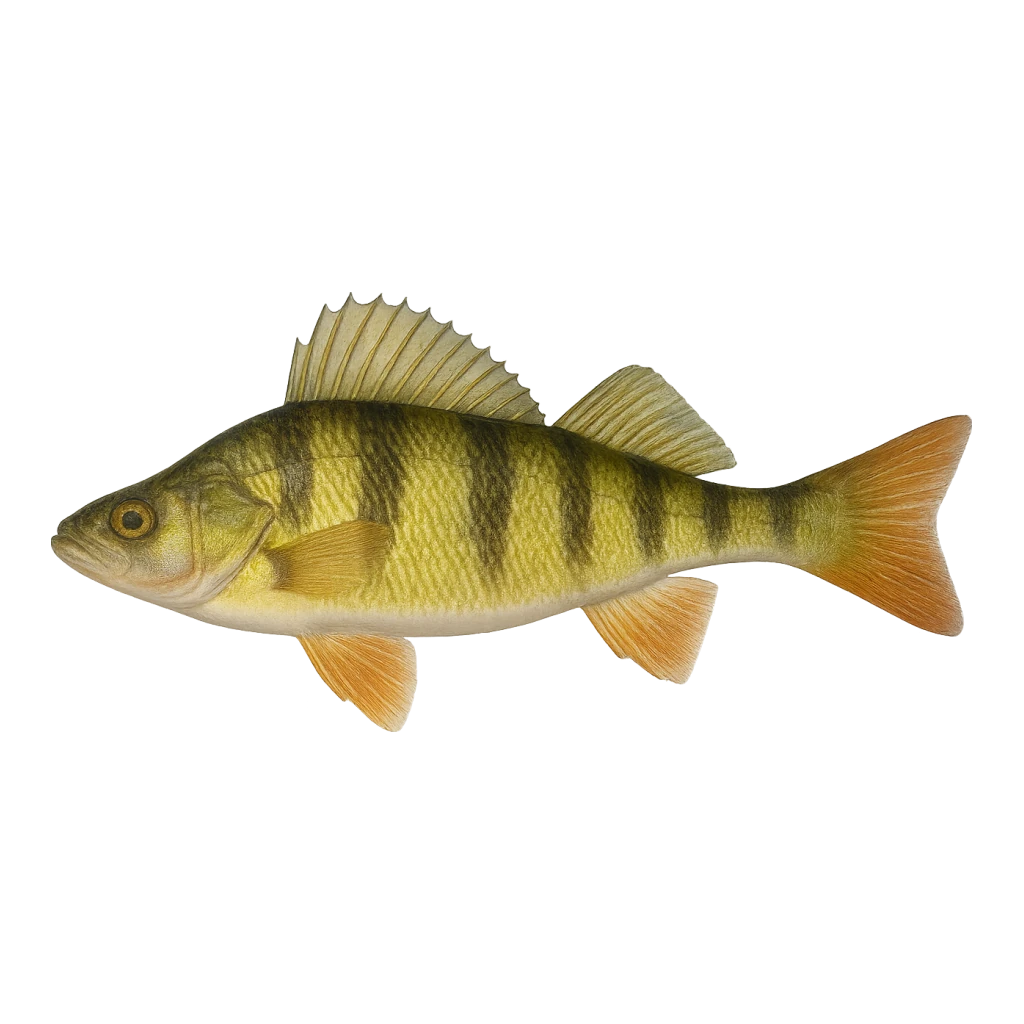
The Yellow Perch (Perca flavescens) is a slender fish with a distinctive yellow to golden body. It features vertical dark green to black stripes along its sides. The dorsal fin is divided into two parts; the first is spiny and the second is soft. The mouth is small and slightly oblique. Yellow Perch are often confused with the European Perch (Perca fluviatilis). The key detail that separates them is the number of spines in the dorsal fin; Yellow Perch have 13 to 15 spines, while European Perch have 11 to 13.
Where it lives
Yellow Perch are found throughout the northern United States and parts of Canada. They inhabit a variety of freshwater environments, including lakes, rivers, and ponds. In terms of depth, they typically range from 5 to 30 feet, depending on the season and water temperature. During the warmer months, they prefer shallow waters with vegetation for cover. In winter, they move to deeper waters as temperatures drop.
When it bites
Yellow Perch are most active from late spring to early fall. They bite best when water temperatures are between 60°F and 75°F. Early morning and late afternoon are prime times for fishing. Weather changes, such as a passing front or increased wind, can trigger feeding activity. A full moon may also enhance their feeding patterns, making them more aggressive.
How to catch it
Effective rigs for catching Yellow Perch include slip bobbers and jigging setups. Use small jigs ranging from 1/16 to 1/8 ounce in bright colors like chartreuse, orange, or white. Live bait such as minnows, worms, or small leeches work well. Use a 4 to 6-pound test line with size 8 to 10 hooks. Cast near structures like weed beds, rocks, or drop-offs. Retrieve slowly, allowing the bait to sink and then jigging it back to entice bites.
Size, age and the table
Anglers typically encounter Yellow Perch in the 8 to 12-inch range. A trophy Yellow Perch is generally considered to be over 14 inches. They grow quickly, reaching around 6 inches in their first year and can live up to 10 years. Yellow Perch are known for their excellent eating quality, with a mild flavor and flaky texture. When handling them, wet your hands to avoid damaging their slime coat, and release them gently to ensure their survival.


