
How to recognise it
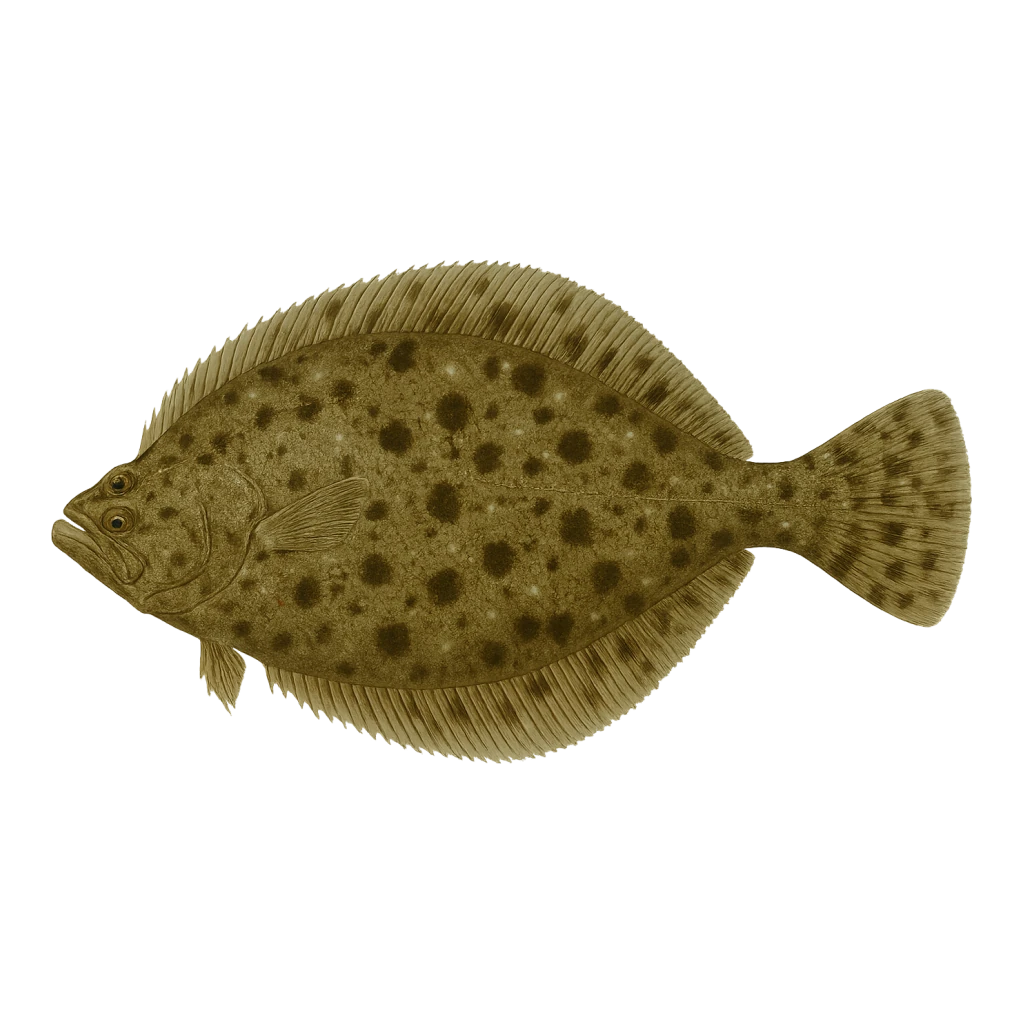
The Summer Flounder, or Paralichthys dentatus, is a flatfish with a distinctive appearance. It has a flattened body that is usually brown or greenish on the upper side, allowing it to blend in with the ocean floor. The underside is white. The fish features a long, pointed snout and a large mouth filled with sharp teeth. Its dorsal fin runs along the length of the body, and the anal fin mirrors it. Summer Flounder can be confused with the Southern Flounder (Paralichthys lethostigma). The key detail that separates them is the presence of a prominent dark spot on the upper side of the Southern Flounder, which the Summer Flounder lacks.
Where it lives
Summer Flounder are primarily found along the Atlantic coast of the United States. Their range extends from Maine to Florida. They inhabit estuaries, bays, and coastal waters. Typically, they prefer sandy or muddy bottoms where they can easily camouflage themselves. Summer Flounder are usually found at depths ranging from 10 to 150 feet. In warmer months, they move into shallower waters, while in colder months, they tend to migrate to deeper areas.
When it bites
Summer Flounder are most active from May to October. They prefer water temperatures between 60 and 75 degrees F. Early morning and late afternoon are the best times to catch them, as they are more likely to feed during these hours. Weather changes can affect their behavior; a passing front may trigger increased feeding activity, while strong winds can make them less active. A full moon can also enhance their feeding, as it provides more light for hunting.
How to catch it
To catch Summer Flounder, anglers often use bottom rigs such as a fish finder rig or a flounder rig. Baits like live minnows, squid, or cut bait are effective, typically in sizes of 4 to 6 inches. Lures such as bucktail jigs or soft plastic grubs in colors like white, chartreuse, or pink can also be successful. Use a 15 to 30-pound test line with a 1/0 to 3/0 hook size. Cast near structures like rocks, wrecks, or sandy bottoms, and work the bait by bouncing it along the bottom to attract the fish.
Size, age and the table
Anglers typically encounter Summer Flounder ranging from 18 to 24 inches in length. A trophy Summer Flounder is considered to be over 30 inches. They grow quickly, reaching maturity in about 3 years and can live up to 12 years. The flesh of the Summer Flounder is known for its delicate flavor and firm texture, making it a popular choice for eating. When handling, use wet hands or a wet cloth to minimize damage to their skin. If releasing, do so gently to ensure their survival.


