
How to recognise it
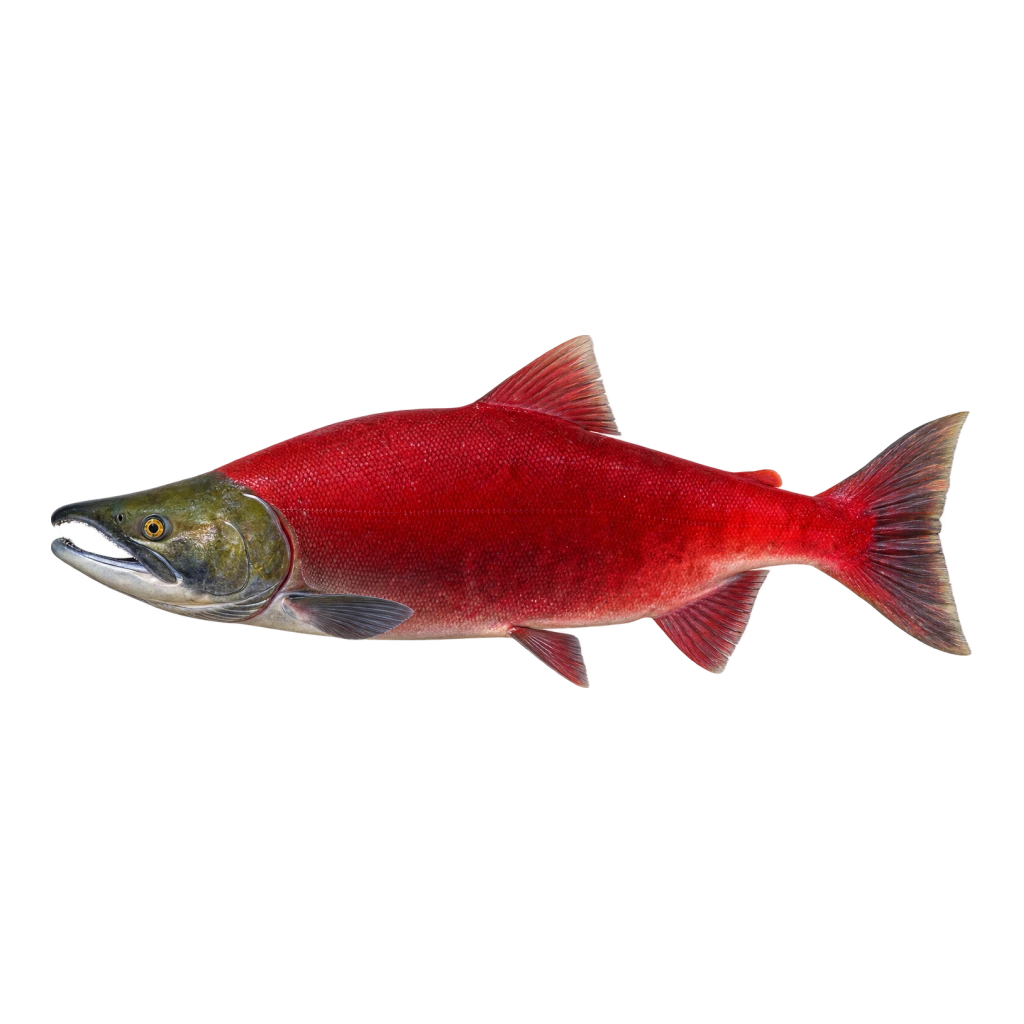
The Sockeye Salmon, or Oncorhynchus nerka, is easily identifiable. It has a streamlined body and a pointed snout. During spawning, males turn a bright red color, while females become a duller shade. Both sexes have greenish-blue heads and dark spots on their backs. The fins are typically dark with a slight reddish hue. The mouth is characterized by sharp, small teeth. Sockeye Salmon are often confused with Coho Salmon. The key detail that separates them is the Sockeye's lack of black spots on its back and tail.
Where it lives
Sockeye Salmon are primarily found in the Pacific Ocean. Their range extends from California to Alaska. They inhabit both freshwater and saltwater environments. In freshwater, they prefer rivers and lakes with clear, cold water. Typical depths range from 10 to 300 feet in the ocean. During the spawning season, they move upstream to shallow waters. In summer, they can be found in deeper waters, while in winter, they often migrate to deeper oceanic areas.
When it bites
Sockeye Salmon are most active from May to September. They prefer water temperatures between 50 and 65 degrees F. Early morning and late evening are prime times for fishing. A passing front can trigger increased feeding activity, while strong winds may scatter schools. A full moon can also enhance their feeding patterns, making them more likely to bite.
How to catch it
Effective rigs for Sockeye Salmon include drift fishing with a float and bait, or using a downrigger with lures. Common baits include salmon eggs, herring, and shrimp. Lures should be bright colors like pink, orange, or chartreuse, typically in sizes 3 to 5 inches. Use a line strength of 10 to 20 pounds and hooks ranging from size 1 to 3/0. Cast near river mouths or in areas with strong currents. Work lures with a steady retrieve, or allow baits to drift naturally with the current.
Size, age and the table
Anglers typically encounter Sockeye Salmon ranging from 5 to 12 pounds. A trophy Sockeye is generally considered to be over 15 pounds. They grow rapidly, reaching maturity at about 3 to 5 years of age. Their lifespan can extend up to 7 years. Sockeye Salmon are known for their excellent eating quality, with firm, rich flesh. Proper handling is crucial; keep them cool and handle them gently to ensure a successful release if not kept for consumption.


