
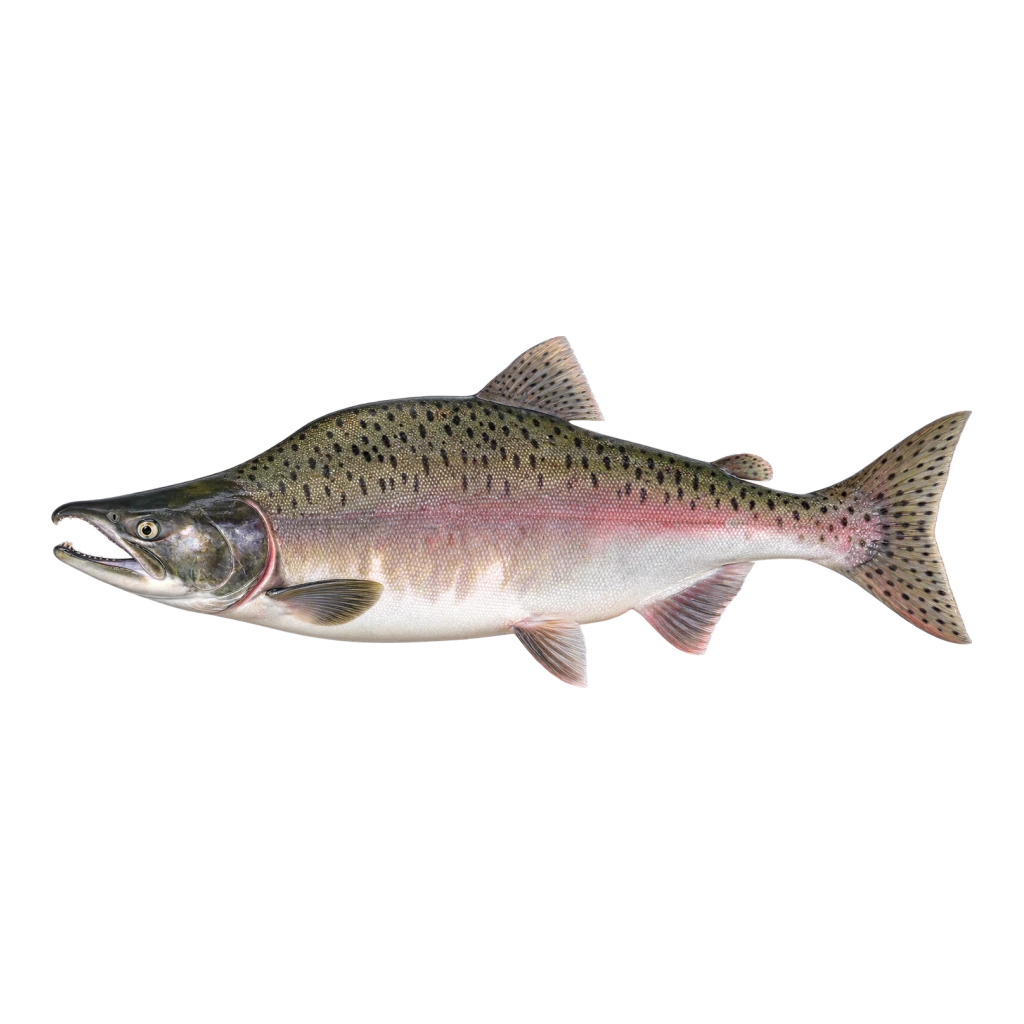
How to recognise it
The Pink Salmon, or Oncorhynchus gorbuscha, is a distinct species. It typically has a light to dark blue-green back with a silvery belly. During spawning, males develop a pronounced hump on their back, which gives them the nickname "humpback salmon." The species is often confused with the Chum Salmon (Oncorhynchus keta), but the key detail that separates them is the presence of small, oval spots on the back and upper lobe of the tail in Chum Salmon, which are absent in Pink Salmon.
Where it lives
Pink Salmon are primarily found in the North Pacific Ocean. In the United States, their range extends from California to Alaska. They inhabit coastal waters and river mouths, typically preferring brackish environments. During the summer months, they can be found in depths of 10 to 100 feet. In the fall, they migrate upstream into freshwater rivers and streams to spawn. Their habitat changes with the seasons, as they move from open ocean waters to freshwater environments for reproduction.
When it bites
Pink Salmon are most active from late summer to early fall, typically from July to September. They prefer water temperatures between 55°F and 65°F. Early morning and late evening are the best times to catch them. Weather changes can influence their feeding behavior; a passing front or strong winds may trigger increased activity. Additionally, a full moon can enhance their feeding patterns, making them more likely to bite.
How to catch it
To catch Pink Salmon, anglers often use spinning or casting rigs. Effective baits include herring, shrimp, and various types of artificial lures such as spoons and spinners. Sizes range from 2 to 4 inches for lures, with colors like pink, silver, and chartreuse being particularly effective. Use a line in the 10 to 20-pound test range and hooks sized 1/0 to 3/0. Cast near river mouths, estuaries, or along shorelines where they are known to school. Retrieve lures with a steady, moderate speed to mimic natural prey.
Size, age and the table
Pink Salmon typically weigh between 3 to 5 pounds and measure around 20 to 25 inches in length. A trophy Pink Salmon is usually considered to be over 8 pounds. They grow rapidly, reaching maturity in about 2 years, and have a lifespan of 3 to 5 years. The flesh of Pink Salmon is mild and has a lower fat content compared to other salmon species, making it a popular choice for grilling and baking. When handling Pink Salmon, it is important to minimize stress and handle them gently to ensure a successful release if not kept for consumption.


