
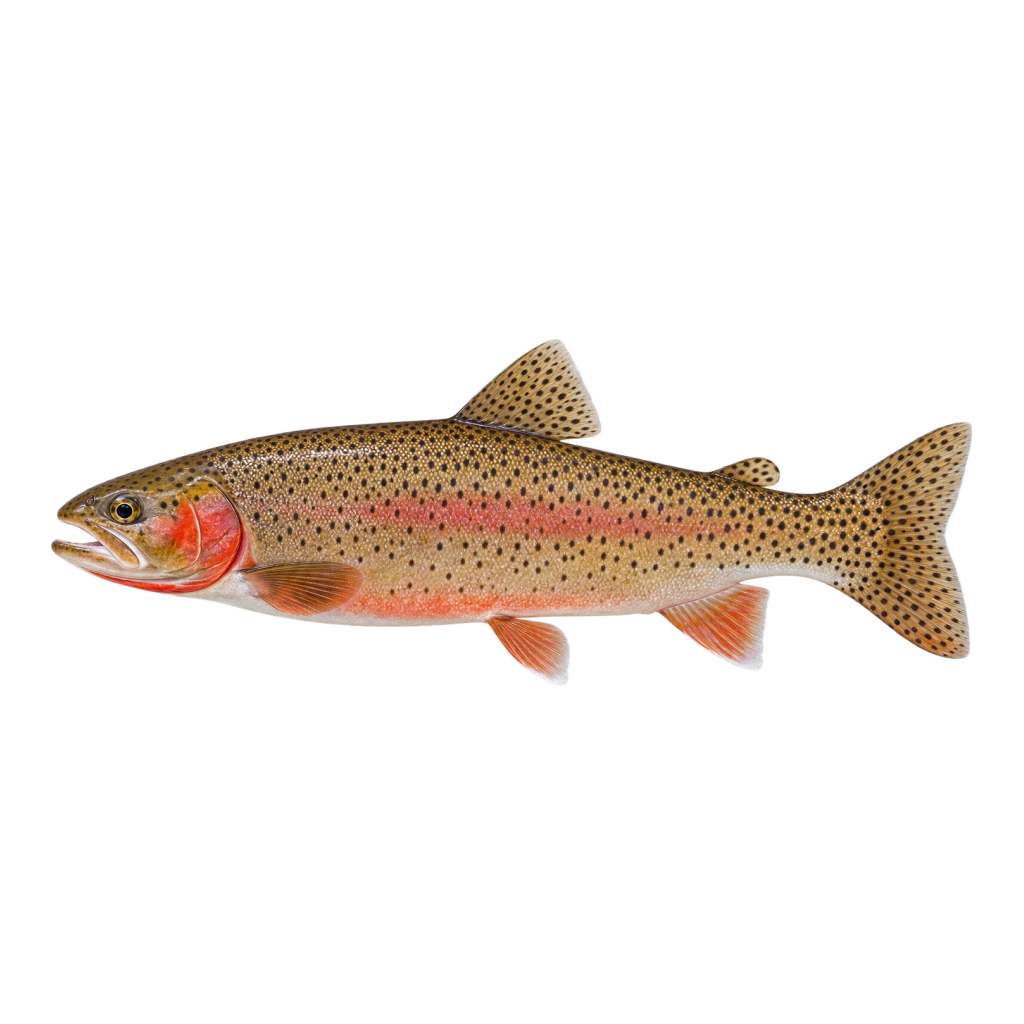
How to recognise it
The Cutthroat Trout (Oncorhynchus clarkii) is identifiable by its vibrant coloration. It typically has a greenish to olive back, with a silvery belly. The most distinguishing feature is the red or orange slash under its jaw, which gives it its name. The fins are generally spotted, and the tail is forked. Cutthroat Trout are often confused with Rainbow Trout (Oncorhynchus mykiss). The key detail that separates them is the presence of the red slash on the Cutthroat's throat, which is absent in Rainbow Trout.
Where it lives
Cutthroat Trout are found throughout the western United States. Their range includes the Pacific Northwest, the Rocky Mountains, and parts of the Great Basin. They inhabit a variety of water types, including rivers, streams, lakes, and reservoirs. They prefer cold, clear waters with temperatures between 50 and 65 degrees F. In terms of depth, they can be found from the surface down to about 30 feet, depending on the season. During warmer months, they tend to stay in cooler, deeper waters, while in colder months, they may move closer to the surface.
When it bites
Cutthroat Trout are most active from April to October. They bite best when water temperatures are between 55 and 65 degrees F. Early morning and late evening are prime times for fishing, as they are more likely to feed during these hours. Weather changes can affect their behavior; a passing front can trigger increased feeding activity. Wind can also stir up food sources, making them more aggressive. A full moon may lead to increased activity at night, but it can also make them more cautious during the day.
How to catch it
Effective rigs for catching Cutthroat Trout include the slip bobber rig and the bottom rig. Use baits such as worms, minnows, or salmon eggs in sizes ranging from 1 to 3 inches. Lures like spinners and spoons in sizes 1 to 3 are also effective, particularly in colors like silver, gold, and bright patterns. For line, use 4 to 8-pound test monofilament or fluorocarbon. Hooks should be size 8 to 12. Cast near structure, such as rocks, fallen trees, or undercut banks. Retrieve lures with a steady, moderate speed, or let baits drift naturally with the current.
Size, age and the table
Anglers typically encounter Cutthroat Trout ranging from 10 to 20 inches. A trophy Cutthroat is generally considered to be over 20 inches. Growth rates vary by habitat, but they can grow about 1 inch per year in optimal conditions. The lifespan of a Cutthroat Trout can reach up to 7 years. They are known for their excellent eating quality, with a mild flavor. When handling, wet your hands to avoid removing the protective slime. For release, minimize air exposure and return them to the water gently to ensure their survival.


