
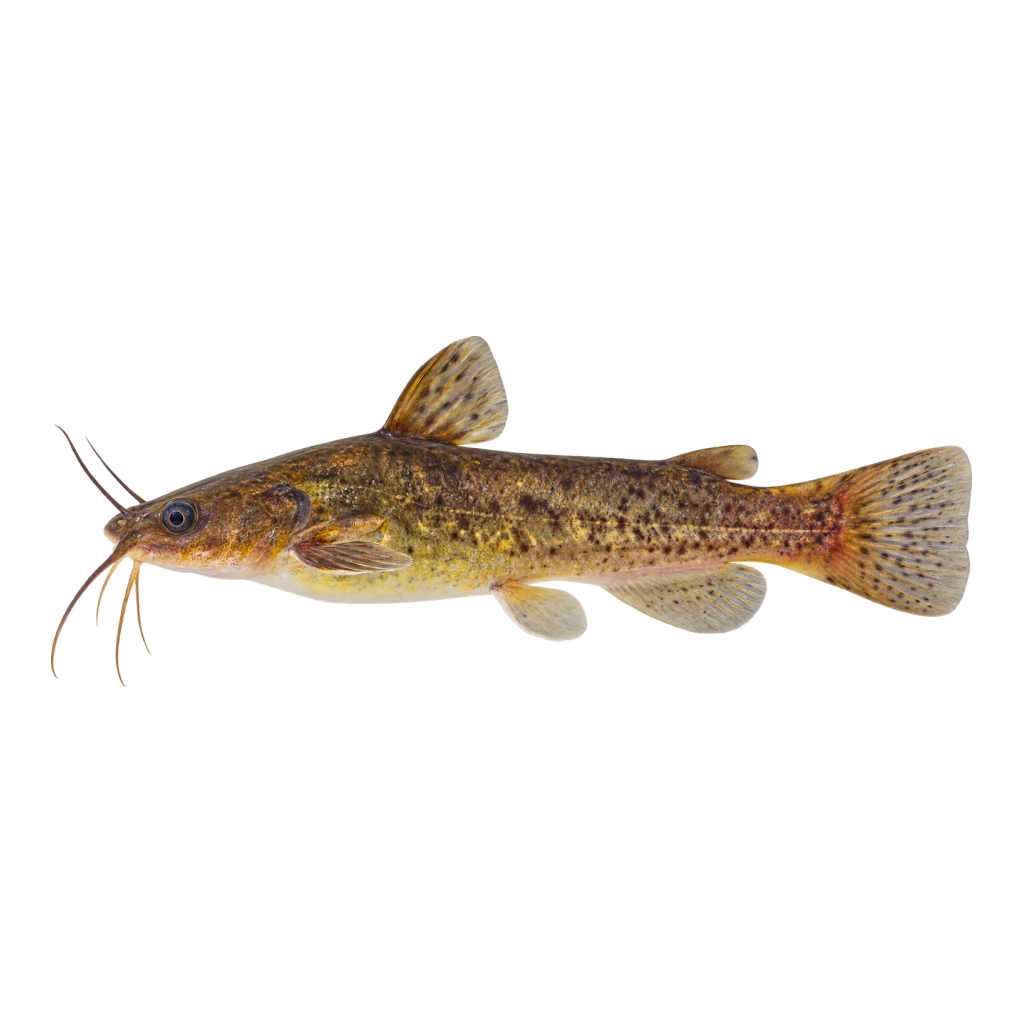
How to recognise it
The Stonecat (Noturus flavus) is a small, elongated catfish. It typically measures 6 to 10 inches in length. The body is slender and covered with a mottled pattern of yellow and brown. This coloration helps it blend into its rocky environment. The Stonecat has a flattened head and a wide mouth filled with small, sharp teeth.
It is often confused with the Margined Madtom (Noturus insignis). The key detail that separates them is the absence of a distinct dark margin on the dorsal fin of the Stonecat, which is present in the Margined Madtom.
Where it lives
The Stonecat is found primarily in the eastern United States. Its range extends from the Great Lakes region down to the Gulf of Mexico. It prefers clear, cool streams and rivers with a rocky or gravel substrate. The Stonecat typically inhabits depths of 1 to 10 feet.
During warmer months, it may seek deeper pools or areas with more cover. In colder months, it often hides under rocks or logs to avoid the current. Seasonal changes in water temperature and flow can affect its habitat preferences.
When it bites
The Stonecat is most active from late spring through early fall. It tends to bite best when water temperatures are between 60 and 75 degrees F. Early morning and late evening are prime times for fishing.
Weather conditions can impact its feeding behavior. A passing front may trigger increased activity, while windy conditions can make it less likely to bite. A full moon can also enhance feeding, as it provides more light during the night.
How to catch it
To catch Stonecats, use a light spinning rod with a 4 to 8-pound test line. A size 6 to 10 hook is recommended. Popular rigs include a simple slip sinker rig or a jig head with a soft plastic bait.
Effective baits include nightcrawlers, small minnows, and soft plastics in natural colors like brown or green. Cast near rocky structures, undercut banks, or submerged logs. Retrieve slowly, allowing the bait to bounce along the bottom to mimic natural movement.
Size, age and the table
Anglers typically encounter Stonecats measuring 6 to 10 inches. A trophy Stonecat is generally considered to be over 12 inches. The growth rate is slow, with individuals reaching maturity in about 2 to 3 years. The lifespan of a Stonecat can reach up to 5 years.
While Stonecats are not commonly sought after for eating, they are edible and have a mild flavor. If you choose to keep one, handle it carefully to avoid damaging its delicate skin. For catch and release, use wet hands or a landing net to minimize stress and injury to the fish.


