
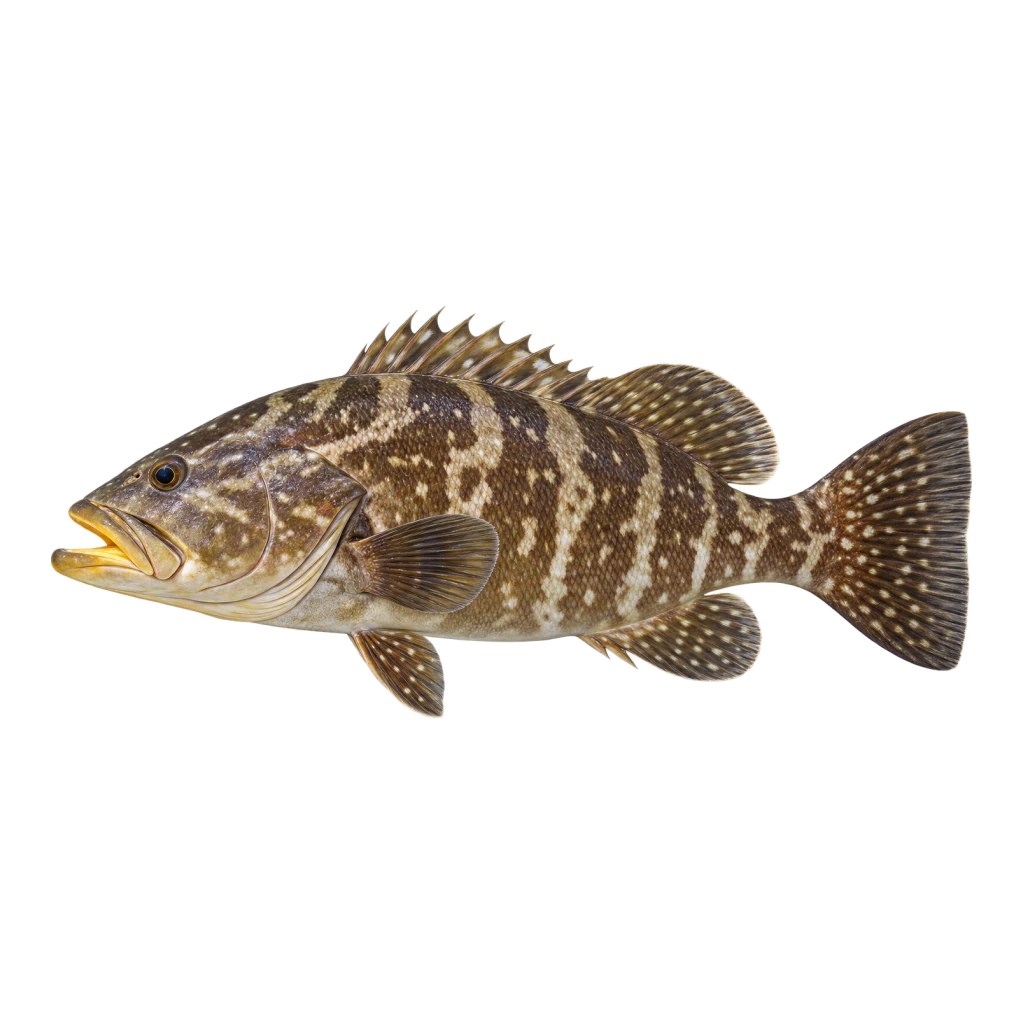
How to recognise it
The Yellowmouth Grouper (Mycteroperca interstitialis) is a robust fish with a distinctive appearance. It has a yellowish-brown body adorned with dark spots. The most notable feature is its bright yellow mouth, which gives the species its name. The dorsal fin is long and spiny, while the anal fin is rounded. The tail is slightly forked. This species is often confused with the Scamp Grouper (Mycteroperca phenax). The key detail that separates them is the yellow mouth of the Yellowmouth Grouper, while the Scamp has a more subdued coloration without the bright yellow hue.
Where it lives
The Yellowmouth Grouper is primarily found in the southeastern United States. Its range extends from North Carolina to Florida, including the Gulf of Mexico. This species prefers warm, saltwater environments, typically inhabiting reefs, rocky bottoms, and ledges. They are commonly found at depths ranging from 30 to 300 feet. During warmer months, they may move shallower, while in colder months, they tend to retreat to deeper waters for thermal comfort. They often seek cover among rocks and coral formations, which provide protection from predators.
When it bites
Yellowmouth Grouper are most active from late spring through early fall, particularly from May to September. They prefer water temperatures between 70°F and 85°F. The best times to fish for them are during dawn and dusk when they are more likely to feed. Weather conditions can influence their feeding behavior; a passing front may trigger increased activity, while strong winds can make them less aggressive. A full moon can also enhance their feeding patterns, as it provides more light during the night.
How to catch it
To effectively catch Yellowmouth Grouper, anglers can use a variety of rigs. A standard bottom rig with a 4/0 to 6/0 circle hook is recommended. Use a 50 to 80-pound test line for durability. Live baits such as pinfish, grunts, or squid are effective, with sizes ranging from 4 to 6 inches. For lures, consider using jigs in bright colors like chartreuse or pink, weighing 1 to 3 ounces. Cast near rocky structures or reefs, and work the bait by bouncing it off the bottom to attract attention. A slow, steady retrieve often works best.
Size, age and the table
Anglers typically encounter Yellowmouth Grouper ranging from 10 to 20 inches in length. A trophy specimen is generally considered to be over 25 inches. Growth rates can vary, but they can reach sexual maturity around 3 to 4 years of age. The lifespan of Yellowmouth Grouper can extend to 15 years or more. They are known for their excellent eating quality, with firm, white flesh. When handling, it is important to minimize stress and use proper techniques for release to ensure their survival after catch and release fishing.


