
How to recognise it
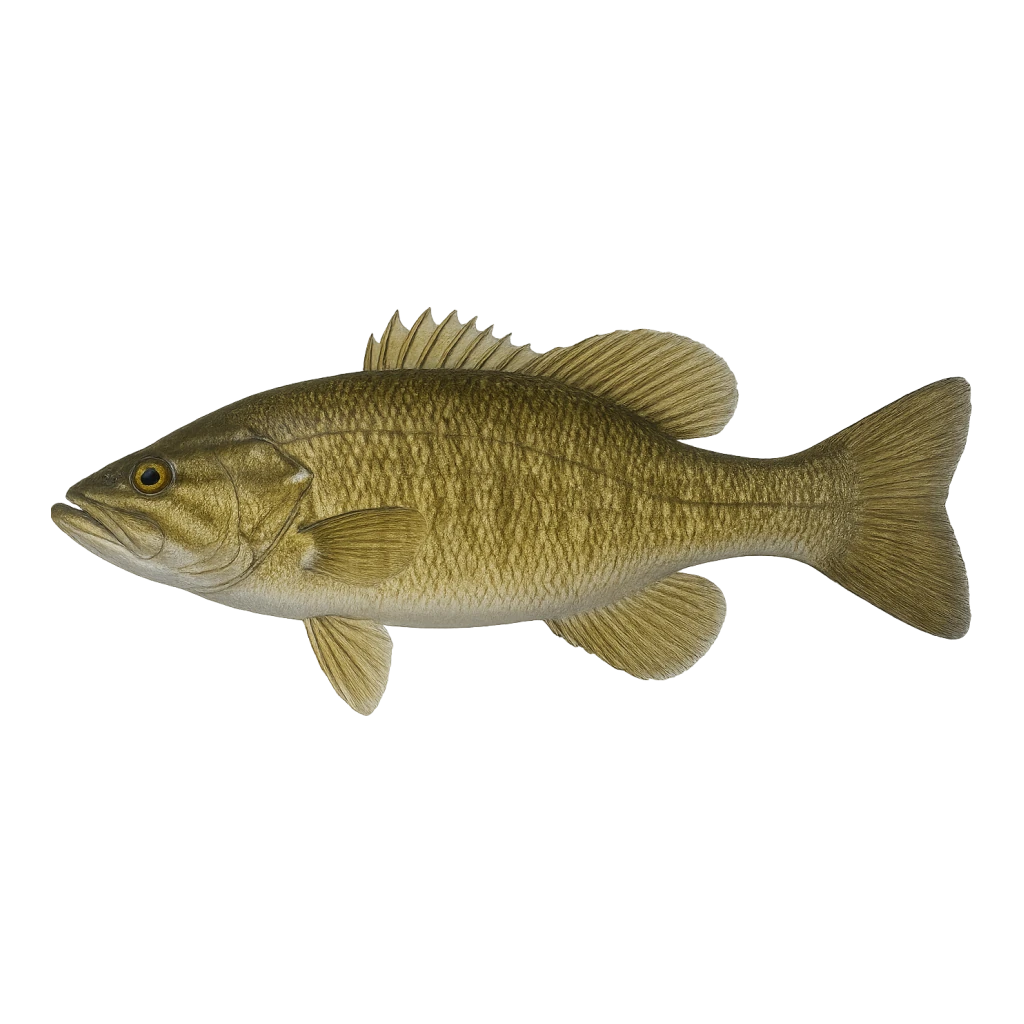
The Smallmouth Bass (Micropterus dolomieu) is a robust fish with a streamlined body. It typically has a bronze to olive-green coloration with dark vertical bars. The belly is lighter, often yellowish. The dorsal fin is long and continuous, with the first part spiny and the second part soft. The mouth is relatively small compared to its body size, and it extends to the front of the eye.
This species is often confused with the Largemouth Bass (Micropterus salmoides). The key detail that separates them is the size of the mouth; the Smallmouth Bass has a smaller mouth that does not extend past the eye.
Where it lives
Smallmouth Bass are found throughout the United States, primarily in the northern and central regions. They inhabit clear, cool waters such as rivers, lakes, and reservoirs. They prefer rocky or gravel bottoms and can be found at depths ranging from 5 to 30 feet.
In the spring, they move into shallower waters for spawning. During summer, they may retreat to deeper, cooler areas. In fall, they often return to shallower waters to feed before winter. In winter, they can be found in deeper, slower-moving waters.
When it bites
Smallmouth Bass are most active from late spring through early fall. They typically bite when water temperatures range from 60 to 75 degrees F. Early morning and late evening are the best times to fish for them.
Weather changes can affect their feeding behavior. A passing front may trigger increased activity, while high winds can make them more difficult to catch. A full moon can also enhance their feeding patterns, making them more aggressive.
How to catch it
Effective rigs for Smallmouth Bass include Texas rigs, Carolina rigs, and drop shot rigs. Use baits such as plastic worms, creature baits, and jigs in sizes ranging from 3 to 5 inches. Colors like green pumpkin, watermelon, and black/blue are effective.
For lures, consider crankbaits and spinnerbaits in sizes 1/4 to 1/2 ounce. Focus on rocky structures, submerged logs, and weed edges. Cast near these areas and retrieve with a steady or erratic motion to entice strikes.
Use a line strength of 8 to 12 pounds and hooks sized 1/0 to 3/0, depending on the bait used. Be prepared for a strong fight, as Smallmouth Bass are known for their acrobatics and endurance.
Size, age and the table
Anglers typically encounter Smallmouth Bass ranging from 12 to 20 inches in length. A trophy fish is generally considered to be over 20 inches. Growth rates vary by region, but they can reach maturity in 3 to 5 years.
Smallmouth Bass can live up to 10 years in the wild. They are known for their excellent eating quality, with firm, white flesh. When handling, wet your hands to avoid removing their protective slime layer. For release, minimize air exposure and handle them gently to ensure their survival.


