
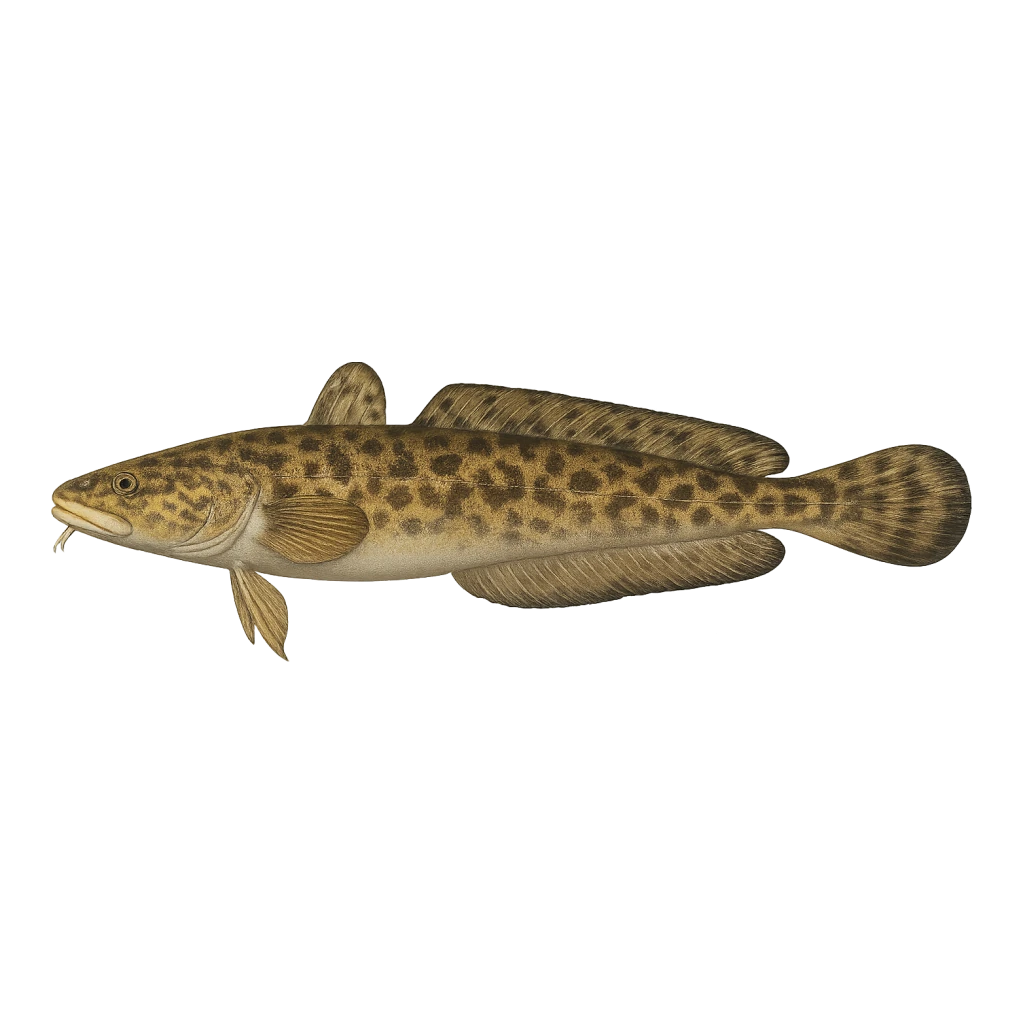
How to recognise it
The burbot (Lota lota) is a unique freshwater fish. It has an elongated body with a broad, flat head. The skin is smooth and typically olive to brown in color, often with lighter mottling. The burbot has a single barbel on its chin, which helps in sensing its environment.
It is most often confused with the eel pout, but the key detail that separates them is the presence of a single barbel on the burbot's chin, while the eel pout lacks this feature.
Where it lives
Burbot are found in various regions across the United States. They inhabit cold, freshwater lakes and rivers, primarily in the northern states. Their range includes parts of the Great Lakes, the upper Mississippi River, and some northern tributaries.
They prefer deeper waters, typically ranging from 10 to 100 feet. Burbot are often found near structures such as rocks, logs, and underwater vegetation. In winter, they tend to move to deeper areas, while in summer, they may be found in shallower waters during the cooler parts of the day.
When it bites
Burbot are most active from late fall to early spring. They bite best when water temperatures are between 35°F and 50°F. Early morning and late evening are prime times for fishing. Weather changes, such as a passing front or increased wind, can trigger feeding activity. A full moon can also enhance their nocturnal feeding habits.
How to catch it
To catch burbot, use a variety of rigs. A simple bottom rig with a 1-2 ounce sinker and a 1/0 to 3/0 hook works well. Live bait such as minnows or cut bait is effective. Lures like jigs in sizes 1/4 to 1/2 ounce, especially in natural colors like white or green, can also attract them.
Cast near structures or drop your line straight down in deeper waters. Work the bait slowly along the bottom. Burbot often bite softly, so be ready to set the hook quickly when you feel a tug.
Size, age and the table
Typically, anglers encounter burbot that are 18 to 24 inches long and weigh between 2 to 6 pounds. A trophy burbot is considered to be over 30 inches. They grow at a moderate rate, reaching sexual maturity at around 3 to 4 years of age, with a lifespan of up to 10 years.
Burbot have a mild flavor and firm texture, making them a good choice for eating. When handling them, be gentle to avoid damaging their slimy skin. If you plan to release them, do so quickly to minimize stress.


