
How to recognise it
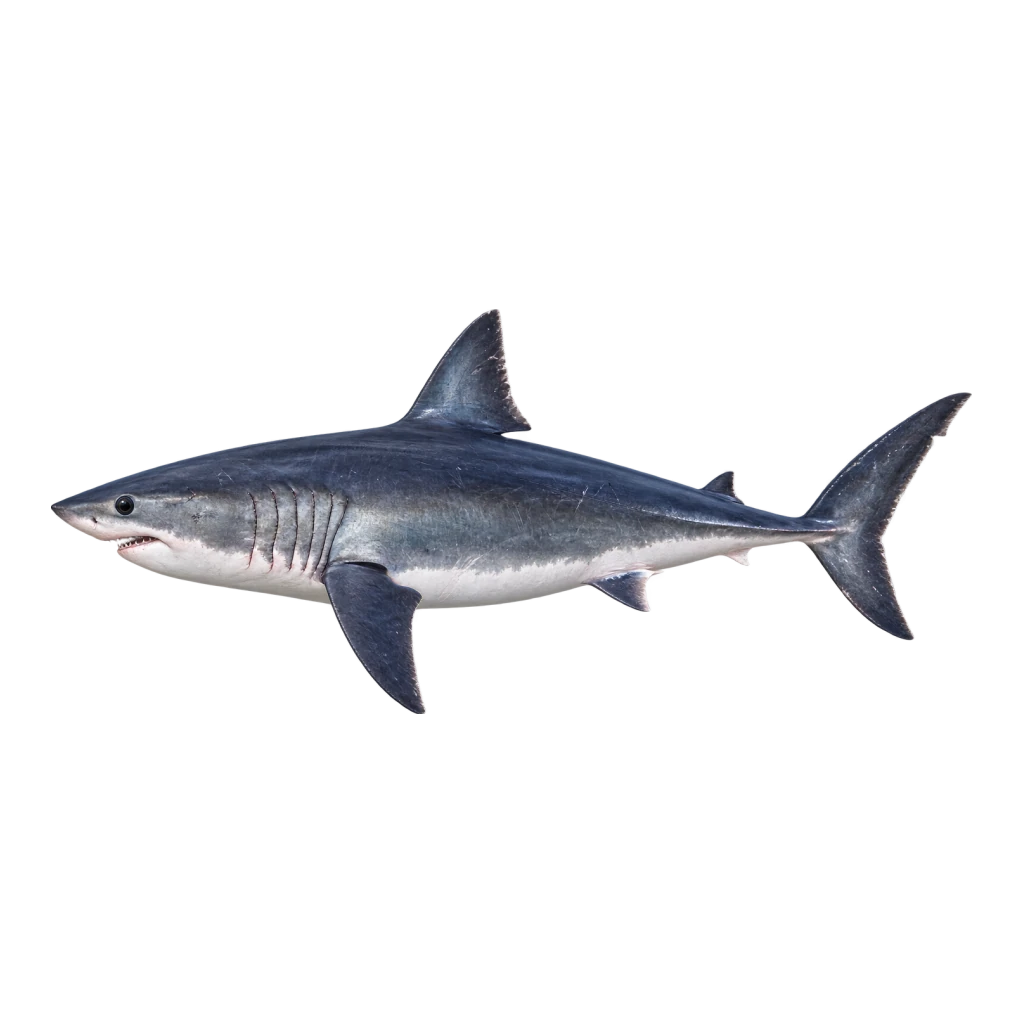
The Porbeagle (Lamna nasus) is a robust shark with a streamlined body. It has a conical snout and a large, crescent-shaped tail. The dorsal side is dark blue to gray, while the belly is white. One of its most distinctive features is the large, triangular first dorsal fin, which is set far back on the body. The Porbeagle can be confused with the Mako shark, but the key difference is the Porbeagle's more rounded snout compared to the Mako's pointed snout.
Where it lives
The Porbeagle is found in the North Atlantic Ocean. In the United States, its range includes the Northeast and parts of the Great Lakes. It prefers cold, temperate waters and is often found near the surface, typically at depths of 100 to 1,500 feet. During warmer months, Porbeagles may move closer to shore, while in colder months, they tend to migrate to deeper waters. They often hold near underwater structures, such as reefs and drop-offs.
When it bites
Porbeagles are most active from late spring to early fall, particularly from May to October. They prefer water temperatures between 50°F and 68°F. Early morning and late afternoon are prime times for bites. Weather changes, such as a passing front or strong winds, can trigger feeding activity. A full moon may also increase their activity, making them more likely to bite.
How to catch it
To catch a Porbeagle, use a heavy-duty trolling rig with a minimum 50-pound test line. A wire leader is recommended to prevent bite-offs. Common baits include mackerel, herring, and squid, typically in 6 to 12 inches. Lures such as large spoons or jigs in bright colors like blue or silver can also be effective. Cast near underwater structures or along current lines. Work the bait by trolling at a speed of 4 to 6 knots, allowing it to swim naturally in the water column.
Size, age and the table
Anglers typically encounter Porbeagles ranging from 30 to 100 inches in length. A trophy Porbeagle is generally considered to be over 100 inches. They grow rapidly, reaching maturity around 5 to 7 years of age, and can live up to 20 years. The meat is considered good eating, with a firm texture and mild flavor. Handle Porbeagles carefully to ensure a successful release, as they are sensitive to stress and can be prone to injury if not treated properly.


