
How to recognise it
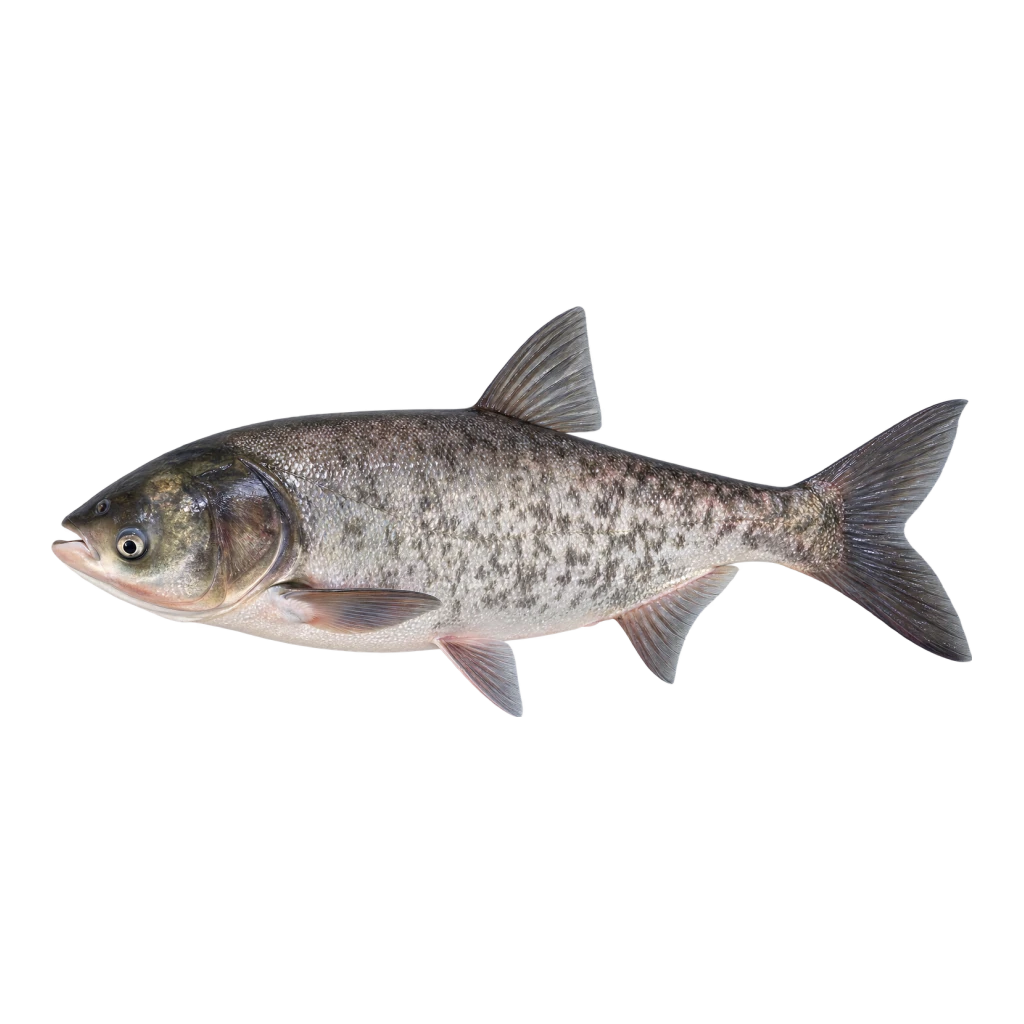
The Bighead Carp (Hypophthalmichthys nobilis) is a large freshwater fish. It has a distinctive broad, flat head and a large mouth that extends below its eyes. The body is elongated and can reach lengths of up to 48 inches. The coloration is typically a grayish-brown on the back, fading to a lighter belly. The fins are generally dark and the tail is forked.
This species is often confused with the Silver Carp (Hypophthalmichthys molitrix). The key detail that separates them is the size of the head; the Bighead Carp has a larger, more pronounced head compared to the Silver Carp.
Where it lives
Bighead Carp are primarily found in the Mississippi River Basin and its tributaries, as well as the Great Lakes region. They thrive in large rivers, lakes, and reservoirs. They prefer warm, slow-moving waters with a depth range of 3 to 20 feet.
During the summer months, they tend to stay near the surface, often in areas with abundant plankton. In colder months, they may move to deeper waters to escape the cold temperatures. Seasonal changes affect their location, with warmer waters drawing them closer to the surface.
When it bites
Bighead Carp are most active from late spring through early fall, particularly from May to September. They prefer water temperatures between 70 and 85 degrees F. Early mornings and late evenings are the best times to catch them.
Weather conditions can influence their feeding behavior. A passing front can trigger increased activity, while high winds may scatter them. A full moon can also enhance their feeding, making them more likely to bite.
How to catch it
To catch Bighead Carp, anglers often use a variety of rigs. A simple slip sinker rig with a 1 to 2-ounce weight is effective. Baits such as corn, dough balls, or commercial carp bait work well. Use hooks in the range of 2/0 to 4/0, depending on the bait size.
When fishing, cast near structures like submerged logs or vegetation where they may be feeding. Retrieve the bait slowly, allowing it to settle on the bottom. Using a bobber can also help keep the bait at the desired depth.
Size, age and the table
Typically, anglers encounter Bighead Carp ranging from 10 to 30 pounds. A trophy Bighead Carp is generally considered to be over 40 pounds. They grow quickly, often reaching 10 inches in their first year and can live up to 15 years.
While Bighead Carp are edible, their taste is often considered less desirable compared to other fish. Proper handling is essential to ensure a successful release. Use wet hands or a wet cloth when handling to protect their slime coat, which is vital for their health.


